
Reviewed · KYOTO TEMPLE TOURS
KYOTO-NARA: Giant Buddha Deer Pagoda “Geisya” (Italian, full day)
Nara’s giant Buddha and free-roaming deer fill the morning, then Kyoto’s temple lanes and Gion-kobu take over the afternoon. I like the Italian-speaking local guidance, especially when Omae explains legends, Buddhist customs, and the details easy to miss on your own. I also like that train fares, buses, and temple entrances are covered.
The main drawback is the pace. You cover two cities in one day, with about an hour at Todai-ji and one hour at Kiyomizu-dera, so this is a strong introduction rather than a slow, thorough visit. The $176 price is fair if you value personal explanation and simple transport, but less appealing if you prefer exploring independently.
Key points at a glance
- Todai-ji and its giant Buddha: See one of Japan’s most famous Buddhist monuments with an Italian-speaking guide.
- Deer in Nara Park: Feed tame deer with special crackers sold at stalls near the temple.
- A two-city day: Combine Nara in the morning with Kiyomizu-dera and Gion in Kyoto.
- Guide Omae: A Japanese guide who lived in Italy for more than ten years and is praised for polished Italian, humor, and clear explanations.
- Small-group format: The group is limited to 15 people, making questions and schedule adjustments easier.
- Transport and entry included: Scheduled trains, buses, and monument admission are part of the $176 cost.
Why this Nara and Kyoto combination works
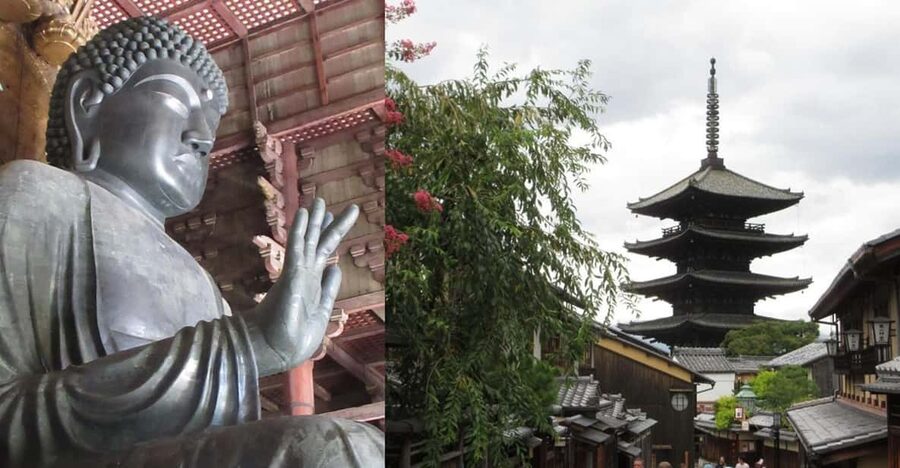
Many first visits to Kyoto include Kiyomizu-dera, but Nara gives the day a useful change of pace. You leave the modern station area, ride to Japan’s old imperial capital, and spend the morning among a huge temple complex and deer that wander freely through the park.
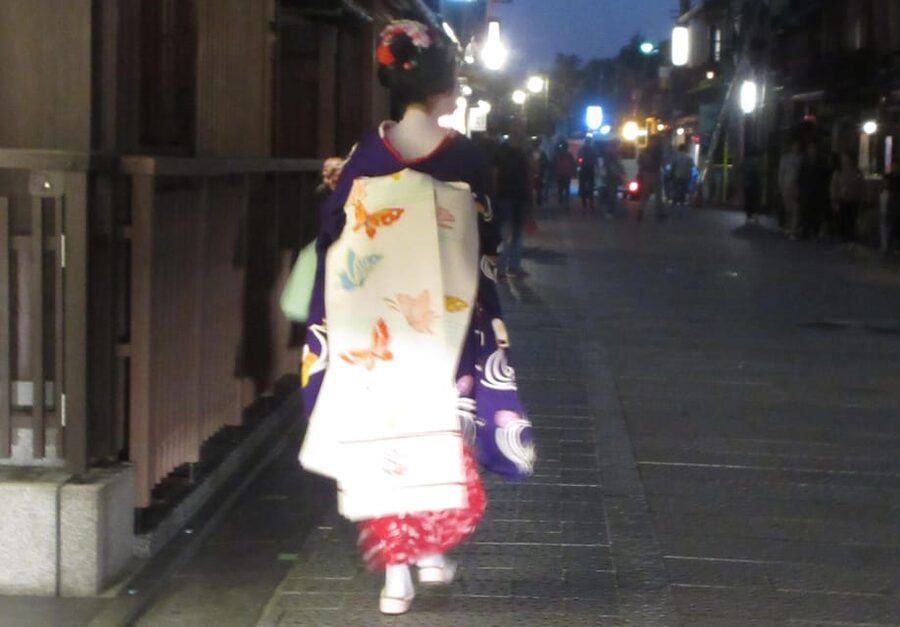
Then you return to Kyoto for a very different setting. Kiyomizu-dera is reached through old pilgrimage routes lined with shops, sweets, bars, and souvenirs. The afternoon ends in Gion-kobu, the part of Kyoto associated with professional Maiko and Geiko artists, often loosely called Geisya by international visitors.
I like the contrast. Nara offers open parkland, monumental Buddhist architecture, and animals that have become part of the city’s identity. Kyoto brings narrow lanes, religious tradition, shopping, and the chance to discuss the living culture around Maiko and Geiko.
The guide is central to the experience. Omae is specifically praised for speaking excellent Italian after living in Italy for over a decade. The strongest part of this style of tour is not simply getting from one place to another. It is being able to ask why a monument matters, how a Buddhist practice developed, or which local story is connected to an object or building.
More Full-Day Tours in Kyoto:
- Kyoto: Nara, Todaiji, Kasuga Taisha Shrine Private Full Day
★ 4.9 · 18 reviews - Siem Reap: Full-Day Angkor Wat Guided Tour with Sunset
★ 4.9 · 3,803 reviews - Full-Day Angkor Wat Sunrise Private Tour with Guide from Siem Reap
★ 5.0 · 2,920 reviews
Meeting at Kyoto Station without confusion
The day begins at Kyoto Station, in the open space between the four escalators in front of the taxi terminal. The taxi terminal is east of the station’s north central entrance. Do not head to the bus terminal.
A useful visual clue is Kyoto Tower. From the meeting area, you should see the tower toward the upper left, not the right. You receive confirmation and more precise meeting instructions the day before, but allow time to find the correct station exit. Kyoto Station is large enough to turn a simple meeting into a small expedition if you arrive at the last minute.
The first train ride takes about 45 minutes. A bus ride of roughly 15 minutes follows, taking you toward Todai-ji. These transfers are included, so you do not need to work out separate fares during the scheduled portion of the day.
Todai-ji and the giant Buddha
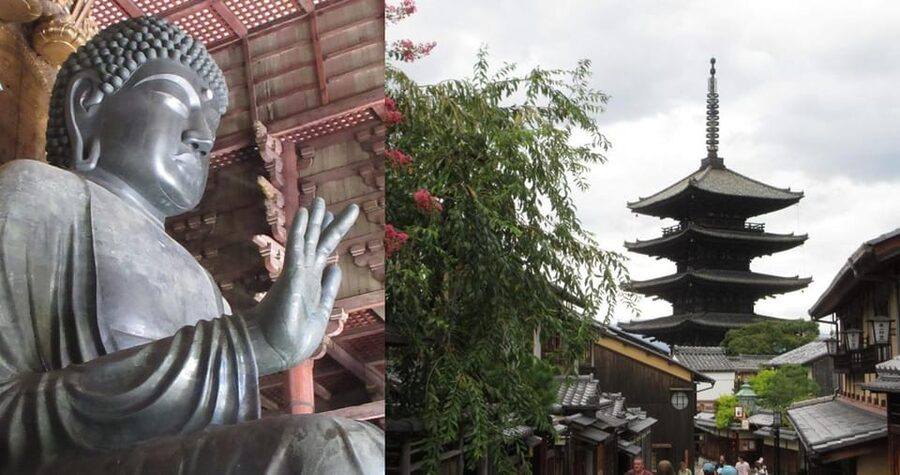
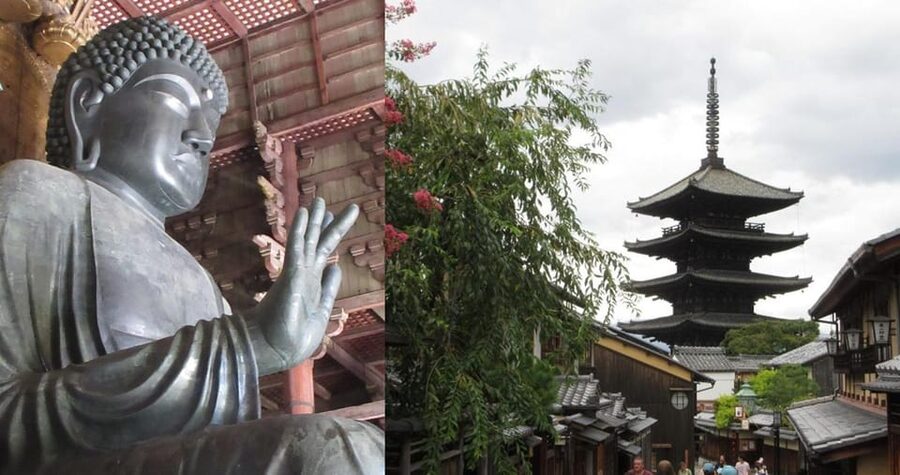
Todai-ji is the morning anchor, and it deserves the attention it gets. The temple is famous for its enormous Buddha statue, one of the largest in Japan, housed within a building that makes the scale even more striking.
You have about 90 minutes for the visit. That time includes a guided look at the temple, the major monuments, and some opportunity for sightseeing and shopping. The guide explains elements designated as national treasures of Japan and places the temple within the story of Buddhist devotion in the country.
This is where an Italian guide adds real value. A quick visit can become a sequence of grand gates, dark wooden interiors, and photographs. With guidance, you can connect the objects and buildings to the people who used them, the beliefs attached to them, and the legends that shaped local understanding.
The tour also focuses on stories that do not always appear in standard guidebooks. That does not mean every moment is a secret revelation, but you can expect local explanations of customs, myths, and religious ideas rather than a list of dates.
The main limitation is time. Ninety minutes is enough for a clear first visit, but not enough for a leisurely study of every corner. If Todai-ji is your main reason for coming to Nara, you may want a longer independent visit on another day.
Feeding Nara’s tame deer
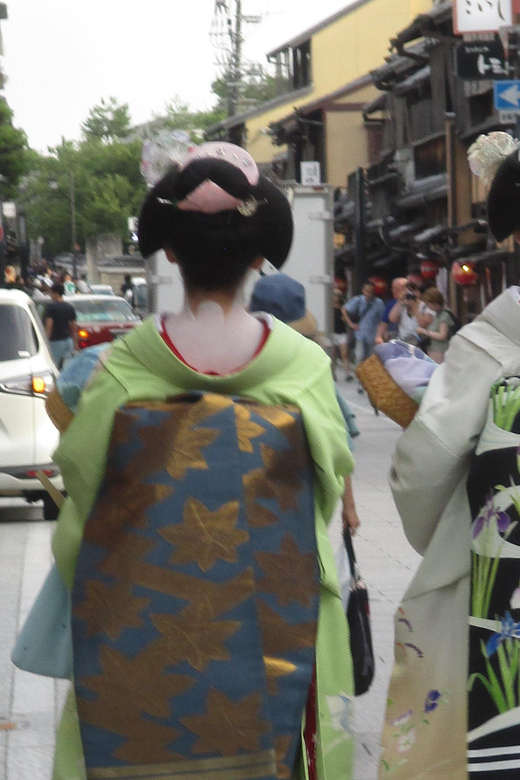
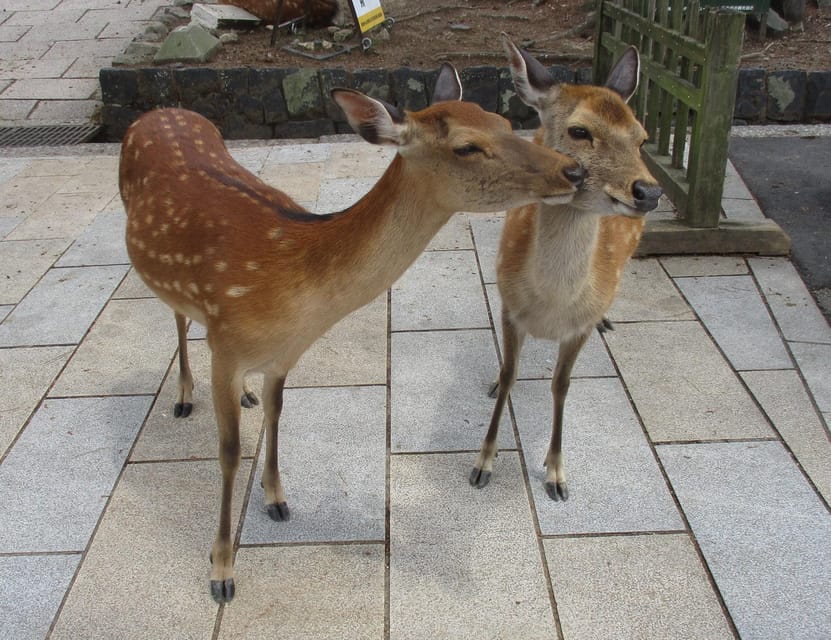
The deer are not a minor side attraction. They are part of the character of the enormous park around Todai-ji, where they have lived alongside local residents for centuries.
Special deer crackers are sold at stalls, allowing you to feed them. This is a pleasant, memorable encounter, but use ordinary common sense. Keep the crackers visible only while feeding, and pay attention to the animals around you. The tour description identifies them as tame, but tame does not mean they have forgotten how to ask firmly for a snack.
The deer also give the morning a lighter feel after the formal temple visit. Children usually appreciate this part, and adults get good chances for photographs. Still, the animals are not guaranteed to behave like posed models. You might find them calm, curious, or more interested in the next food seller than in your camera.
Other temple visits near Kyoto we have written up
- Kyoto: Tea Ceremony Ju-An at Jotokuji Temple
★ 4.9 · 3,207 reviews - Osaka/Kyoto:Kinkakuji,Arashiyama,FushimiInariShrine,NaraPark
★ 4.1 · 1,596 reviews - Arashiyama Bamboo, Temple, Monkeys, or Secret Sake Brewery
★ 4.8 · 886 reviews - Kyoto: Arashiyama Bamboo Forest, Monkeys, Matcha & Temple Tour
★ 5.0 · 759 reviews
Ukimido and a short walk through Nara Park
After Todai-ji, the route includes a brief visit near Ukimido, with about ten minutes for walking and passing by. This is not a long sightseeing stop, so think of it as a short scenic pause rather than a second major attraction.
The route then returns to the station by train, with another ride of about 45 minutes. The compact sequence keeps the day moving, but it also explains why comfortable shoes matter. You will use trains, buses, and footpaths several times before the afternoon is over.
The Kyoto break between city visits
Back at Kyoto Station, you have about an hour of break time before the Kyoto afternoon begins. This pause matters because the morning has already included transport, temple walking, deer watching, and a full guided visit.
Use it to eat, rest, or buy something simple for the next stretch. The supplied details do not specify a restaurant or included meal, so plan on arranging food yourself during this break.
The next bus ride takes about 15 minutes. After that, you walk for roughly 15 minutes to Kiyomizu-dera. The route is practical rather than luxurious. You are moving through a working city and a popular temple district, not being carried from one doorway to the next.
Walking up to Kiyomizu-dera
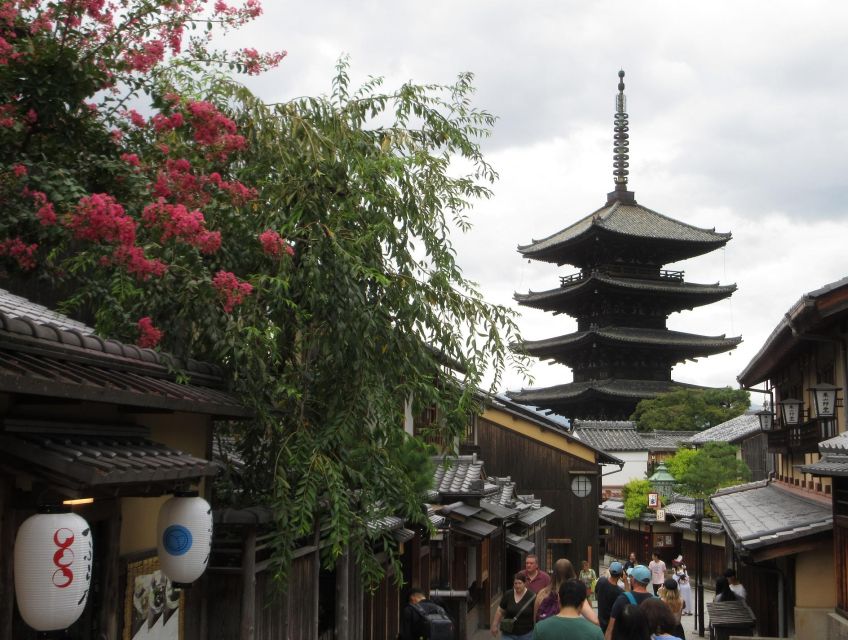
The approach to Kiyomizu-dera follows old pilgrimage routes that have developed from the eighth century to the present day. Shops line the streets, selling souvenirs, sweets, and other items aimed at visitors from Japan and abroad.
I like this part because the approach is part of the visit. The temple does not appear in isolation. You see how religion, commerce, food, and local entertainment have grown together around an important pilgrimage destination.
The trade-off is that the streets can feel more commercial than the quietest Kyoto lanes. If you want untouched old Japan, this section may feel busy with shops and merchandise. If you enjoy browsing, tasting sweets, and seeing how a major temple functions as a public destination, the route makes sense.
Kiyomizu-dera itself receives about one hour of guided attention. The guide explains historical, cultural, and religious details, then answers questions as you go. This is a good place to ask about Buddhist devotion and the connection between pilgrimage and daily life.
The walk to the next stop takes around 20 minutes. Again, the timing is purposeful. You see the district on foot rather than simply arriving by bus and leaving immediately.
Gion-kobu, Maiko, and Geiko culture
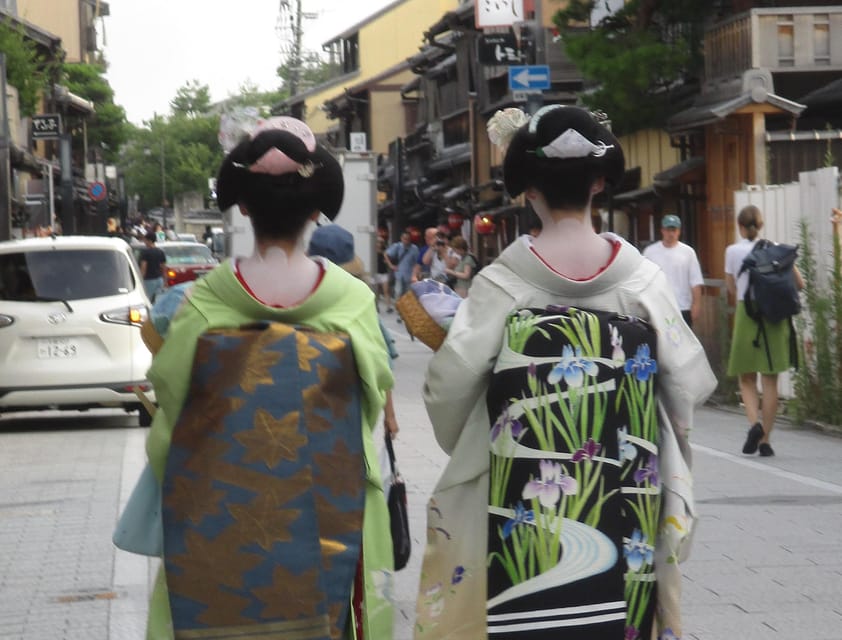
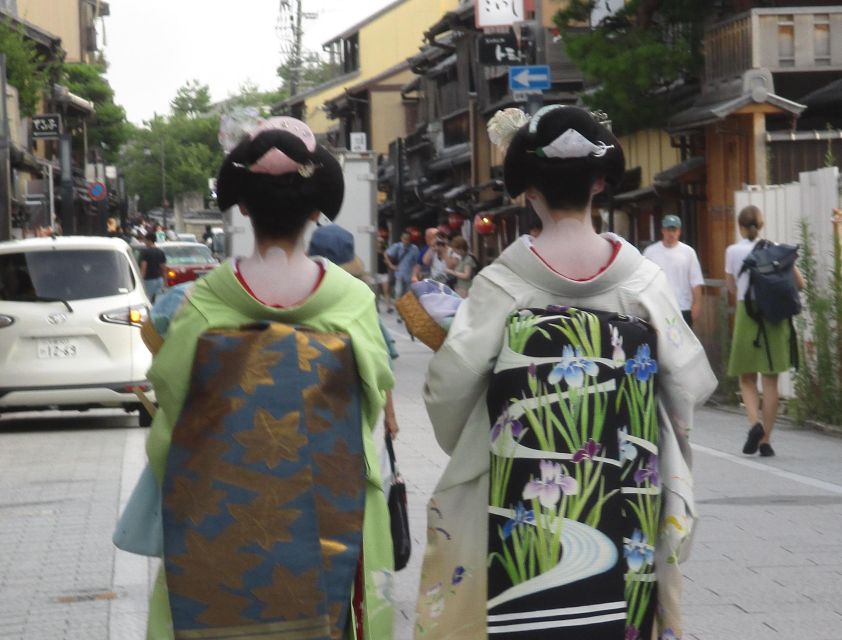
The final guided visit is in Gion, specifically the Gion-kobu area associated with professional Maiko and Geiko artists. The visit lasts about 20 minutes, so it is an introduction to the district, not a performance or a private meeting with an artist.
This distinction matters. The tour lets you understand the setting where these professionals work and helps separate actual Kyoto tradition from the broad foreign use of the word Geisya. You can ask questions about the district, its customs, and the role of Maiko and Geiko in Kyoto culture.
The guide’s explanation is especially useful here because the subject is easy to oversimplify. You should expect context and orientation, not a guarantee of seeing a particular artist. The tour finishes in Pontocho after a final walk of about ten minutes.
Pontocho is a practical ending point for the evening. The tour does not include a meal, but finishing there gives you a useful part of central Kyoto from which to continue your night.
What the $176 price includes
At $176 per person, this is not a bargain-basement sightseeing day. The value depends on how much help you want.
The price includes the scheduled train and bus fares, entrance fees for the monuments in the program, guided visits, and explanatory material in Italian. You also receive practical help with questions about traveling in Japan, available at no extra charge.
That package removes several small decisions. You do not need to work out the Nara connections, buy separate entry tickets, or translate temple explanations on the spot. For a first visit to Japan, or for anyone who wants a full Italian-language day, those conveniences can justify the cost.
The price is harder to defend if you already know Kyoto and Nara well, speak Japanese or English comfortably, and are happy to handle trains and temple tickets yourself. You are paying for interpretation, coordination, and support as much as for transport.
A group limit of 15 keeps the experience smaller than a large coach tour. It does not guarantee a private feel, but it should make questions easier and leave some room for reasonable requests. Flexible schedules and route adjustments can be considered when possible, though you should not expect every preference to fit into a tightly timed two-city day.
Pace, walking, and practical comfort
This is a full day with several changes of transport and a good amount of walking. The route includes short walks between stops, the approach to Kiyomizu-dera, temple grounds, and city streets. Wear shoes you can use comfortably for hours.
The experience is listed as wheelchair accessible, but the route still includes buses, walking sections, temple grounds, and old pilgrimage streets. If you use a wheelchair, ask for practical details about the exact route and any requested adjustments before departure.
The schedule has a useful break at Kyoto Station, but it is not a slow day. You spend roughly 90 minutes at Todai-ji, one hour at Kiyomizu-dera, and only about 20 minutes in Gion. That balance favors seeing major highlights over lingering.
Free cancellation up to 24 hours before departure and reserve-now, pay-later booking add flexibility. Starting times vary, so check the available date and time before booking.
Who will get the most from this day
I would choose this tour if you want to see both Nara and Kyoto in one organized day and prefer to receive explanations in Italian. It is particularly useful for first-time visitors who want help with Japanese transport, temple customs, and cultural questions.
Families can also benefit from the mix of giant architecture, deer, food shops, and short walks. The deer provide a natural break from temple sightseeing, while the guide can adapt explanations and answer questions.
It also suits solo visitors or couples who value a small group but do not want to pay for a private guide. Omae’s Italian, humor, and willingness to give people space for photographs are important strengths.
I would hesitate if you want long, quiet periods at each temple, extensive shopping time, or a detailed evening in Gion. You will see the main places, but the day keeps moving.
Should you book this Italian full-day tour?
Book it if you want a well-connected introduction to Nara and Kyoto with an Italian-speaking guide, included transport, and cultural explanation that goes beyond basic facts. The strongest reasons are Todai-ji, the deer, Kiyomizu-dera, and the chance to ask direct questions to a guide such as Omae.
Skip it if your priority is freedom, a low-cost self-guided day, or a long visit to one temple. At $176, the tour makes sense when language support and practical help matter to you. It is less compelling for independent visitors who already know the routes.
For the right person, this is an efficient way to put Japan’s giant Buddha, deer park, pilgrimage streets, and Gion-kobu into one memorable day.
FAQ
Is the tour conducted in Italian?
Yes. The live tour guide language is Italian, and explanatory material for the monuments is also provided in Italian.
Where does the tour begin?
It begins at Kyoto Station, in the space between the four escalators in front of the taxi terminal east of the north central entrance. Kyoto Tower should appear toward the upper left from this meeting area.
What places are visited?
The day includes Todai-ji in Nara, the surrounding deer park, a brief stop near Ukimido, Kiyomizu-dera in Kyoto, and the Gion-kobu area. The tour finishes in Pontocho.
Are train and bus fares included?
Yes. The scheduled train and bus fares listed for the tour are included in the price.
Are temple entrance fees included?
Yes. Entrance fees for the monuments included in the program are covered.
How large is the group?
The tour is limited to 15 participants. It is listed as wheelchair accessible, and reasonable itinerary or schedule adjustments may be requested when possible.
Newly written up around Kyoto
- Kyoto:Kiyomizu-dera Temple Rent a kimono and ride a rickshaw★ 4.8 · 7 reviews
- Kyoto: Kiyomizudera, Sanjusangendo, Ginkakuji and Higashiyama.★ 5.0 · 3 reviews
- Kyoto: Shakyo & Matcha in Historic Temple Garden★ 5.0 · 4 reviews
- KYOTO: Tempio Kiyomizu Pagode Gion “Geisya” (Guida Italiana)★ 4.7 · 17 reviews
- KYOTO: Golden Pagoda, Bamboo Forest, Arashiyama (Italian)★ 4.9 · 5 reviews
- Kyoto:Quiet Arashiyama and Sagano Temples★ 4.8 · 5 reviews
- Kyoto kiyomizu Temple : Maiko and Samurai Couple Photoshoot★ 4.8 · 25 reviews
- Kyoto: Nara, Todaiji, Kasuga Taisha Shrine Private Full Day★ 4.9 · 18 reviews
Kyoto Temple Tours, compared.
Osaka/Kyoto:Kinkakuji,Arashiyama,FushimiInariShrine,NaraPark
Read our review →
Arashiyama Bamboo, Temple, Monkeys, or Secret Sake Brewery
Read our review →
Arashiyama Bamboo Forest, Monkeys, Matcha & Temple Tour
Read our review →
Osaka/Kyoto: Arashiyama, Nara & Fushimi Inari Shrine w/Lunch
Read our review →
Kyoto Zen Meditation & Garden Tour at a Zen Temple with Lunch
Read our review →
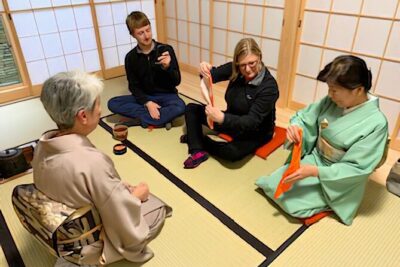
KYOTO Tea Ceremony with kimono near by Imamiya Jinjya Shrine
Read our review →Browse the lists this tour appears in