
Reviewed · KYOTO TEMPLE TOURS
Kyoto:Quiet Arashiyama and Sagano Temples
Arashiyama is famous for its bamboo grove, but this three-hour private walk takes you farther into the area’s quieter religious world. You’ll hear the sorrowful story of Giou-ji, see the thousands of stone figures at Adashino Nenbutsu-ji, and follow old streets toward Tenryu-ji.
I like the personal scale of the tour and the way guide Masa connects buildings to real lives, faith, and loss. I also like that temple admissions are covered, and that the route includes Saga Toriimoto, an old street many visitors rush past.
The main concern is pace. The listed stops add up to more than three hours, and one afternoon booking found the schedule a little quick. You’ll need comfortable shoes, water, and a willingness to keep moving.
Key points at a glance
- Giou-ji’s tragic story: Learn how a dancer, her family, and her former rival ended up living as Buddhist nuns together.
- Adashino’s 8,000 stone figures: See a memorial site for people who died without relatives to pray for them.
- Saga Toriimoto’s preserved street: Walk past old farmhouses and machiya homes in a historic suburban setting.
- A private English-speaking guide: Masa meets you at JR Saga-Arashiyama Station and adjusts the experience to your needs.
- Temple admissions included: The $38 price covers entry to the temples visited, plus selected hands-on experiences.
- A peaceful side of Arashiyama: The route focuses on temples, wooded paths, and quiet reflection rather than only the famous photo stops.
Why this Arashiyama walk feels different
Many Arashiyama visits revolve around one famous bamboo path and a crowded main street. This tour gives that bamboo grove only part of the day. The larger idea is to help you understand why Sagano matters as a place of prayer, retreat, memory, and old village life.
That approach works best if you want more than pretty scenery. The guide explains how people lived and worshiped in earlier periods, then gives you time to consider what those customs mean now. This is not a lecture-heavy tour in a classroom sense. The stories are tied to the exact rooms, statues, gardens, and paths in front of you.
Masa is the named guide, and the experience is offered in English for a private group. That matters in Kyoto, where a small site can feel very different when someone explains what you are seeing. One especially useful part of his style is the mix of explanation and participation. He can demonstrate prayer and meditation traditions at selected temples, then invite you to try them.
The tour has a strong human angle. Giou-ji is not presented as a pretty mossy temple alone. Adashino Nenbutsu-ji is not just a photo stop filled with stone statues. Each place carries a story about people who suffered, prayed, lost family, or searched for peace.
Other temple visits near Kyoto we have written up
- Kyoto: Tea Ceremony Ju-An at Jotokuji Temple
★ 4.9 · 3,207 reviews - Osaka/Kyoto:Kinkakuji,Arashiyama,FushimiInariShrine,NaraPark
★ 4.1 · 1,596 reviews - Arashiyama Bamboo, Temple, Monkeys, or Secret Sake Brewery
★ 4.8 · 886 reviews
Meeting Masa at JR Saga-Arashiyama Station
Your starting point is JR Saga-Arashiyama Station, not Hankyu Arashiyama Station and not Randen Arashiyama Station. Masa waits in the plaza just outside the ticket gates with a sign bearing your name.
That distinction is important. Arashiyama has several railway stations, and choosing the wrong one can cost you time before the walk even begins. Plan to arrive 15 minutes early. You are not simply boarding a bus after meeting the guide, so a late arrival can affect the whole route.
Transportation to the meeting point is not included. Meals, drinks, and personal purchases are also your responsibility. If you are hungry, say so early. On one afternoon, Masa arranged lunch after meeting the group because the timing and appetite called for it. That flexibility is useful, although lunch is not a standard inclusion and should not be treated as part of the $38 package.
Adashino Nenbutsu-ji and the meaning of a memorial
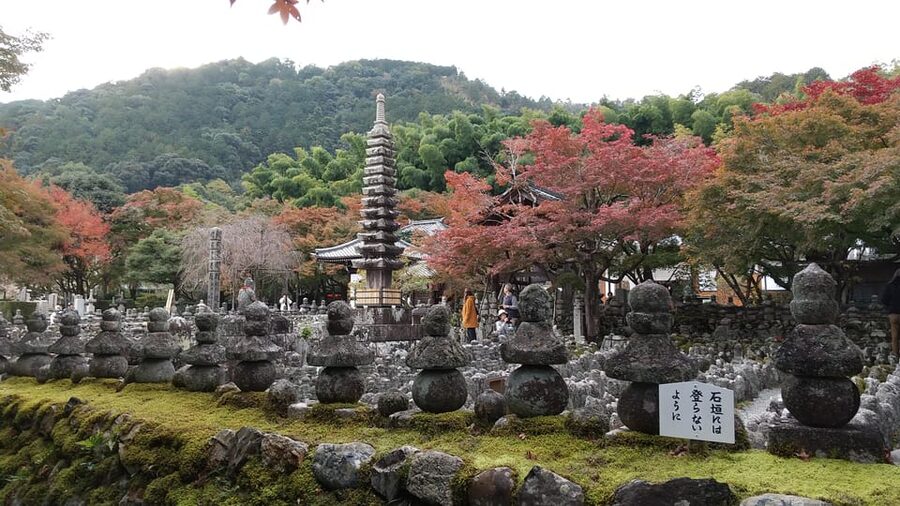
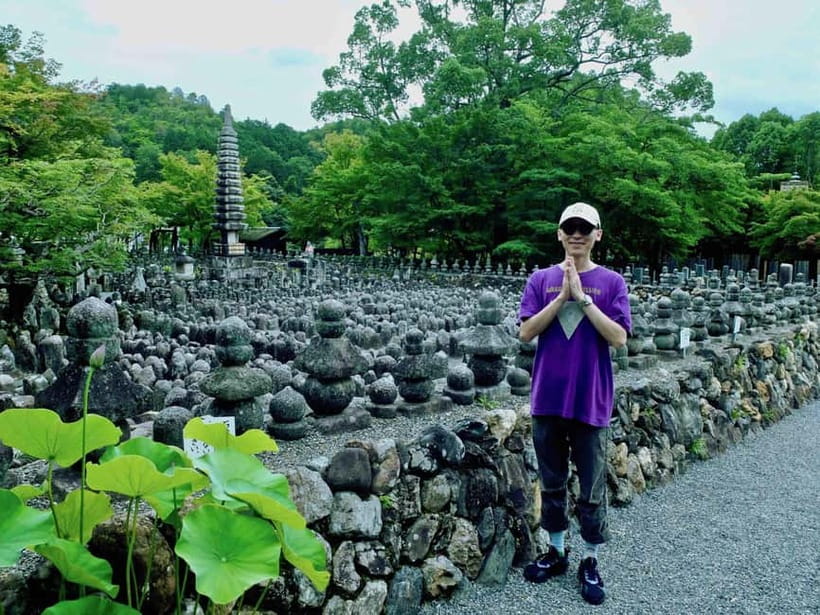
Adashino Nenbutsu-ji is one of the tour’s strongest stops. The temple dates to the Kamakura period, and its name is linked to the idea of a vain or heartless field. The area was once associated with abandoned bodies, a reminder of how differently death was handled in earlier Kyoto.
The temple’s founder was Honen, the Buddhist teacher associated with nenbutsu, the chanting of a Buddhist phrase. The site also honors muen botoke, dead people whose spirits had no relatives to pray for them. Nearly 8,000 stone Buddhist figures were collected and enshrined here.
That number is hard to grasp until you see the close grouping of the statues. The effect is not grand in the way a famous golden temple is grand. It is more personal and sobering. You begin to think about the people represented, and about the importance of remembrance when family lines disappear.
The annual Sento Kuyo ceremony in August adds another layer. Thousands of candles are lit and flowers are offered for the dead. The tour does not promise that this ceremony will take place during your visit, but the guide explains the tradition and helps you read the site as a place of continuing prayer.
Allow about 45 minutes here for a guided visit and scenic walking. The ground can be uneven, and the day includes plenty of walking, so solid shoes matter. You’ll get more from the stop if you slow down for the statues instead of treating them as a quick backdrop.
Giou-ji and the story of four women
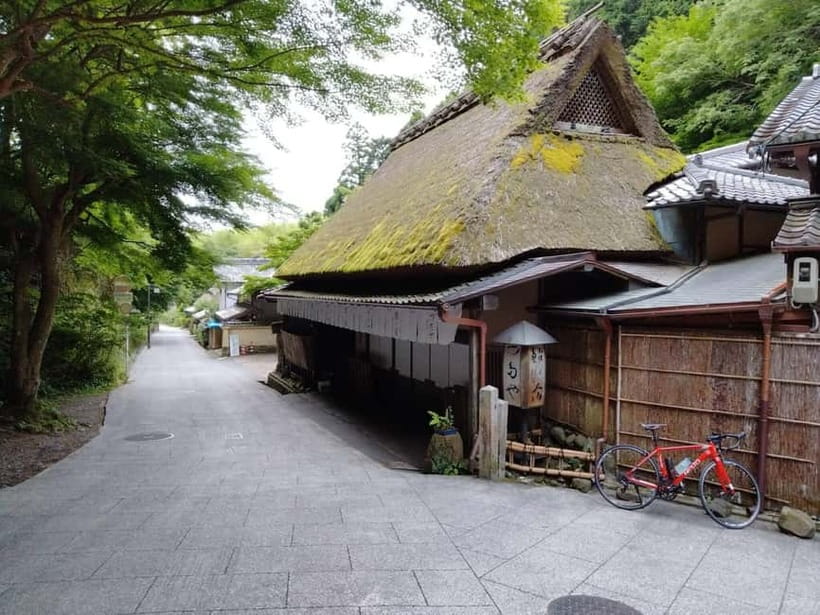
The tour’s discussion of Giou-ji gives Arashiyama a very human face. The small temple dates to the 12th century, during the Heian period. Its name comes from Giou, a woman whose life became tied to the political and romantic power of Taira no Kiyomori.
Giou was a dancer favored by Kiyomori, who was a major military and political figure of his era. At first he loved Giou, but later turned his attention to another woman, Butsugozen. Giou was driven away and eventually became a nun, living with her sister and mother at Giou-an, the small house associated with the temple.
The story does not end there. Butsugozen, once Giou’s rival, was later rejected by Kiyomori as well. She also became a nun and joined Giou, her sister, and her mother. The four women practiced Buddhism together.
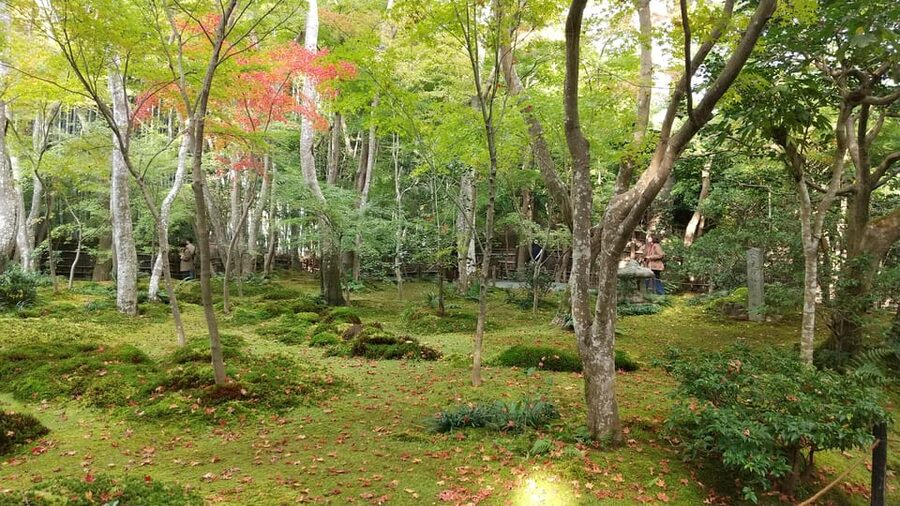
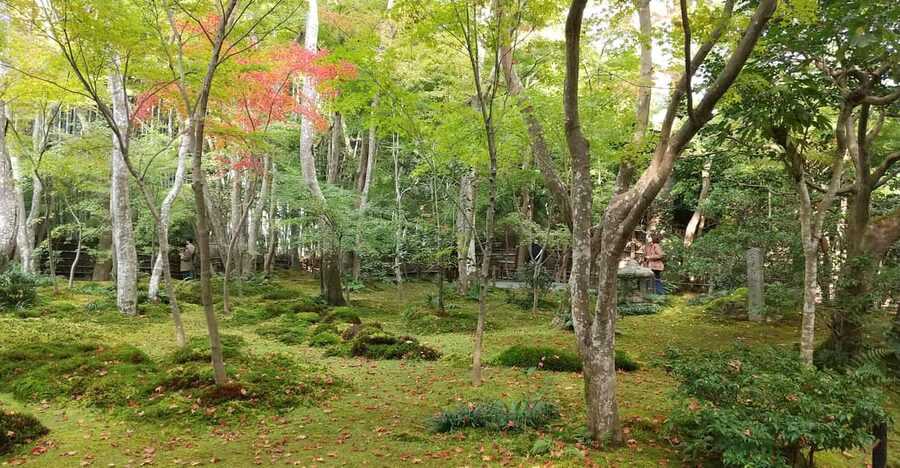
That detail changes how you see the site. Its quiet setting can feel almost too pretty for the story it carries. The moss, trees, and small buildings create calm, but the calm is shaped by grief, rejection, and a decision to build a different life.
Giou-ji is used as an example of how the tour treats temples. You are not only told when a building was made. You are shown how people attached meaning to it. The experience may include a visit to this temple, though the published stop list names one 30-minute temple visit without identifying it directly. If Giou-ji is essential to your plans, confirm the exact temple sequence when booking.
A different set of gates, same trip:
- Kyoto: Arashiyama Bamboo Forest, Monkeys, Matcha & Temple Tour
★ 5.0 · 759 reviews - Osaka/Kyoto: Arashiyama, Nara & Fushimi Inari Shrine w/Lunch
★ 4.4 · 754 reviews - Kyoto Zen Meditation & Garden Tour at a Zen Temple with Lunch
★ 5.0 · 441 reviews - Kyoto: Zen Experience in a Hidden Temple
★ 5.0 · 437 reviews
Saga Toriimoto’s old street and suburban Kyoto
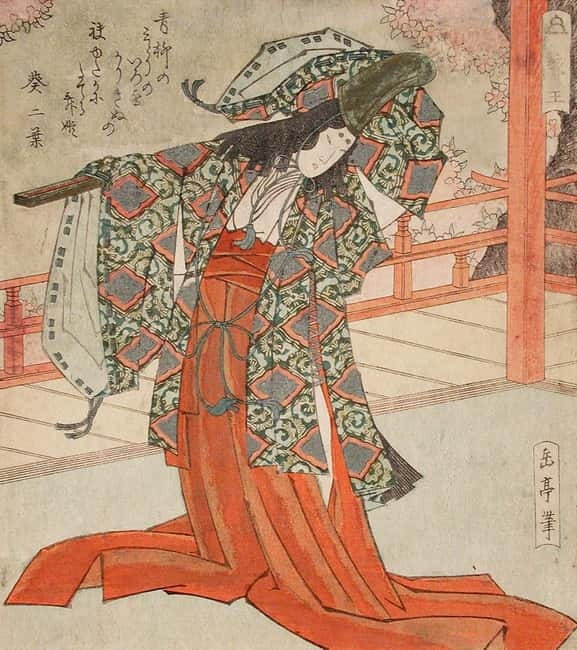
Between temple visits, the route passes through Saga Toriimoto Preserved Street. This is a welcome change of rhythm. Instead of only moving from one religious site to the next, you walk through a historic street where farmhouses and machiya homes sit together.
The setting offers a look at Kyoto beyond the central tourist districts. It is a preserved suburban scene, with old structures that show how homes, work, and village life once shared the same area. The walk here is listed at about 15 minutes, so do not expect a long architectural tour. Think of it as a short but useful bridge between temple stories.
I especially like this section because it helps you understand that Sagano was not only a retreat for monks or a scenic stop for sightseers. People lived and worked here. The old street gives the religious sites a local setting instead of making them feel like isolated attractions.
Keep your camera ready, but pay attention to the guide as well. The value is in the contrast between the preserved buildings and the more famous temple grounds ahead.
The bamboo grove without making it the whole day
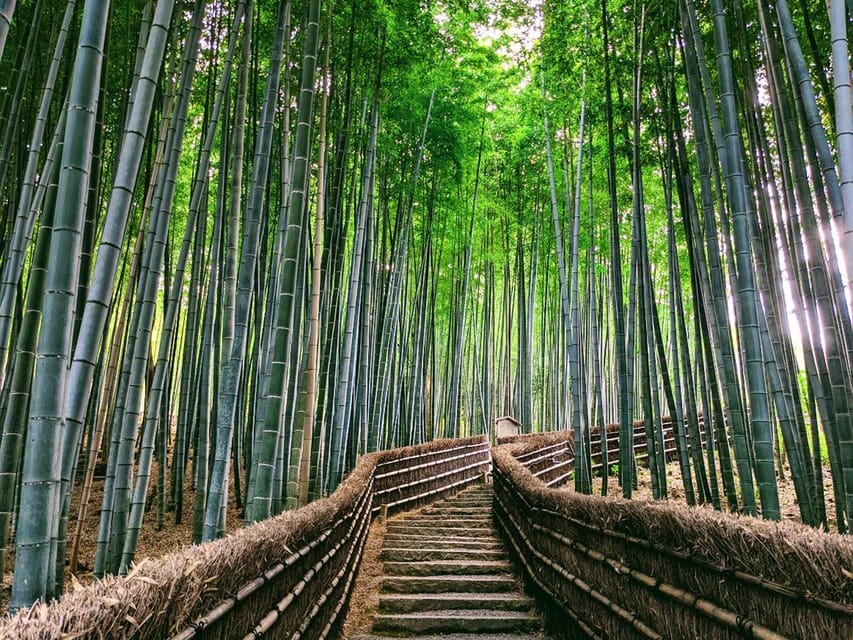
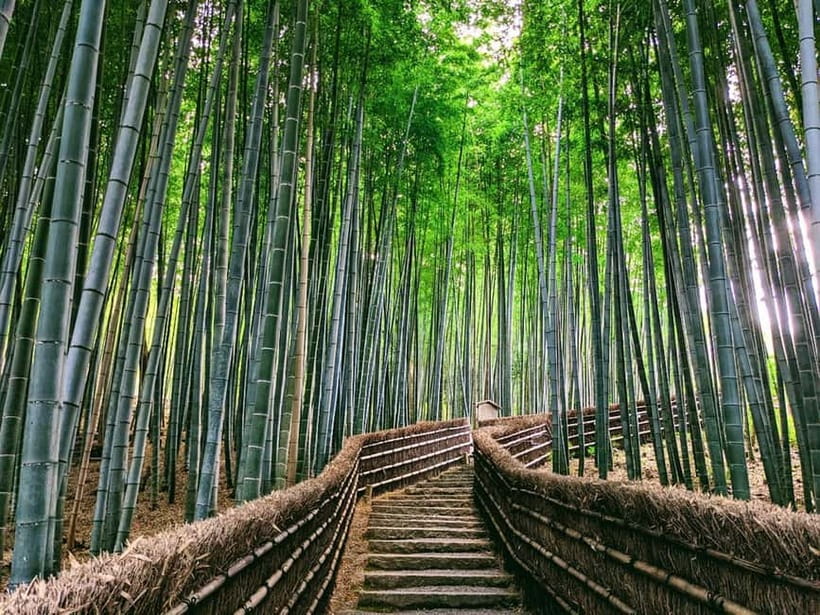
The Sagano Bamboo Grove appears as a scenic section of the route, with about 30 minutes devoted to the area. You’ll have time to see the tall bamboo and take photographs, but the grove is not treated as the sole reason to visit Arashiyama.
That is a sensible choice. The bamboo is striking, yet the path can become crowded and the experience can be brief if you only stop for photos. Here it functions as one part of a broader walk through Sagano.
The route’s overall promise is to avoid the worst of the crowds by focusing on quieter parts of Arashiyama. Conditions can still vary by time and day, so do not expect complete solitude. Even so, the temple-led route should feel more measured than a quick visit to the central bamboo path alone.
Sun protection is practical here. Bring a hat, sunscreen, and water, and check the forecast before you leave. The tour runs outdoors for much of the time, and there is no included meal or drink.
Tenryu-ji closes the route with scale
Tenryu-ji is the largest and most substantial temple stop listed on the route, with about 1.5 hours devoted to a guided visit. That length gives the guide room to explain the site rather than hurry you from one view to another.
The temple provides a useful contrast with smaller Giou-ji. After hearing an intimate story about four women and standing among memorial stones for people without descendants, you reach a major Zen temple with a broader institutional presence. The sequence helps you see different forms of religious life in the same part of Kyoto.
Your guide leads the visit and explains the setting, while the included admission keeps you from having to manage separate entry fees. Hands-on experiences may also be offered at selected temples. These are particularly useful if you want to understand prayer and meditation as practices rather than just watch other people perform them.
The tour then returns to JR Saga-Arashiyama Station. The published duration is three hours, but the listed stop times total about three and a half hours before allowing for walking between locations. That is the clearest practical detail to clarify before booking. The actual timing may depend on the selected start time, pace, and route, but you should not schedule a tight train connection immediately afterward.
What the $38 price buys you
At $38 per person, the tour is reasonably priced if you value a private guide and temple admissions. You are paying for more than a walk through public streets. The fee includes guided touring, entry to all temples visited, narrative explanations, and selected hands-on experiences.
The value is strongest for first-time visitors who would otherwise see the buildings without understanding the stories. A guide can also help you notice details you might pass by, such as the meaning of memorial statues or the connection between a temple and the people who lived there.
The price is less compelling if you prefer to move alone, spend a long time photographing one location, or skip guided explanations. The pace is structured, and you will cover several places in a short period. One person found the schedule a little fast and wanted more time simply to sit and take in the surroundings.
Still, the private format gives you a better chance to ask questions and adjust the conversation. It also avoids the fixed social rhythm of a large group. A strong part of Masa’s service is his willingness to respond to practical needs, such as arranging lunch after the meeting point when the group was hungry.
Who should book this experience
I would recommend this tour to you if you want Kyoto’s temples explained through personal stories and religious practice. It suits couples, families with older children, and small private groups who prefer a guide’s company over a self-guided route.
It is also a good match if you have already seen central Kyoto and want a quieter side of Arashiyama. The combination of Adashino Nenbutsu-ji, Saga Toriimoto, the bamboo grove, and Tenryu-ji gives you more variety than a bamboo-only visit.
You should think twice if you have mobility limits. The tour is not suitable for wheelchair users or people with mobility impairments, and it involves a lot of walking. Wear comfortable shoes, bring water, and dress for the weather.
If you want a slow temple retreat with long periods of silence, this may feel too busy. The route covers several sites, and the listed timings suggest a full walking schedule. If you prefer a broad introduction with meaningful stories, the pace makes more sense.
Should you book the Arashiyama and Sagano temple walk?
Book it if you want to connect Arashiyama’s scenery with the lives and beliefs behind its temples. Masa’s personal guidance, the private group format, included admissions, and hands-on religious demonstrations give the $38 price real value.
Before booking, confirm the exact timing and whether Giou-ji is included in your chosen route, since the published schedule names one 30-minute temple stop without clearly identifying it. If you can accept a brisk pace and arrive prepared for several hours on foot, this is a thoughtful way to see Sagano beyond its famous bamboo grove.
FAQ
Where does the tour start?
The tour starts at JR Saga-Arashiyama Station. The guide waits in the plaza outside the station ticket gates with a sign bearing your name. Do not go to Hankyu or Randen Arashiyama Station.
How long does the tour last?
The activity is advertised as three hours. The listed stop times add up to about three and a half hours before travel between sites, so confirm the exact schedule and allow extra time afterward.
Is the tour private?
Yes. The tour is offered as a private group experience with a live English-speaking guide.
Which temples are included?
The route specifically lists Adashino Nenbutsu-ji and Tenryu-ji. The tour also presents Giou-ji as an important temple story, while one 30-minute temple visit in the schedule is not named directly. Confirm the precise temple sequence before booking if Giou-ji is important to you.
Are temple admission fees included?
Yes. Admission to all temples visited is included in the tour price.
What should I bring?
Bring comfortable walking shoes, a hat, a camera, sunscreen, and water. Check the forecast and dress appropriately for the day.
Is the tour suitable for wheelchair users?
No. The experience is not suitable for wheelchair users or people with mobility impairments.
Newly written up around Kyoto
- Kyoto:Kiyomizu-dera Temple Rent a kimono and ride a rickshaw★ 4.8 · 7 reviews
- Kyoto: Shakyo & Matcha in Historic Temple Garden★ 5.0 · 4 reviews
- KYOTO: Tempio Kiyomizu Pagode Gion “Geisya” (Guida Italiana)★ 4.7 · 17 reviews
- Kyoto: Kiyomizudera, Sanjusangendo, Ginkakuji and Higashiyama.★ 5.0 · 3 reviews
- KYOTO: Golden Pagoda, Bamboo Forest, Arashiyama (Italian)★ 4.9 · 5 reviews
- Kyoto kiyomizu Temple : Maiko and Samurai Couple Photoshoot★ 4.8 · 25 reviews
- Kyoto: Nara, Todaiji, Kasuga Taisha Shrine Private Full Day★ 4.9 · 18 reviews
- Kyoto : Kiyomizu-dera Temple : kimono and Indoor photo shoot★ 4.6 · 5 reviews
Kyoto Temple Tours, compared.
Osaka/Kyoto:Kinkakuji,Arashiyama,FushimiInariShrine,NaraPark
Read our review →
Arashiyama Bamboo, Temple, Monkeys, or Secret Sake Brewery
Read our review →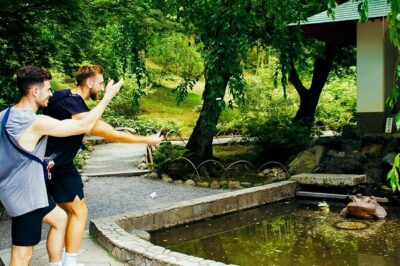
Arashiyama Bamboo Forest, Monkeys, Matcha & Temple Tour
Read our review →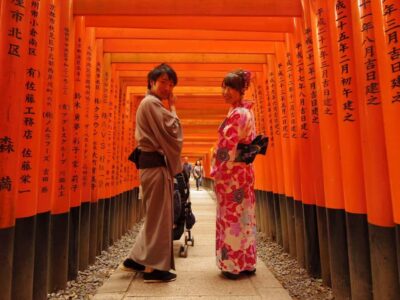
Osaka/Kyoto: Arashiyama, Nara & Fushimi Inari Shrine w/Lunch
Read our review →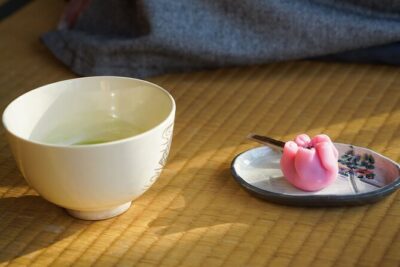
Kyoto Zen Meditation & Garden Tour at a Zen Temple with Lunch
Read our review →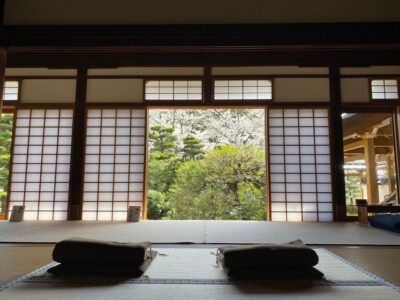
KYOTO Tea Ceremony with kimono near by Imamiya Jinjya Shrine
Read our review →Browse the lists this tour appears in