
Reviewed · HISTORICAL TOURS
Nara Heritage Walkabout from Nara Park to Todaji-ji temple
Nara’s best sights fit neatly into this four-hour walk, but the shika deer are what grab you first. They roam Nara Park as divine messengers in Shinto tradition, and they have a very practical interest in your senbei crackers. I like the clear mix of nature and major sights, and I like finishing in Naramachi, where old wooden houses, small shops, and local food replace the grand scale of the temples.
The main consideration is the walking. You cover Nara Park, Todaiji, Kasuga Taisha, and Naramachi in one morning or afternoon, with a roughly 20-minute walk along the route. The tour is wheelchair accessible, and one guide has adapted well to a guest with walking difficulties, but comfortable shoes and a realistic view of your stamina still matter.
Key points to know before booking
- Deer crackers come with a lesson in local culture: You can buy shika senbei and learn why the deer matter in Nara’s religious tradition.
- Todaiji contains Nara’s big wow moment: The Great Buddha Hall houses one of Japan’s most impressive bronze Buddha statues.
- Kasuga Taisha adds a quieter forest shrine setting: Vermilion buildings and thousands of hanging lanterns give this stop a different mood from Todaiji.
- Naramachi brings the tour down to street level: Traditional machiya houses, crafts, shops, food, and a Japanese snack provide a relaxed finish.
- The guide shapes the experience: Ferdinand and Angelito are among the guides associated with recent departures, with English commentary and practical local advice.
- The $102 price covers the core costs: You get a professional guide, entrance fees, public transportation, guided commentary, and a traditional treat, but not lunch or personal purchases.
Starting beside Kintetsu Nara Station
The meeting point is the Lawson convenience store directly outside Kintetsu Nara Station. That is an easy place to find, especially if you are arriving by train and want a quick drink or snack before setting off.
The stated route begins at 3 Higashimuki Nakamachi, continues toward Nara Station, and then moves through the park and temple area before returning to the same location. The route includes public transportation, but much of the sightseeing is on foot. Ask your guide at the start how the walking and transport sections will be handled that day.
This is a private or small-group experience, which matters in Nara. Deer encounters can get crowded, and temple grounds cover a lot of space. A smaller group lets you hear the guide more easily and makes it simpler to pause for a photo, adjust the pace, or ask about a detail that catches your eye.
More History Tours in Japan:
- Mt. Fuji Heritage Tour: Traditional Villages, Lakes & Shrine
★ 4.5 · 509 reviews - Tokyo History: Sensoji Temple & Asakusa District Private Tour
★ 5.0 · 28 reviews - Fukuoka’s Sacred Path: Temples, History & Culture
★ 5.0 · 17 reviews
Feeding Nara’s famous shika deer
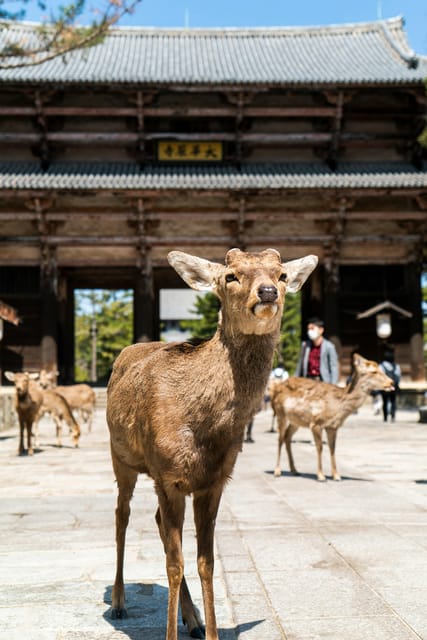
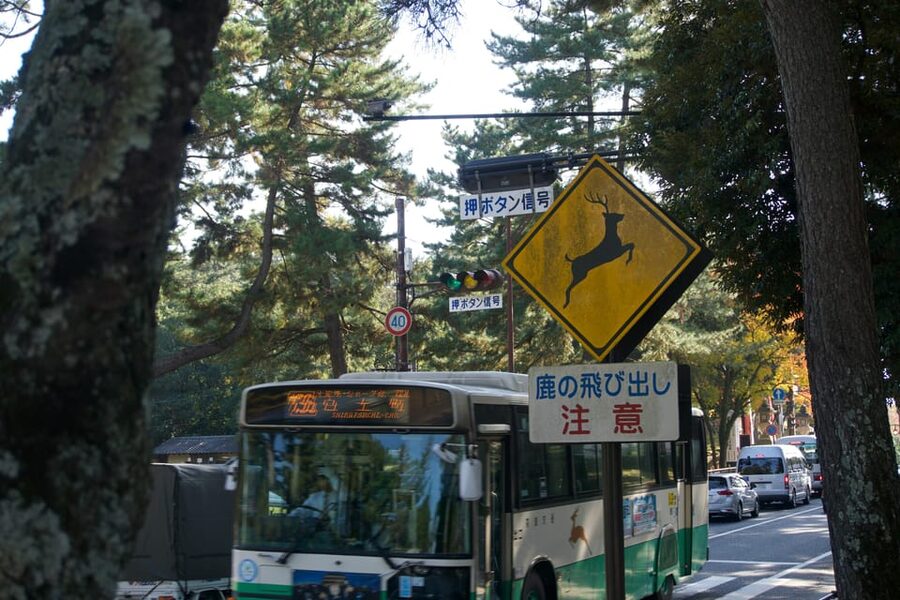
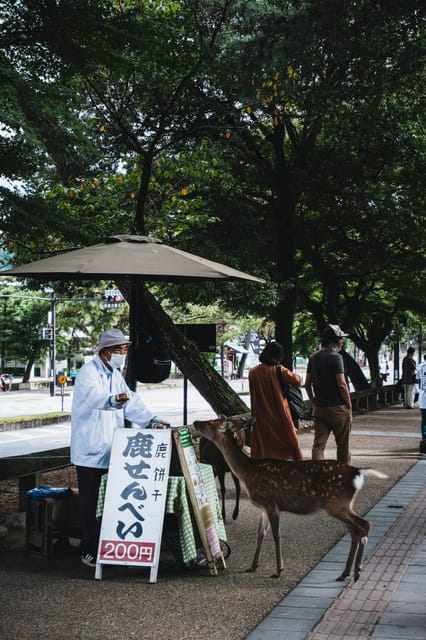
Nara Park is not simply a green space placed between tourist sights. The deer are part of the place’s identity, and the tour uses them as an introduction to Nara’s connection with Shinto belief. They are regarded as divine messengers, so feeding one is more than a cute photo opportunity.
You can buy shika senbei, the traditional deer crackers sold in the park. The deer are used to people, but they are still animals with their own habits and timing. Keep the crackers visible when you have them, and be ready for an eager approach once they notice your supply.
The guide can make this stop much more useful than a quick deer selfie. You will learn about the animals’ place in local folklore, then see how the park blends wildlife, religion, and everyday city life. That combination is one of the strongest reasons to choose this tour instead of visiting only Todaiji.
The park portion is scheduled for about 45 minutes. That gives you time for wildlife viewing and scenic walking, but it is not a full nature outing. If you want long quiet stretches away from crowds, you may prefer to spend extra time in Nara Park before or after the tour.
Also watch your belongings and clothing around the deer. The experience description promises friendly animals, not perfectly behaved ones. Their charm comes with a little comic unpredictability.
Entering Todaiji and the Great Buddha Hall
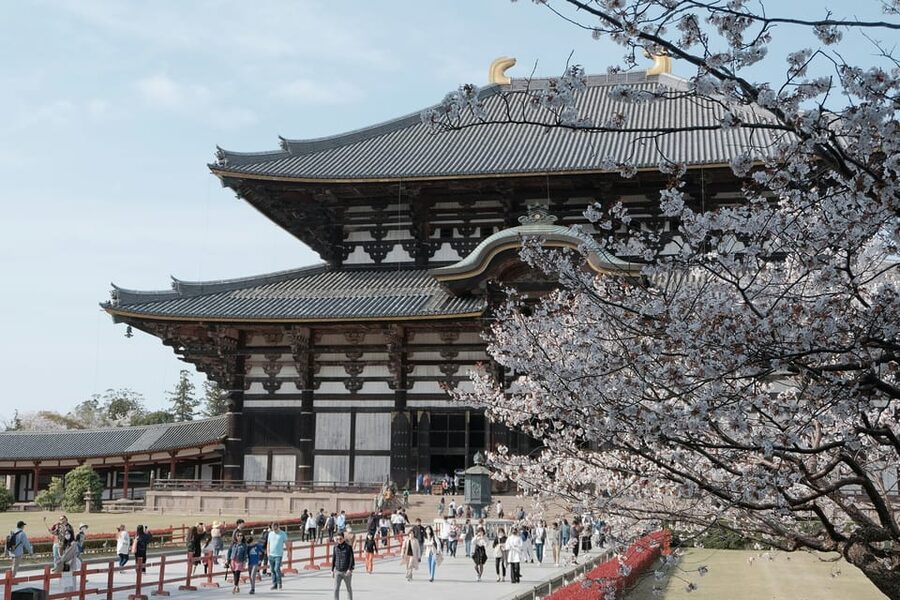
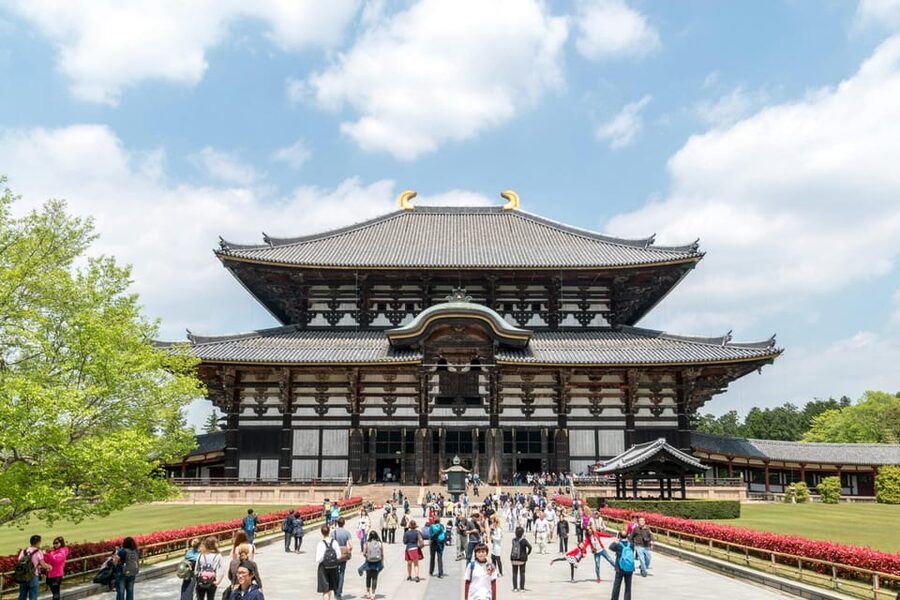
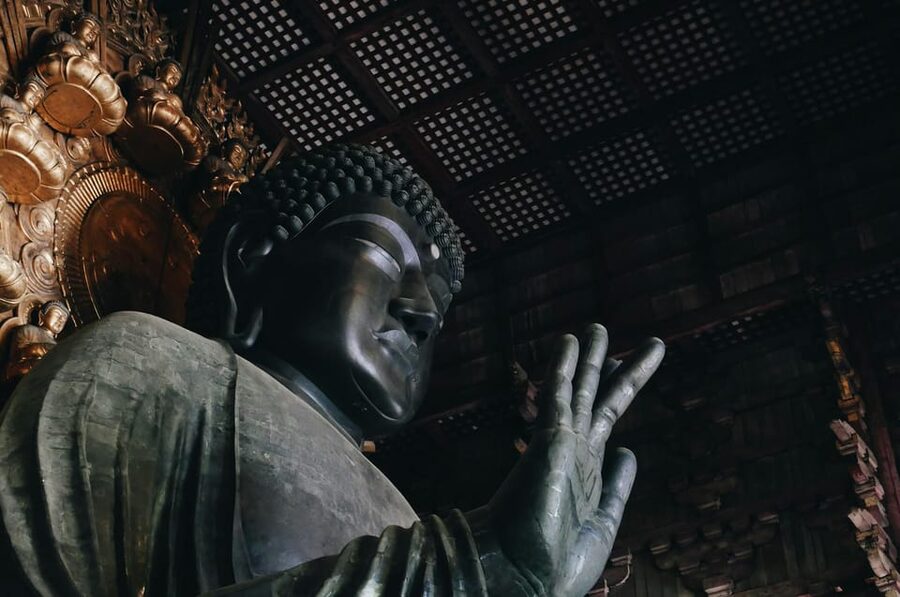
Todaiji is the tour’s largest historical stop, with about an hour set aside for guided sightseeing and walking. The temple is home to the Great Buddha, a huge bronze figure seated inside the Great Buddha Hall, or Daibutsuden.
Scale is the point here. The hall and statue are difficult to take in from a quick photograph, so a guide’s explanation helps you notice how the space is organized and why the Buddha commands the room. The visit also includes temple artifacts, ancient scriptures, and detailed woodwork, giving you more than one famous statue to look at.
Do not rush the approach. The Nandaimon Gate, guarded by fierce Nio statues, creates a powerful entrance before you reach the main hall. The guardians have a very different mood from the gentle deer outside, and that change helps you feel the shift from open park to sacred temple grounds.
At the rear of the temple, look for the pillar with a hole said to grant enlightenment to anyone who can squeeze through it. Children often treat it as a challenge. Adults may prefer to admire the idea from a safe distance. The guide can explain the tradition while you decide how flexible your shoulders are.
Entrance fees are included, a useful detail because Todaiji is the kind of major sight where admission costs can add up during a busy Japan itinerary. You also avoid spending your limited time working out what to see first. The guide keeps the visit moving while leaving room for questions.
The tradeoff is time. Todaiji has enough art, architecture, and religious meaning for a much longer visit. One hour gives you the essential experience, not a slow study of every object. If Todaiji is your main reason for coming to Nara, consider returning independently for a second look.
Lanterns and forest air at Kasuga Taisha
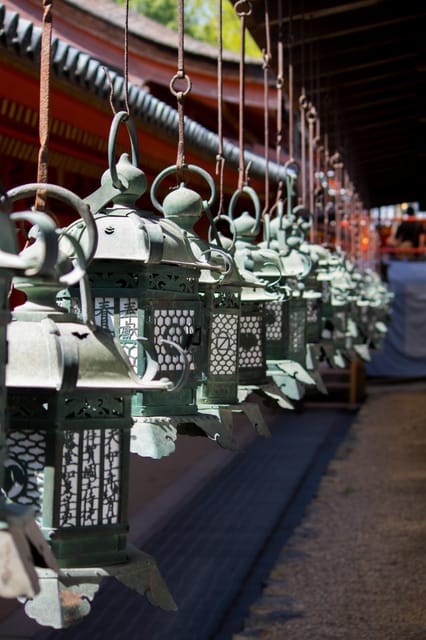
After Todaiji, the tour moves to Kasuga Taisha, another major Nara sight with about 45 minutes for guided sightseeing. The mood changes again. Instead of Todaiji’s massive hall and bronze Buddha, you get vermilion-lacquered shrine buildings, wooded paths, carved details, and rows of hanging lanterns.
Kasuga Taisha was founded in the eighth century and has served Shinto rituals and ceremonies for more than a thousand years. That long use gives the shrine a sense of continuity, but the visit remains easy to understand: the guide connects the buildings, lanterns, and rituals to the beliefs that shaped Nara.
Thousands of lanterns hang around the shrine, creating one of the site’s most memorable visual details. They are especially striking during festivals, when many are lit. On an ordinary visit, you may see the lanterns without the full festival display, so keep your expectations focused on the architecture, setting, and sheer number of them.
I like this stop because it keeps the tour from becoming a parade of grand indoor sights. Kasuga Taisha gives you a slower, more reflective section, with greenery and shrine buildings working together. The 45-minute schedule is enough for an introduction, though not enough for every corner of the grounds.
As with Todaiji, a guide adds context that is easy to miss on your own. The difference between a Buddhist temple and a Shinto shrine can be confusing when you are seeing several sacred sites in one day. Clear commentary helps you understand why both places belong in Nara’s cultural story.
Other temple visits near Japan we have written up
- Kyoto: Tea Ceremony Ju-An at Jotokuji Temple
★ 4.9 · 3,207 reviews - Osaka/Kyoto:Kinkakuji,Arashiyama,FushimiInariShrine,NaraPark
★ 4.1 · 1,596 reviews - Tokyo: Asakusa Walking Tour with Sensoji Temple Visit
★ 4.8 · 1,583 reviews - Nikko: Kegon Falls, Lake Chuzenji & Toshogu Temple
★ 4.6 · 1,577 reviews
Traditional houses and snacks in Naramachi
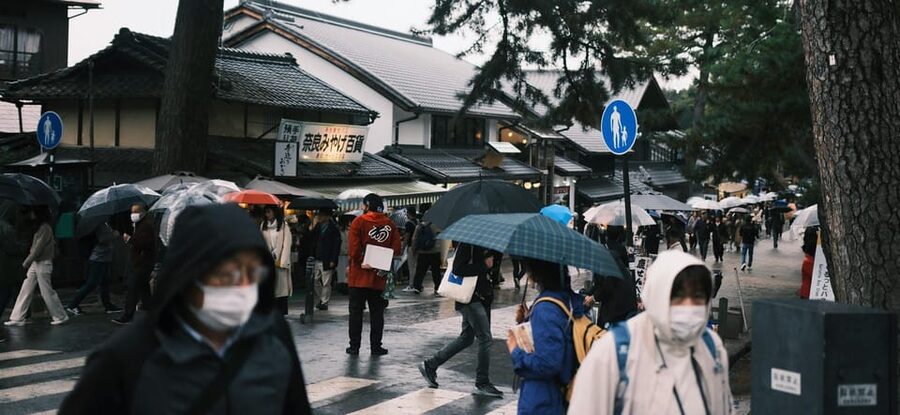
The last major stop is Naramachi, an old town district known for its traditional machiya houses. These narrow wooden buildings give the neighborhood a more intimate scale than the temple grounds, and the change is welcome after several hours of formal sights.
You will have about 45 minutes for shopping, sightseeing, and a food market visit. Shops offer handmade crafts, local products, and vintage items. This is a good place to look for a small souvenir with a connection to Nara rather than a generic airport purchase.
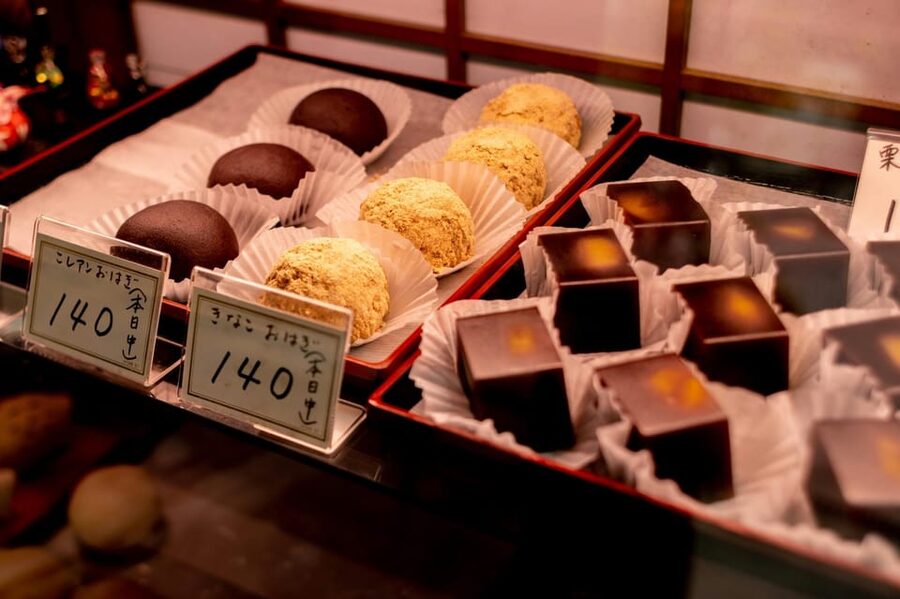
The food is part of the appeal. You may see savory street food and sweets, and the tour includes one traditional Japanese snack. Lunch is not included, so treat this stop as a taste and browsing period rather than a full meal.
The included snack is a small but smart feature. Food gives you a direct way to connect with the neighborhood, and it means you can sample something without immediately adding another expense. You still pay for extra snacks, drinks, or souvenirs, so bring some spending money if Naramachi catches your eye.
Naramachi also makes the ending practical. Instead of finishing at a large temple entrance, you return to the area around 3 Higashimuki Nakamachi. From there, you can continue shopping, find lunch, or make your way back to Kintetsu Nara Station.
What the guide adds to the four-hour route
The experience is conducted in English with a live professional guide. The guide is not there only to point out buildings. The strongest version of this tour connects the deer, Buddhist temple, Shinto shrine, and old merchant district so that Nara feels like one place rather than four unrelated stops.
Recent guide names connected with the experience include Ferdinand and Angelito. Ferdinand is described as helpful and well informed about the sights. Angelito is associated with local advice about feeding the deer, Naramachi shops, dinner places, and taking good souvenir photos.
Those practical touches matter. A guide who can show you how to approach the deer or point you toward local products can save time and make the day feel less like a checklist. The guide has also been praised for adapting to walking difficulties and using humor, so you can ask early if you need a slower pace or a short pause.
Guide quality can vary by departure, of course. The listed language is English, and private or small groups are available. If you care about a particular guide, ask when booking rather than assuming a named guide is guaranteed.
Is $102 a fair price?
At $102 per person, this is not the cheapest way to see Nara. The value depends on how much you want explanation and organization rather than simply access to the sights.
The price includes a professional guide, public transportation, entrance fees, guided tours, commentary, and one traditional snack. You avoid separate admission planning and get a route that links the park, Todaiji, Kasuga Taisha, and Naramachi in four hours.
For a first visit, that package can make sense. Nara’s sights are close enough to connect but spread across enough ground that a poorly timed visit can become tiring. A guide also helps you understand the religious meaning behind the deer, temple, shrine, and architecture instead of just photographing them.
The price makes less sense if you already know Nara well, prefer to move slowly, or want to spend most of the day at Todaiji alone. You will have limited time at each stop, and lunch, extra snacks, souvenirs, and other personal expenses are not covered.
You can reserve now and pay later, and cancellation is free up to 24 hours before the start for a full refund. Those terms help if your Japan schedule is still shifting, but they do not change the central question: are you paying for access, or for a well-explained route? Here, you are mainly paying for the latter.
Walking, timing, and comfort
Four hours sounds manageable, but the route includes several walking sections, temple grounds, shrine approaches, and time on your feet. Wear comfortable shoes, as requested by the operator, and avoid treating this as a dress-up outing.
The tour is wheelchair accessible. That is useful, but accessibility does not mean every minute will feel effortless. The route still includes outdoor movement and large cultural sites. If you use a wheelchair or have limited mobility, discuss your needs with the guide at the beginning.
Starting times vary, so check availability before booking. A morning departure may leave your afternoon open for more Nara sightseeing. An afternoon departure can work well if you want a slower start, but the exact light and activity around the shrine lanterns will depend on the time of day.
The tour returns to its starting area, which simplifies the rest of your plans. You do not need to arrange a separate pickup at the final sight.
Who should book this Nara walk?
I would choose this tour for a first-time visitor who wants the major Nara sights explained in plain English. It is also a good match for anyone who likes a mix of animals, religion, architecture, local streets, and food rather than a tour focused only on temples.
Families may enjoy the deer, the Great Buddha, and the pillar-hole tradition. Couples and small groups will appreciate the photo opportunities and the chance to browse Naramachi afterward. Visitors who need a more adaptable pace should consider the private or small-group option and explain their needs before setting out.
I would be more cautious if you dislike crowds, have very limited walking ability, or want extended time for photography and quiet observation. The route is full and efficient. That is its strength, but it also means you cannot linger everywhere.
Should you book the Nara Heritage Walkabout?
Book it if you want one organized half-day that covers Nara’s essentials without turning the day into a history lecture. The deer, Todaiji, Kasuga Taisha, and Naramachi each offer something different, and the route makes those contrasts easy to understand.
Skip it if you prefer complete freedom, already know the sites, or plan to spend several hours inside Todaiji alone. For most first visits, though, the combination of included admissions, an English-speaking guide, public transportation, a local snack, and a small-group option gives the $102 price a reasonable purpose.
FAQ
Where does the tour meet?
The meeting point is the Lawson convenience store directly outside Kintetsu Nara Station.
How long does the experience last?
The tour lasts four hours.
What language is the tour conducted in?
The live tour guide provides the tour in English.
Is the tour private or shared?
Private and small-group options are available.
Is the tour wheelchair accessible?
Yes, the activity is listed as wheelchair accessible.
Are entrance fees included?
Yes, entrance fees for the included sights are covered.
Is public transportation included?
Yes, public transportation is included in the activity.
Is lunch included?
No. Lunch is not included, and you also pay separately for personal expenses, extra snacks, souvenirs, and activities not listed.
Do I need comfortable shoes?
Yes. The route includes a fair amount of walking, so comfortable shoes are recommended.
Can I cancel for a full refund?
Yes. You can cancel up to 24 hours in advance for a full refund.
Can I reserve now and pay later?
Yes. You can reserve your place and pay nothing at the time of booking.
Newly written up around Japan
- From Asakusa: Old Tokyo, Temples, Gardens and Pop Culture★ 5.0 · 47 reviews
- Goshuin Collecting tour at Asakusa Local Temples & Shrines, Tokyo★ 5.0 · 8 reviews
- Private guided tour: Mt. Aso volcano, grasslands, Aso Shrine★ 5.0 · 19 reviews
- Takayama Inari Shrine Tour with Private Transportation★ 5.0 · 5 reviews
- Tokyo: Snow Monkey and Zenkoji Temple Day Trip In Low Price★ 5.0 · 5 reviews
- Tokyo: Gotokuji Culture Walk & Lucky Cat Temple Experience★ 4.9 · 5 reviews
- :Tokyo,Shibuya /Meiji Shrine tour in KIMONO/English-friendly★ 5.0 · 4 reviews
- Tokyo War History Tour: Yasukuni Shrine & War Museum★ 4.5 · 6 reviews
Historical Tours, compared.
Mt. Fuji Heritage Tour: Traditional Villages, Lakes & Shrine
Read our review →
Malta: Prehistoric Temples, Limestone Heritage & Blue Grotto
Read our review →
Day Trip From Addis Ababa See Historical Monastery,Stunning Nature,Animals,Birds
Read our review →
Beijing Historical Tour II including Summer Palace, Lama Temple & Panda Garden
Read our review →
“Porto: Fado Show with Guided Tour in a Historic Monastery”
Read our review →
Private Half-Day Temples and Cultural Tour in Kuala Lumpur
Read our review →
Beijing Historical Tour I – Forbidden City, Tiananmen Square & Temple of Heaven
Read our review →Browse the lists this tour appears in