
Reviewed · MEIJI SHRINE & SENSO-JI TOURS
Tokyo: Harajuku Meiji Shrine to Shibuya Crossing Guided Tour
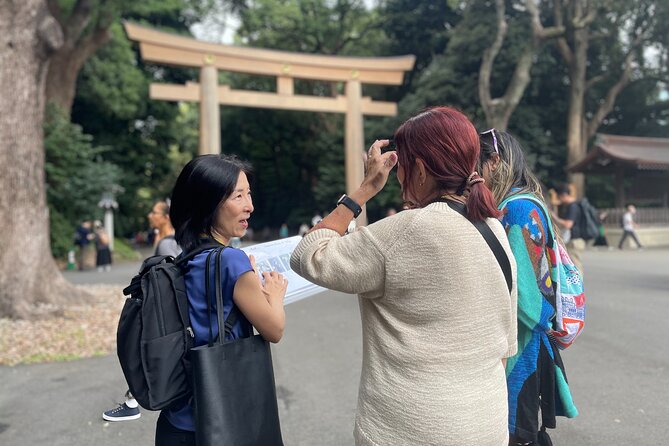
Meiji Jingu is the heart of this short Tokyo walk. You begin among towering trees and quiet shrine grounds, then move through Harajuku’s youthful Takeshita Street before finishing at Shibuya Crossing. I like the sharp contrast between old Japan and modern Tokyo, and I like that the guide explains how to behave at a shrine rather than simply pointing at buildings.
The small group of up to 10 keeps the walk personal, and guides such as Shigure and Masahito have been praised for answering questions and setting an easy pace. The main drawback is time: two hours gives you a useful introduction, but not much freedom for shopping, long photo stops, or an extended meal.
Key points at a glance
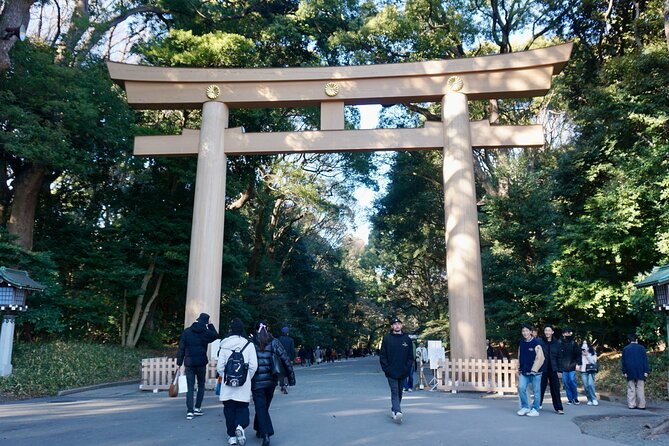
- Meiji Jingu comes first: Learn the shrine’s origins, customs, and proper visiting manners with an English-speaking guide.
- The route changes mood quickly: Move from forested shrine grounds to the loud, youthful shops of Takeshita Street.
- A Japanese crepe is part of the experience: The tour highlights this Harajuku specialty, though the listed inclusions cover the guide and omikuji fee, not the food cost.
- Shibuya Crossing provides the finale: Take group pictures from a scenic viewing point above the famous intersection.
- Hachiko adds a human story: Hear the sad tale behind Tokyo’s best-known symbol of loyalty.
- The pace suits a first visit: Seven perfect ratings praise friendly guides, useful cultural detail, and a well-managed two-hour route.
Starting at Harajuku Station
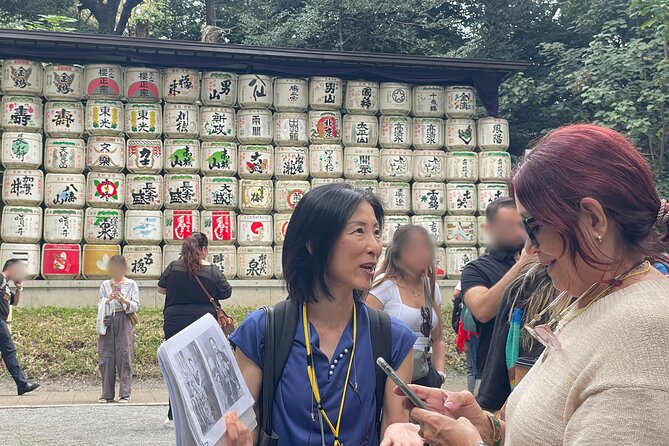
Your meeting point is the west exit of JR Harajuku Station. Look for a guide holding a sign marked gotcha. This is a practical meeting place if you are already using the JR line, but give yourself enough time to find the correct exit. Harajuku Station can feel confusing when you are watching the crowds and station signs at the same time.
The route is designed as a one-way introduction to three different sides of Tokyo. You do not spend the whole tour inside one attraction. Instead, the guide connects a major shrine, Harajuku’s street culture, and Shibuya’s city spectacle.
That structure matters. If you are visiting Tokyo for the first time, it is easy to treat these neighborhoods as separate photo stops. A guide helps explain why they feel so different and how they fit together in the city. You also meet the guide at the start, rather than trying to locate an attraction on your own.
The tour is limited to 10 people. That is large enough to create a social outing but small enough for questions and group movement. Several guides have been praised for warmth, useful answers, and a comfortable pace. The experience is offered in English.
More Meiji Shrine and Senso-ji Tours in Tokyo:
- Tokyo: Asakusa Walking Tour with Sensoji Temple Visit
★ 4.8 · 1,583 reviews - Tokyo Panoramic 1 Day: Meiji Shrine, Asakusa, Odaiba and SKYTREE®
★ 4.5 · 1,222 reviews - Tokyo: Asakusa and Tokyo’s Oldest Temple Senso-ji Tour
★ 4.9 · 352 reviews
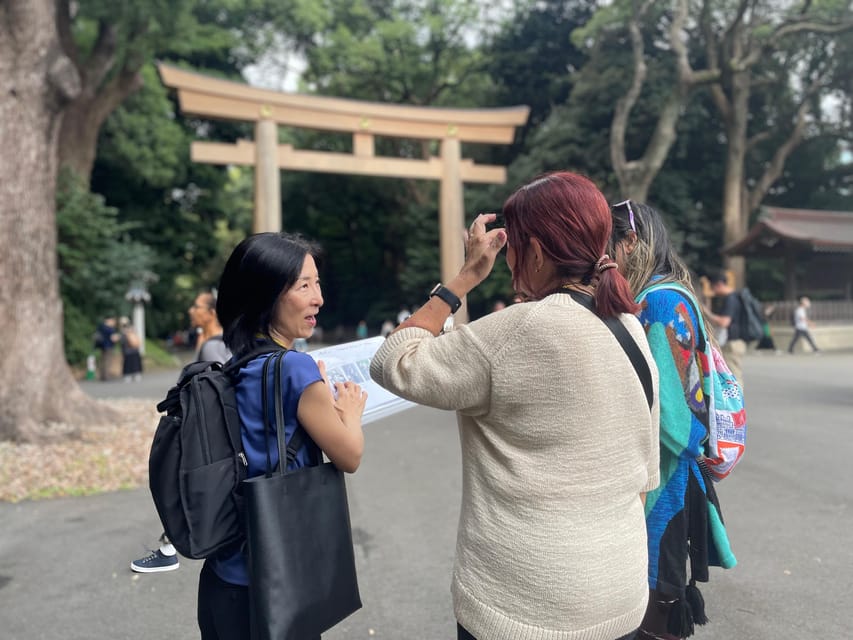
Entering Meiji Jingu’s forest
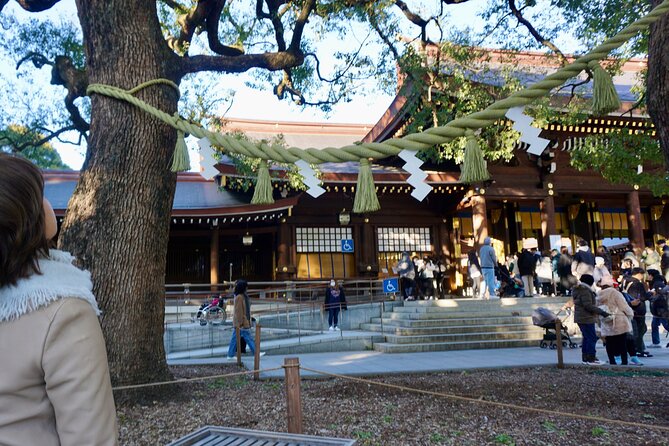
Meiji Jingu is the quietest and most traditional part of the walk. The shrine is associated with Emperor Meiji and Empress Shoken, and it is known as Japan’s most visited shrine for Hatsumode, the first shrine visit of the New Year.
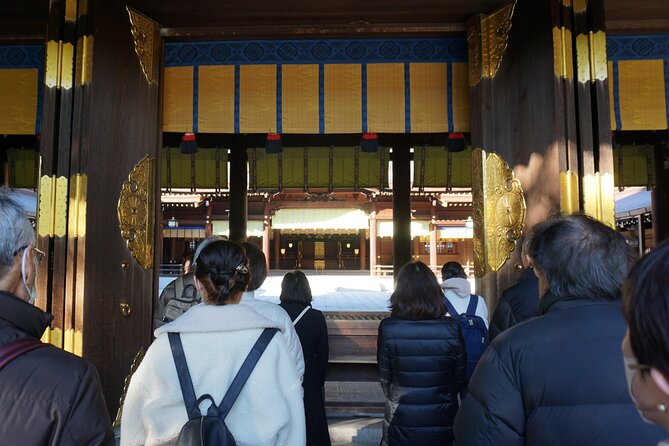
Your guide explains the shrine’s origins and how to visit respectfully. That practical instruction is one of the tour’s strongest features. You can learn what to do at the entrance, how to approach the shrine, and how to make a wish without having to copy the person in front of you.
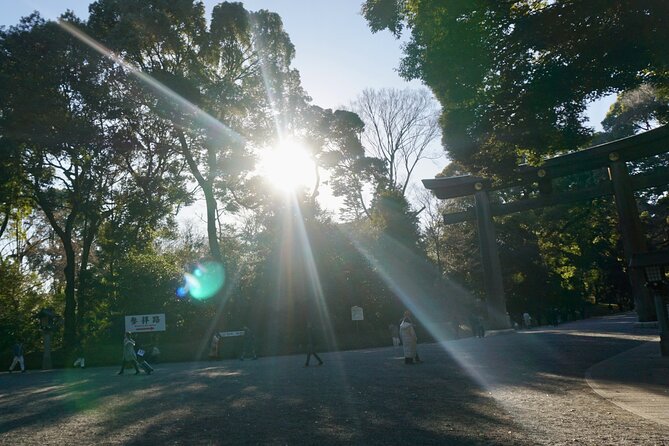
The grounds also give you a welcome break from Tokyo’s hard surfaces and traffic. The supplied description emphasizes the sense of natural energy here, and that is a useful way to understand the appeal. The visit is not only about a religious building. It is about the change in atmosphere as you move from the station into a broad wooded setting.
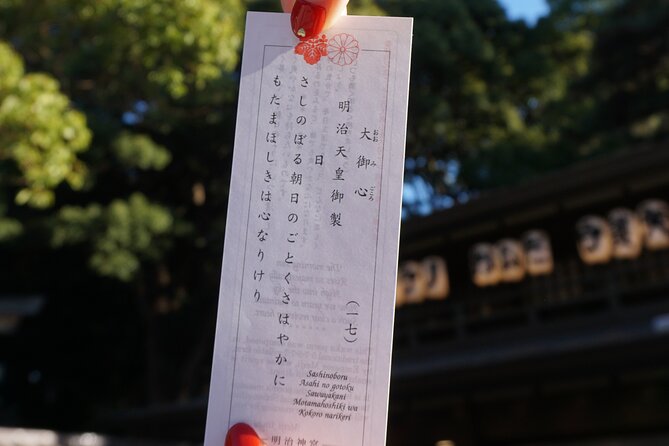
The included omikuji fee adds a small hands-on ritual. An omikuji is a fortune paper, and the guide can help place this custom in context. It is a simple detail, but it gives you something personal to do at the shrine instead of treating the stop as a quick photograph.
One visitor specifically praised learning about Japanese customs and making a wish at the shrine. That is the kind of moment this tour handles well. You receive enough explanation to make the visit feel meaningful, while still keeping the pace moving.
Do not expect a long historical lecture. Two hours must cover several neighborhoods, so the shrine section is an introduction rather than a full study of Shinto or Meiji-era Japan. If Meiji Jingu is your main reason for visiting, you may want to return later with more time.
From shrine quiet to Takeshita Street
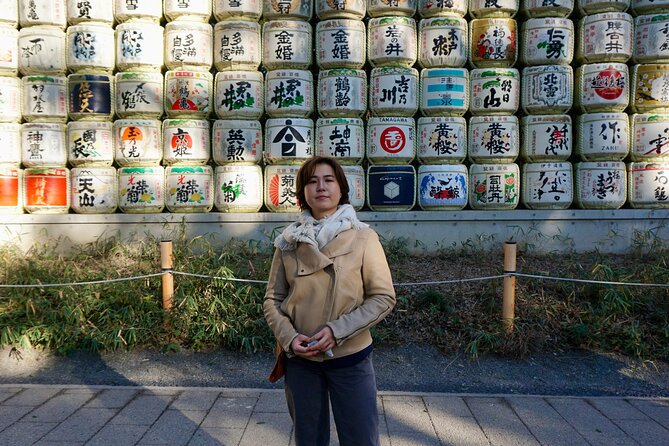
The shift from Meiji Jingu to Takeshita Street is the route’s best visual joke. One moment you are thinking about shrine etiquette and wooded paths. Soon you are facing Harajuku’s famous shopping street, where fashion, snacks, and youthful style take over.
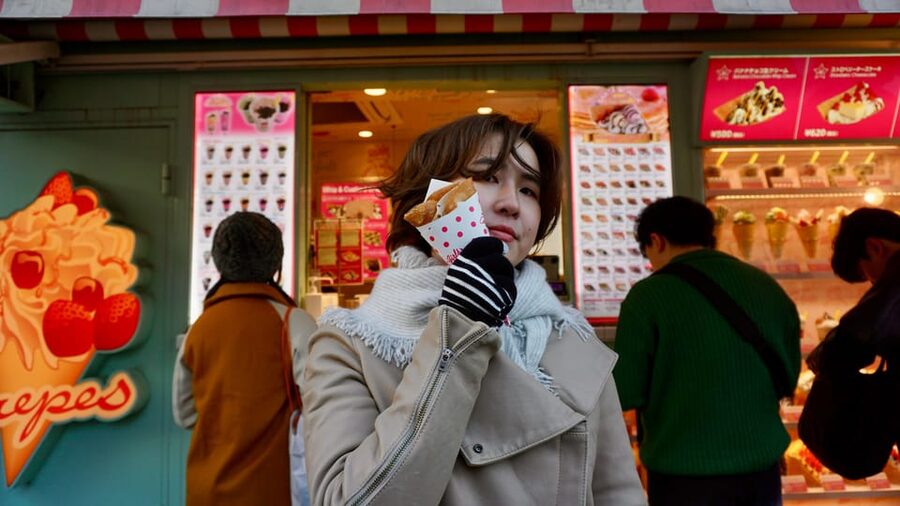
Takeshita Street is known for Japanese-style crepes, and sampling one is a central part of the outing. This is not a formal meal. It is a quick taste of the sweet, highly decorated snack associated with Harajuku. If you have never tried one, the stop gives you a simple way to join in without planning a separate food search.
Pay attention to the wording of the inclusions when you budget. The listed inclusions are the tour guide and the omikuji fee. The description says you will savor a Japanese crepe, but it does not state that the crepe is included in the $78 price. I would carry some extra money for the food and any shopping.
Takeshita Street can be crowded, and the tour does not promise a long browsing session. That is both a limit and a benefit. You get a taste of Harajuku without losing the rest of the route, but you will not have much time to inspect every shop or stop whenever you see an appealing snack.
I like this middle section because it keeps the tour from becoming too solemn. Meiji Jingu teaches you how to approach a sacred place. Takeshita Street shows you a playful side of Japanese city life. The contrast is more useful than visiting two similar attractions in a row.
Walking toward Shibuya Crossing
The route continues on foot toward Shibuya. The supplied information does not give an exact distance or step count, so you should think of this as a guided neighborhood walk rather than a vehicle-based transfer.
The guide keeps the group moving toward the final photo stop. This is where the experience works best for people who want orientation. You see the connection between Harajuku and Shibuya rather than simply appearing at Shibuya Crossing by train.
A two-hour schedule requires discipline. If you stop for many photographs, spend a long time eating, or shop along the way, the group will have less time at Shibuya. The guides are praised for maintaining a good pace, so expect a structured walk rather than a completely free afternoon.
This is also the point where the group format can be helpful. A guide can keep everyone together and answer questions as the surroundings change. The route is short enough to feel manageable, but active enough that comfortable walking shoes make sense.
Other temple visits near Tokyo we have written up
- Nikko: Kegon Falls, Lake Chuzenji & Toshogu Temple
★ 4.6 · 1,577 reviews - Tokyo: Nikko Toshogu Shrine and Kegon Waterfall Tour
★ 4.5 · 1,266 reviews - Tokyo: Zen Meditation at a Private Temple with a Monk
★ 5.0 · 510 reviews - Mt. Fuji Heritage Tour: Traditional Villages, Lakes & Shrine
★ 4.5 · 509 reviews
Hachiko’s story at Shibuya
Before the final viewpoint, you visit the Hachiko statue. Hachiko is famous for his loyalty, and the guide explains the sad story connected with this symbol.
The statue is more than another landmark to check off. It gives Shibuya a human story before the tour returns to the larger spectacle of the crossing. After the guide explains Hachiko, the area’s constant movement feels a little less anonymous.
This stop is brief, but it adds emotional balance to the route. Meiji Jingu connects you with ceremony and tradition. Takeshita Street brings food and youth culture. Hachiko gives you a story about loyalty, memory, and the way Tokyo turns a local history into a public meeting point.
Because the tour has only two hours, do not expect an extended visit around the statue. The guide’s role is to explain why it matters and help you understand its place in Shibuya, not to provide a full history of the surrounding district.
The final view of Shibuya Crossing
The tour ends with views over Shibuya Crossing, one of Tokyo’s most recognizable city scenes. You can take group photos against the moving backdrop, then say farewell from a scenic vantage point overlooking the intersection.
This is a strong ending because the crossing is best understood from above. At street level, you are part of the flow. From a viewing point, you can watch the pattern of people, traffic, signs, and buildings come together.
Your guide helps turn a famous photo into a shared moment. That matters if you are traveling alone or want someone to take a group picture. The tour specifically includes group photos as part of the Shibuya stop.
There is a trade-off. The experience ends at the overlook rather than giving you a long block of unstructured time in Shibuya. If you want to shop, visit more viewpoints, or explore the district’s food options, plan to continue on your own after the farewell.
Still, the route gives you a satisfying visual finish. You begin in a calm shrine setting and end above one of Tokyo’s busiest intersections. In two hours, the city’s contrasts are clear.
What the $78 price gives you
At $78 per person, this is not the cheapest way to walk between Harajuku and Shibuya. You can visit Meiji Jingu and Shibuya Crossing independently, and the distance between the districts is manageable for many people.
The value comes from the interpretation and structure. You are paying for an English-speaking local guide, a planned route, shrine customs explained in context, the omikuji fee, and help with the transition between several major stops. You also avoid spending your first hours deciding what to do next.
The small group improves the value. With no more than 10 participants, the guide can answer questions and keep the walk from becoming anonymous. The strong feedback about Shigure, Masahito, and other guides centers on friendliness, cultural explanations, and a pace that does not feel rushed.
I would consider the price reasonable if you want orientation and cultural context more than independent exploration. It is less compelling if you already know Harajuku and Shibuya well, or if you prefer to spend your money on food and shopping.
Remember to allow extra money for the crepe, since the listed inclusions do not clearly say that it is covered. The reservation terms also allow you to cancel up to 24 hours in advance for a full refund, and you can reserve now and pay later. Those options are useful when your Tokyo plans are still shifting.
Who will enjoy this two-hour route
I would recommend this walk to a first-time Tokyo visitor who wants a clear introduction without committing to a full-day tour. It suits people who enjoy hearing the meaning behind customs, taking photos, and moving through several districts at a steady pace.
It is also a good choice for solo visitors. The small group creates an easy social setting, and the final group photo solves a common problem when you want a picture of yourself at Shibuya Crossing.
Families and older participants should consider the walking pace and crowd levels. The tour information does not provide accessibility details, step counts, or a detailed walking distance, so ask the provider if those factors are important for your group.
Food-focused visitors may find the crepe stop appealing, but this is not a dedicated food tour. You get one highlighted Harajuku snack, not a long series of tastings.
Independent explorers should also think carefully. You will have less freedom to linger at Meiji Jingu, browse Takeshita Street, or explore Shibuya during the two-hour route. The benefit is that someone else handles the order, timing, and explanations.
What to know before you book
Arrive at the west exit of JR Harajuku Station and look for the gotcha signboard. The meeting point is specific, and finding it calmly will make the first few minutes easier.
Wear shoes suitable for walking. The exact distance is not provided, but the experience moves from the shrine through Harajuku and onward to Shibuya on foot.
Keep the schedule in mind. This is a compact introduction, not a slow private tour. You will get the most from it if you are ready to listen during the shrine visit, enjoy a quick crepe stop, and keep moving between photo opportunities.
Bring some extra spending money for the crepe and any purchases at Takeshita Street. The omikuji fee is included, along with the guide, but the food inclusion is not clearly stated.
Should you book this Harajuku and Shibuya tour?
Book it if you want a friendly, tightly planned introduction to Meiji Jingu, Harajuku, and Shibuya in one short outing. The strongest reasons are the small group, clear shrine guidance, useful cultural explanations, and the contrast between the forested shrine and the city crossing.
Skip it if you already know these neighborhoods or want a slow shopping and food day. You will be following a set route, and two hours leaves little room for detours.
For a first Tokyo visit, I think the route earns its place when you value context as much as photos. Guides such as Shigure and Masahito have been singled out for warmth, detailed answers, and a well-paced walk. Add a little extra money for the crepe, arrive at the correct station exit, and you will be ready for a compact introduction to three very different faces of Tokyo.
FAQ
How long does the tour last?
The tour lasts two hours.
Where does the tour meet?
The meeting point is the west exit of JR Harajuku Station. The guide waits there with a signboard marked gotcha.
What language is the tour offered in?
The live tour guide speaks English.
How many people can join the tour?
The tour is a small-group experience limited to 10 participants.
Is the omikuji fee included?
Yes. The omikuji, or fortune paper, fee is included.
Is the Japanese crepe included in the price?
The tour description includes eating a Japanese-style crepe, but the listed inclusions only specify the guide and omikuji fee. The food cost is not clearly stated as included.
Can I cancel the booking for a refund?
Yes. You can cancel up to 24 hours in advance for a full refund. You can also reserve now and pay later.
Newly written up around Tokyo
- Tokyo: Snow Monkey and Zenkoji Temple Day Trip In Low Price★ 5.0 · 5 reviews
- Tokyo: Gotokuji Culture Walk & Lucky Cat Temple Experience★ 4.9 · 5 reviews
- :Tokyo,Shibuya /Meiji Shrine tour in KIMONO/English-friendly★ 5.0 · 4 reviews
- Tokyo: Sensoji Temple & Street Food: Private Tour with guide★ 4.6 · 8 reviews
- Tokyo: Visit 5 Shrines & Collect Goshuin on Private Tour★ 5.0 · 3 reviews
- Tokyo War History Tour: Yasukuni Shrine & War Museum★ 4.5 · 6 reviews
- Tokyo: Shibuya Sky, Harajuku & Meiji Shrine Highlights Tour★ 4.5 · 9 reviews
- Tokyo: Private Meiji Shrine & Harajuku Highlights Tour★ 4.5 · 4 reviews
Meiji Shrine & Senso-ji Tours, compared.
Asakusa Walking Tour with Sensoji Temple Visit
Read our review →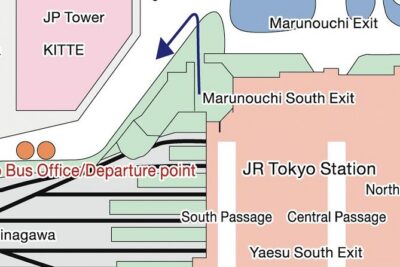
Tokyo Panoramic 1 Day: Meiji Shrine, Asakusa, Odaiba and SKYTREE®
Read our review →
Asakusa Senso-ji Temple and Old Tokyo Walking Tour
Read our review →
Asakusa and Tokyo’s Oldest Temple Senso-ji Tour
Read our review →
Meiji Shrine Walking Tour — Shinto & Imperial System
Read our review →
Meiji Jingu Shrine and Shinto Culture Walking Tour
Read our review →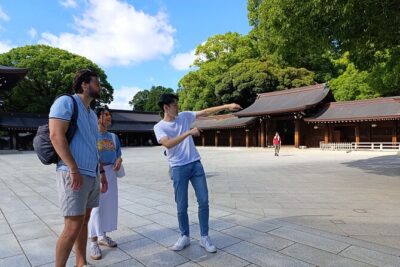
Meiji Shrine Walking Tour — Shintoism & Imperial System
Read our review →Browse the lists this tour appears in