
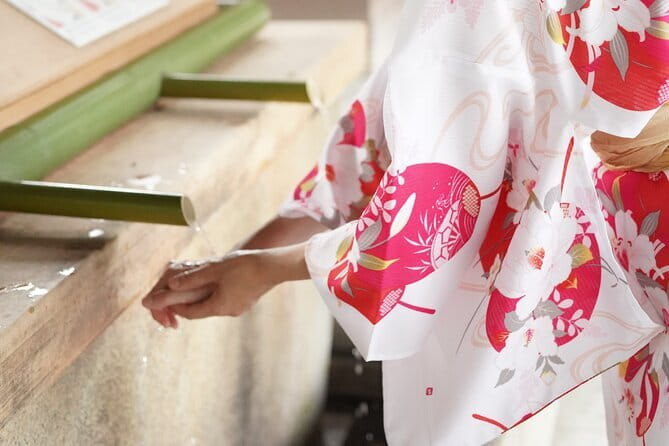
Reviewed · MEIJI SHRINE & SENSO-JI TOURS
:Tokyo,Shibuya /Meiji Shrine tour in KIMONO/English-friendly
Wearing a kimono or yukata gives this Meiji Shrine visit a clear sense of occasion. You choose your outfit at the SHIBUI shop, then walk with an English-speaking guide through torii gates, barrel displays, the forest, main shrine, and prayer hall. I like the very short walk to both the shrine and Takeshita Street, and I like that the guide explains Shinto customs rather than treating the kimono as a simple costume.
The main consideration is timing. The guided walk lasts about an hour, but the full booking takes three hours because you need time to dress, take photos, explore on your own, and change back. The shop is in an apartment building on the fourth floor, so find the building carefully at the meeting point: Jingumae Room 413, Harajuku Cope Annex.
Key points at a glance
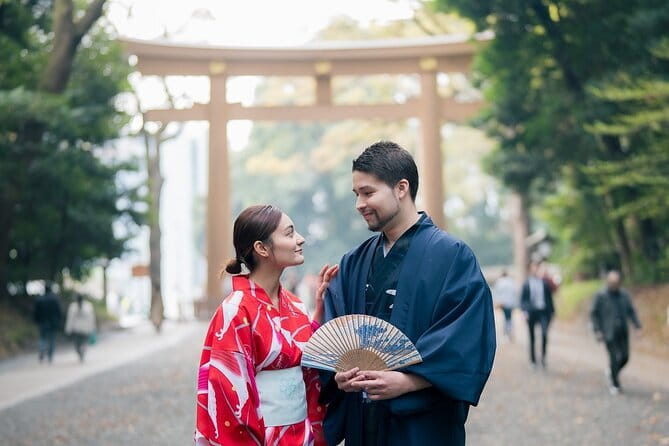
- Choose your own kimono or yukata: The rental is included, with free choices of colors, slippers, bags, and accessories.
- Six Meiji Shrine stops: The route includes torii gates, sake barrels, wine barrels, the shrine forest, the main shrine, and the Shinto prayer hall.
- English-speaking guidance: A small group of up to 10 people receives a one-hour explanation of the shrine and its customs.
- Photos are part of the plan: Your guide can take photos and can also help record video during the visit.
- Handy Harajuku location: The shop is close to Meiji Shrine and about two minutes from Takeshita Street.
- Extra charges to note: Hair styling costs 2,000 JPY, while museum and Inner Garden admission are not included.
Choosing a Kimono Near Takeshita Street
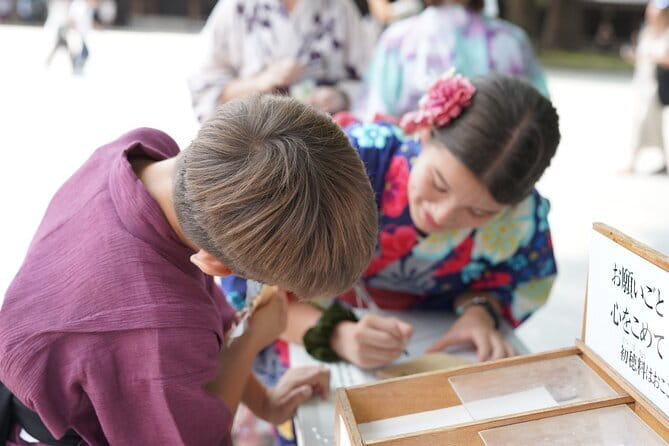
The experience begins at Harajuku Kimono SHIBUI, listed at Jingumae Room 413 in the Harajuku Cope Annex building. The shop sits close to Meiji Shrine and Takeshita Street, which makes this easy to fit into a day focused on Harajuku.
Give yourself time to locate the entrance and reach the fourth floor. This is not a street-level shop with a large storefront, so the building detail matters. One practical note from a previous booking is that the shop is in an apartment building, not an obvious standalone boutique.
At the shop, you can choose from both kimono and yukata. A kimono is the more formal traditional garment, while a yukata is lighter and more casual. The available collection covers different ages, colors, and styles, so you are not locked into one outfit selected for you.
Your rental also includes suitable slippers, a bag, and accessories at no extra charge. That is useful because the small details make the outfit look finished, and you do not need to shop for matching items beforehand.
Hair styling is optional and costs 2,000 JPY, paid at the shop. The base experience does not include it, so decide ahead of time if you want a more polished photo session. The supplied details do not specify how long the dressing process takes, so arrive with enough time before the scheduled start rather than cutting it close.
More Meiji Shrine and Senso-ji Tours in Tokyo:
- Tokyo: Asakusa Walking Tour with Sensoji Temple Visit
★ 4.8 · 1,583 reviews - Tokyo Panoramic 1 Day: Meiji Shrine, Asakusa, Odaiba and SKYTREE®
★ 4.5 · 1,222 reviews - Tokyo: Asakusa and Tokyo’s Oldest Temple Senso-ji Tour
★ 4.9 · 352 reviews
Why the Meiji Shrine Setting Works So Well
Meiji Shrine is a particularly useful place for a kimono experience because the setting connects the clothing with living religious practice. You are not only posing in a traditional outfit. You are also learning how a major Shinto shrine is used and what its spaces mean.
The walk from SHIBUI is described as about three to five minutes, depending on the route and the exact point used for timing. That short distance keeps the outing simple. You do not need a separate train ride or a long transfer after changing clothes.
The guide leads an English-language visit of roughly 50 to 60 minutes. The group is limited to 10 people, which should make it easier to hear explanations and ask questions than on a large coach tour. The guide is Japanese, and the activity is designed for English speakers.
You will visit six recommended areas:
- Torii gates
- Sake barrels
- Wine barrels
- Meiji Shrine forest
- Main shrine
- Shinto prayer hall
The route gives you a useful mix. Some stops explain the shrine’s visual symbols, while others help you understand the setting and its religious purpose.
The Torii Gates and Barrel Displays
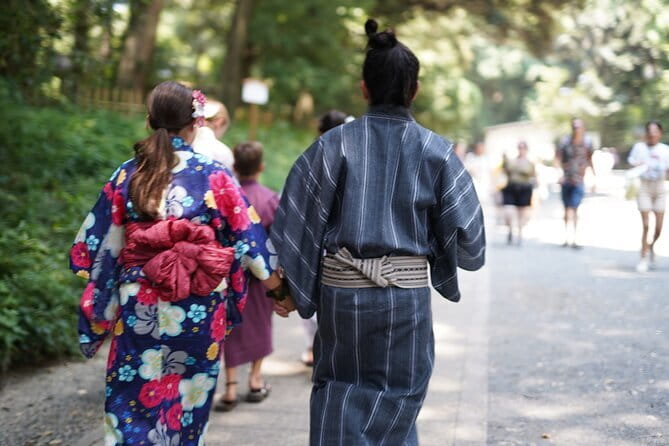
The torii gates are a natural opening stop. These gates mark the approach to a Shinto sacred area, and your guide can explain how to behave as you pass through. The gates also create one of the clearest photo settings, especially when your full outfit is visible.
Next come the sake barrels. Sake is closely linked with Shinto ceremonies and offerings, so the barrels are more than a colorful wall for photographs. They show how religion, craft, and local customs meet at the shrine.
The wine barrels offer a less expected sight. Their presence reflects an unusual connection between Meiji Shrine and French wine producers. The display gives the tour a bit of historical texture without requiring you to spend time inside a museum.
These early stops are also good for getting comfortable in the clothing. If you have never worn a kimono or yukata, the pace gives you time to adjust before the longer walk through the shrine grounds.
Walking Through the Shrine Forest
The forest is one of the most important parts of the visit. Even though the shrine is close to Harajuku’s shopping streets, the grounds provide a marked change in pace and atmosphere.
Your guide explains the forest as part of the shrine setting, rather than treating it as a simple shortcut between photo stops. This is where the experience moves beyond dress-up. You begin to see why the shrine feels separate from the busy streets nearby.
Wear the slippers provided by the shop, but remember that you will be walking for a while. The tour description does not give a total walking distance or promise a particular surface, so comfortable movement matters more than elaborate footwear. A kimono can also affect your stride, which is another reason not to rush.
The forest section may appeal most to you if you want a calmer side of Tokyo. It is also the part where taking too many photos can interrupt the visit. Let the guide explain the setting, then use the planned photo opportunities instead of stopping constantly on your own.
Other temple visits near Tokyo we have written up
- Nikko: Kegon Falls, Lake Chuzenji & Toshogu Temple
★ 4.6 · 1,577 reviews - Tokyo: Nikko Toshogu Shrine and Kegon Waterfall Tour
★ 4.5 · 1,266 reviews - Tokyo: Zen Meditation at a Private Temple with a Monk
★ 5.0 · 510 reviews - Mt. Fuji Heritage Tour: Traditional Villages, Lakes & Shrine
★ 4.5 · 509 reviews
Main Shrine and Shinto Prayer Hall

The main shrine is the central religious focus of the route. The guide introduces the place and explains the customs connected with visiting. This makes the stop more useful than a quick photograph in front of a famous building.
The Shinto prayer hall adds a practical lesson. You can learn how visitors approach prayer and what respectful behavior looks like. The exact teaching depends on the guide, but the tour is intended to explain Shinto practices in English, which helps you take part with more confidence.
Keep in mind that this is an introduction, not a full religious studies course. The guided presentation takes about an hour and includes six stops. You will receive a clear orientation, but anyone seeking long lectures on shrine architecture or Japanese religion may want a museum visit as well.
The Meiji Jingu Museum and Inner Garden are optional during your free time. Admission is not included, and you decide if you want to pay separately. This arrangement is helpful if members of your group have different interests, but it also means the advertised price does not cover every possible shrine attraction.
Photos With Your Guide
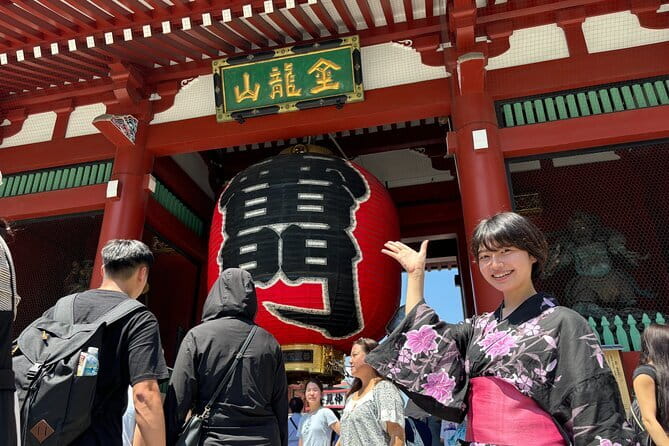
Photo help is built into the outing. Your guide can take pictures of you alone, with friends, or with family, and video is also possible. That makes a real difference when you are dressed in a full kimono and do not want every image to be a rushed selfie.
The best photo spots are connected to the route, including the torii gates and shrine grounds. Your guide knows the planned stops and can help frame the moment, but the information does not promise professional photography or edited images. Think of this as helpful photo assistance, not a formal studio session.
I would suggest deciding what kind of photos you want before you arrive. A few posed portraits, group shots, and walking images are easier to organize than trying to document every step. The three-hour schedule leaves room for photos, but it is not an unlimited photo shoot.
The setting also changes with the season. The tour presents the shrine as a place to notice seasonal details, so you may see different colors and conditions depending on your date. The supplied information does not guarantee a particular seasonal display.
Free Time After the Guided Walk
After the 50 to 60-minute presentation, you have free time to explore. The stated plan is to meet again about 1.5 hours later and return to SHIBUI to change clothes.
This is a useful part of the schedule. You are not forced to leave the shrine as soon as the guide finishes. You can revisit a favorite spot, take more photos, consider the museum or Inner Garden, or simply walk at your own speed.
At the same time, watch the clock. The group has a return meeting, and the clothing rental is tied to the three-hour experience. If you go farther into the grounds or add the optional attractions, allow enough time to get back to the shop.
The free period also gives you flexibility if you are traveling with family or friends. One person can spend more time taking photos while another visits an optional attraction. The activity does not describe separate plans for children or different mobility needs, so ask the operator directly if your group has special requirements.
Price, Group Size, and Overall Value
The listed price is $137 per group up to one person. That wording is unusual, so check the final booking screen carefully if you are booking for more than one participant. The price may be most straightforward for a solo booking, but the supplied information does not state the extra cost for additional people.
For one person, the value comes from several services combined: kimono or yukata rental, accessories, an English-language shrine walk, photo help, and time to explore independently. A basic clothing rental alone would not give you the same cultural explanation or organized route.
The small group limit of 10 is another plus. You are not signing up for a huge crowd, and the guide can keep the walk more personal. Still, the activity is not a private tour, and the exact group size on your date can vary up to that limit.
Food and drinks are not included. That is easy to manage in Harajuku, but budget separately if you plan to eat before or after. Hair styling, museum admission, and Inner Garden admission are also extra.
Free cancellation is available up to 24 hours before the start for a full refund. You can also reserve and pay later, which helps if your Tokyo schedule is still shifting. Starting times vary, so check availability for your chosen date.
Who Will Enjoy This Experience Most
I would recommend this for a first visit to Tokyo when you want one organized cultural activity without giving up half a day. The location is especially convenient if you already plan to visit Meiji Shrine, Takeshita Street, or the wider Harajuku area.
It suits solo visitors, couples, families, and friends. The included photo assistance is useful for solo guests, while the choice of colors and accessories makes it more fun for a group.
You should choose it if you want context along with the outfit. If your only goal is a quick kimono rental and a few photographs, a shorter rental service may be enough. Here, you are paying for the guide and the explanation of the shrine as much as for the clothing.
The experience may be less suitable if you dislike changing clothes, walking in traditional footwear, or keeping to a return time. The tour also does not include every paid attraction inside Meiji Shrine, so set your expectations before booking.
Practical Details Before You Book
Plan to arrive at Jingumae Room 413, Harajuku Cope Annex, and allow time to find the fourth-floor apartment location. The shop is described as a few minutes from Meiji Shrine and two minutes from Takeshita Street, but the building entrance still deserves attention.
The total duration is three hours. That includes changing, the guided walk, photo time, free exploration, and changing back. The shrine presentation itself is about one hour, followed by roughly 1.5 hours of independent time before returning to the shop.
English is the listed tour language. The activity includes a friendly Japanese guide, with English-speaking staff providing the explanations.
Bring only what you need for the outing. You will be wearing a traditional garment and carrying a bag or accessories, so a light day is simpler. Food and drinks are your own responsibility, and any purchases are separate from the tour.
Should You Book the SHIBUI Kimono Tour?
Book this if you want a convenient Harajuku activity that combines traditional clothing, basic Shinto guidance, and time for photos. The short walk to Meiji Shrine, free choice of outfit and accessories, English support, and small group size give it solid value for a first cultural stop in Tokyo.
Skip it if you only want a rental with no guided visit, or if your schedule cannot spare three hours. Also confirm the group pricing, since the listed $137 rate is described as covering up to one person.
For most visitors who want to see Meiji Shrine with more understanding and a memorable outfit, this is a sensible choice. Just note the fourth-floor meeting point, budget for optional hair styling or admissions, and leave enough time to return the kimono on schedule.
FAQ
Where does the activity meet?
The meeting point is Jingumae Room 413 in the Harajuku Cope Annex building.
How far is the shop from Meiji Shrine?
The shop is described as about three to five minutes on foot from Meiji Shrine.
How far is the shop from Takeshita Street?
The shop is about a two-minute walk from Takeshita Street.
Is kimono rental included?
Yes. Kimono and yukata rental is included in the tour package.
Can I choose my own kimono?
Yes. You can freely choose from the available kimono and yukata collection, including different colors and styles.
Are slippers, bags, and accessories included?
Yes. Suitable slippers, bags, and accessories are available without an additional charge.
Is hair styling included?
No. Hair styling is optional and costs 2,000 JPY, paid at the shop.
What language is the tour conducted in?
The tour is conducted in English with an English-speaking guide.
What places are visited at Meiji Shrine?
The route includes torii gates, sake barrels, wine barrels, the Meiji Shrine forest, the main shrine, and the Shinto prayer hall.
Are the Meiji Jingu Museum and Inner Garden included?
No. They are optional, and admission fees are not included.
How long does the activity last?
The full activity lasts three hours. The guided shrine presentation takes about 50 to 60 minutes, followed by free time before you return to change clothes.
How large is the group?
The activity is a small group tour limited to 10 participants.
Are food and drinks included?
No. Any food and drinks you buy are paid for separately.
Can I cancel for a refund?
Yes. You can cancel up to 24 hours in advance for a full refund.
Newly written up around Tokyo
- Tokyo: Snow Monkey and Zenkoji Temple Day Trip In Low Price★ 5.0 · 5 reviews
- Tokyo: Gotokuji Culture Walk & Lucky Cat Temple Experience★ 4.9 · 5 reviews
- Tokyo: Sensoji Temple & Street Food: Private Tour with guide★ 4.6 · 8 reviews
- Tokyo: Visit 5 Shrines & Collect Goshuin on Private Tour★ 5.0 · 3 reviews
- Tokyo War History Tour: Yasukuni Shrine & War Museum★ 4.5 · 6 reviews
- Tokyo: Shibuya Sky, Harajuku & Meiji Shrine Highlights Tour★ 4.5 · 9 reviews
- Tokyo: Private Meiji Shrine & Harajuku Highlights Tour★ 4.5 · 4 reviews
- Tokyo: Mt. Fuji, Owakudani, Hakone Shrine, & Open-Air Museum★ 4.7 · 25 reviews
Meiji Shrine & Senso-ji Tours, compared.
Asakusa Walking Tour with Sensoji Temple Visit
Read our review →
Tokyo Panoramic 1 Day: Meiji Shrine, Asakusa, Odaiba and SKYTREE®
Read our review →
Asakusa Senso-ji Temple and Old Tokyo Walking Tour
Read our review →
Asakusa and Tokyo’s Oldest Temple Senso-ji Tour
Read our review →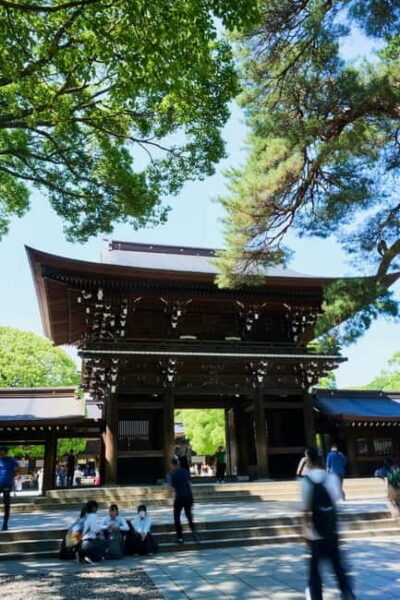
Meiji Shrine Walking Tour — Shinto & Imperial System
Read our review →
Meiji Jingu Shrine and Shinto Culture Walking Tour
Read our review →
Meiji Shrine Walking Tour — Shintoism & Imperial System
Read our review →Browse the lists this tour appears in