
Reviewed · KYOTO TEMPLE TOURS
Kyoto: Arashiyama Bamboo Forest, Monkeys, Matcha & Temple Tour
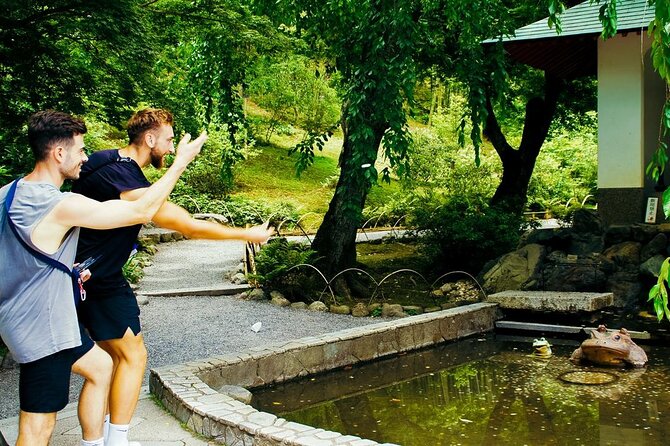
Arashiyama packs a remarkable amount into one half-day: a Zen temple, a bamboo path, an old shrine, a river bridge, matcha, and a hilltop troop of Japanese macaques. The Monkey Park climb gives this tour its best surprise, with Kyoto spread below you while the monkeys go about their business.
I like the way the route balances quiet culture with outdoor fun. Tenryu-ji’s garden gives you a calm start, and the matcha stop breaks up the walking before the final uphill stretch.
The main caution is simple: this is a walking tour with a real climb. The path to Monkey Park can feel tough, especially in wet weather or if your fitness is limited. The group may also start late if someone arrives behind schedule.
Key points at a glance
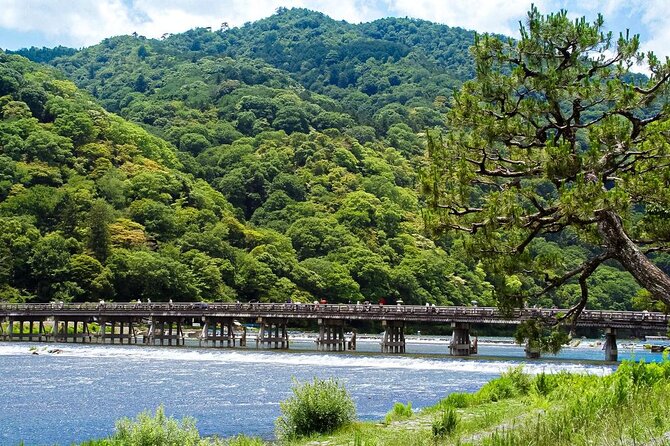
- Six classic Arashiyama sights: Visit Tenryu-ji, the Bamboo Forest, Nonomiya Shrine, Togetsukyo Bridge, Monkey Park Iwatayama, and the wider Arashiyama district.
- A one-hour monkey park visit: See wild Japanese macaques and look across Kyoto from the hilltop.
- A useful mix of culture and nature: Zen gardens, Shinto tradition, bamboo, river views, and local tea all fit into one outing.
- Admission is included: The price covers Tenryu-ji, Monkey Park Iwatayama, and one Uji matcha drink.
- Small-group format: The tour has a maximum of 15 people, with an English-speaking guide.
- Allow four to four and a half hours: This is not a quick photo stop. Comfortable shoes matter.
Why this Arashiyama route works so well
At $53.06 per person, this tour offers a practical way to see Arashiyama without piecing together several admissions and finding your own way between sights. You get Tenryu-ji and Monkey Park entry, a matcha drink, and a guide for roughly half a day.
I see the value less in the individual stops than in the order. Tenryu-ji sets a quiet, reflective tone. The bamboo path shifts the mood to nature. Nonomiya Shrine adds a small dose of old religious tradition. Then the bridge and monkey park bring in open views and a bit of lively animal watching.
The guide also helps connect places that can otherwise feel like separate photo stops. Guides including Tim, Nay, Amy, and Gabriele Cammisuli have been singled out for clear explanations, friendly conversation, and keeping the group together. That matters in Arashiyama, where the famous paths can be crowded and easy to navigate poorly on your own.
This is a group experience, not a private walk. With up to 15 people, you will need to follow a shared pace. That size is still manageable, but it can make timing less flexible than a private guide.
Other temple visits near Kyoto we have written up
- Kyoto: Tea Ceremony Ju-An at Jotokuji Temple
★ 4.9 · 3,207 reviews - Osaka/Kyoto:Kinkakuji,Arashiyama,FushimiInariShrine,NaraPark
★ 4.1 · 1,596 reviews - Arashiyama Bamboo, Temple, Monkeys, or Secret Sake Brewery
★ 4.8 · 886 reviews
Starting at Randen Arashiyama Station
The meeting point is Tully’s Coffee at Randen Arashiyama Station, at 20-2 Sagatenryuji Tsukurimichicho in Ukyo Ward. The station location is useful because it puts you right in the center of the district, near several of the day’s main sights.
You should arrive ready to walk rather than treating the meeting point as a place to get organized. The tour returns to the same point at the end, which makes the outing easy to fit into a larger Kyoto day.
One practical wrinkle is punctuality. A late arrival by one person has caused a delayed start, so give yourself enough time to reach the station and find Tully’s. The tour is near public transportation, and confirmation is provided when you book.
Tenryu-ji opens the day with quiet beauty
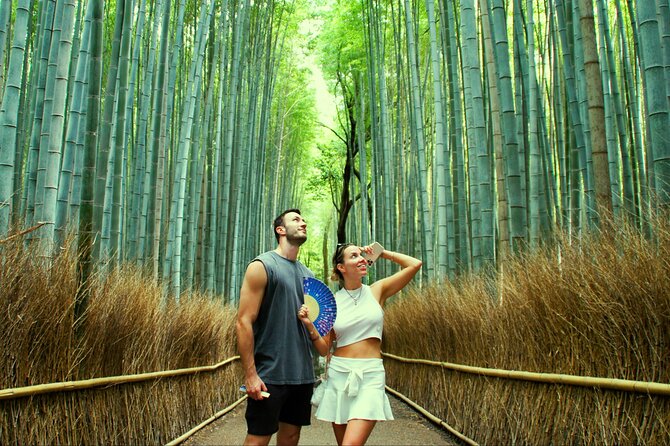
Tenryu-ji is the cultural anchor of the tour. It is a UNESCO World Heritage Site and one of Kyoto’s important Zen temples. You receive about 30 minutes here, with admission included.
The real pleasure is the garden. Its pond, trees, and seasonal color provide a composed opening before you head into the busier parts of Arashiyama. Reflections in the water can be especially striking, and the garden gives you a chance to slow down and notice how Zen spaces use carefully placed elements to shape the eye.
The allotted time is enough for an introduction, but not for a long, unhurried temple visit. If you want to study every garden detail or spend extra time inside the temple buildings, you may prefer to return independently after the tour.
Guides often use this stop to explain Zen ideas, garden design, and the temple’s place in Kyoto’s religious culture. Gabriele Cammisuli, Tim, and Nay have been praised for adding useful background rather than simply pointing out photo spots.
The Bamboo Forest is beautiful, but timing matters
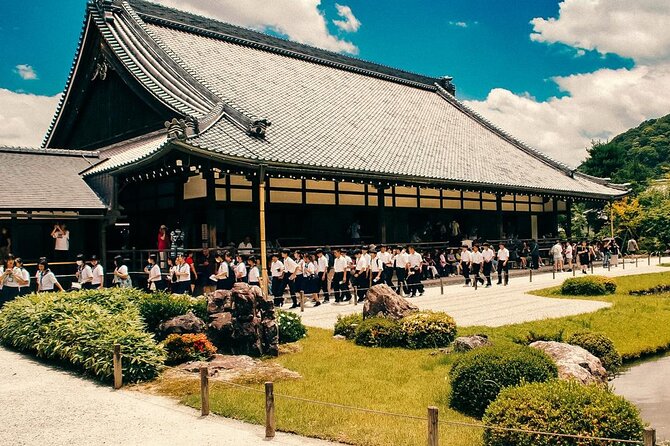
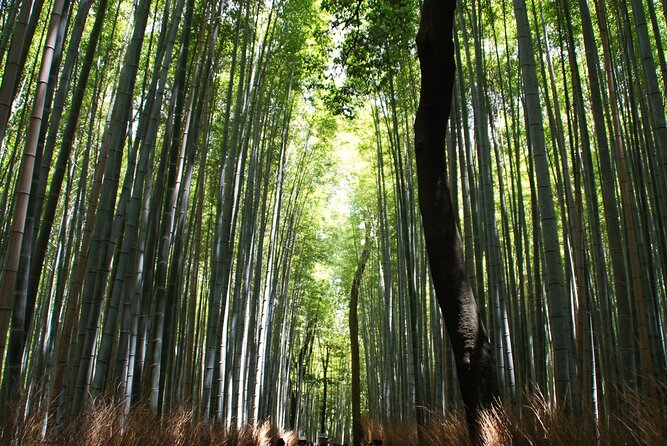
The famous Arashiyama Bamboo Forest receives about 30 minutes. Admission is free, and the path is one of Kyoto’s most recognizable walks.
Tall bamboo rises on both sides, creating a narrow green corridor with a cool, shaded feel. When the stalks move in the breeze, the path can feel remarkably still despite its fame. It is easy to understand why this is one of Kyoto’s essential sights.
The short visit is a sensible compromise. The grove is not enormous, and the tour has several other stops to cover. Still, the area can be busy, and you should not expect a private stroll through empty bamboo. Your guide can help you move through efficiently while leaving time for photographs.
I like this stop because it follows the temple well. Tenryu-ji gives you a formal garden shaped by human hands. The bamboo grove feels less controlled and more atmospheric. Together, they make a stronger pair than either sight would alone.
A different set of gates, same trip:
- Osaka/Kyoto: Arashiyama, Nara & Fushimi Inari Shrine w/Lunch
★ 4.4 · 754 reviews - Kyoto Zen Meditation & Garden Tour at a Zen Temple with Lunch
★ 5.0 · 441 reviews - Kyoto: Zen Experience in a Hidden Temple
★ 5.0 · 437 reviews - KYOTO Tea Ceremony with kimono near by Imamiya Jinjya Shrine
★ 5.0 · 343 reviews
Nonomiya Shrine adds a small, old-world pause
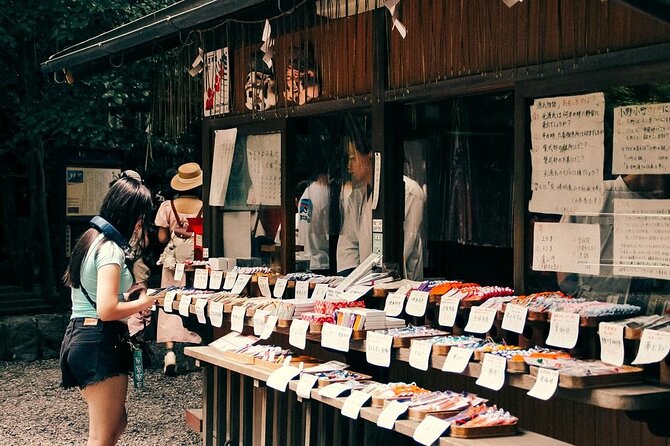
Nonomiya Shrine receives about 15 minutes. It is a compact Shinto site associated with ancient purification rituals and surrounded by mossy woodland.
This is not the largest or grandest shrine in Kyoto. That is part of its appeal. After the well-known bamboo path, Nonomiya offers a quieter corner where the focus shifts from scenery to tradition.
Your guide can explain the shrine’s connection to purification and how older practices still appear in modern Japanese religious life. The stop is brief, so think of it as a thoughtful pause rather than a full shrine visit.
The moss and wooded setting also provide a change in texture. You move from temple garden to bamboo corridor to a small shrine with a more intimate feel. The route keeps changing its mood, which helps the four-hour walk pass without feeling repetitive.
Matcha gives the walking tour a useful break
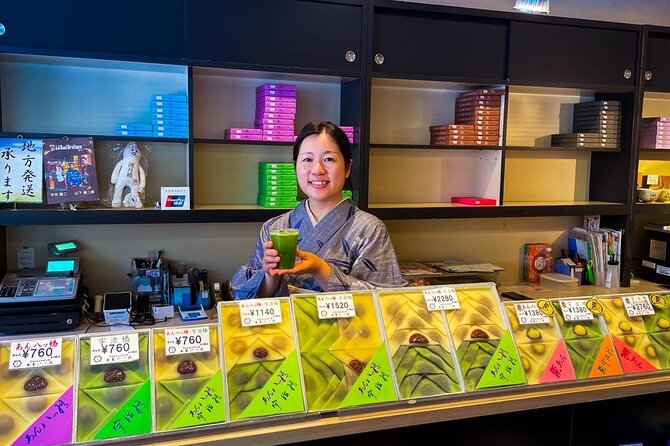
One Uji matcha drink is included. The tea break is more than a free extra. It gives you a chance to rest, ask questions, and reset before the Monkey Park climb.
Uji is closely associated with Japanese tea, and the matcha adds a local food and drink element to a tour otherwise focused on places and scenery. If you are new to matcha, expect a distinct flavor that can be earthy and slightly bitter rather than sweet.
Some tour accounts refer to a matcha ice cream stop, but the stated inclusion is one Uji matcha drink. Treat the drink as the guaranteed part, and budget separately for any other snack or dessert you may want.
The break also helps with pacing. Four hours of walking can feel long when every stop is active. A short pause makes the final uphill section more manageable.
Togetsukyo Bridge is short but scenic
The tour spends about 10 minutes at Togetsukyo Bridge, known as the Moon Crossing Bridge. It is one of Arashiyama’s familiar symbols, with views along the river toward the surrounding mountains.
This is a quick stop, mainly for views and photographs. The bridge itself is not a major historical tour in this schedule, but it gives you a broad, open scene after the enclosed bamboo and wooded shrine.
Your guide may explain the bridge’s name and its role in the area. You can also use the time to orient yourself around the river and the wider Arashiyama district.
Ten minutes is enough for a look, though not for a leisurely river walk. If the bridge is a place you especially want to enjoy, consider returning after the tour ends, since the activity finishes back at the starting point.
Monkey Park Iwatayama is the active finale
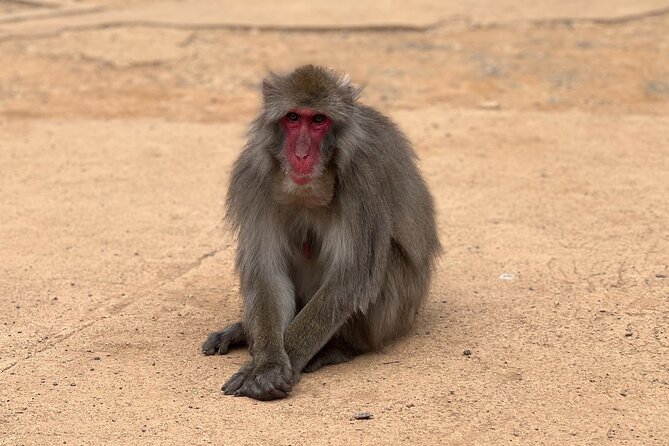
The final major stop is Monkey Park Iwatayama, with about an hour and admission included. Reaching it requires a short but noticeable uphill hike.
This is the part to take seriously when judging the tour. The climb can be difficult for anyone with limited fitness, recent health problems, or trouble on uneven paths. Wet conditions may make the route more slippery. Comfortable shoes are essential, and you should not book this walk expecting a flat sightseeing route.
The reward is excellent. At the top, you can see wild Japanese macaques close by and enjoy broad views over Kyoto. The macaques are not presented as tame pets. They go about their own social routines, and the best approach is to watch rather than chase interaction.
The feeding area gives you a chance to see them at close range, but the animals generally do not approach unless you go there. That distinction matters. This is a wildlife encounter, not a petting zoo.
The monkeys are often the tour’s most memorable feature, especially when young macaques are active. The wide city view adds another layer, turning the stop into both an animal visit and a scenic lookout.
If you cannot manage the climb, you may need to skip this portion. People who have recently dealt with health problems have chosen not to go uphill while companions continued. The rest of the route still offers plenty, but the monkey park is a major part of what you are paying for.
How the four-hour pace feels
The listed duration is about four to four and a half hours. The scheduled stop times add up to less than that because the route includes walking between locations, explanations, bathroom breaks, group movement, and the uphill path to the monkeys.
The pace is active but broken into manageable pieces. One guide has been praised for adding enough breaks and bathroom stops to make the long walk easier. Another kept the pace comfortable for different age groups while still covering every stop.
You should still plan for a walking-heavy morning or afternoon. Bring comfortable shoes and be prepared to spend much of the time on foot. The route is not designed for sitting back in a vehicle.
The maximum group size of 15 keeps the outing smaller than a large coach tour. It also means the guide can usually answer questions and keep an eye on the group. The tradeoff is that the group’s pace depends partly on the slowest participant.
Guide quality can shape the whole experience
This tour depends heavily on its guide. A strong guide turns a sequence of popular sights into a connected story about Kyoto, religion, nature, and local customs.
The guide names associated with particularly strong outings include Tim, Nay, Amy, Gabriele Cammisuli, Sofia, Shin, Maggie, Gabri, and Meg. Gabriele is noted for giving detailed explanations and making sure people had time for questions and photos. Tim is known for an entertaining style and useful suggestions for places to eat and things to do nearby.
That range of names also suggests that your exact experience can vary by departure. One poor account describes a late start and explanations that felt limited and overly scripted. That is worth keeping in mind. Most signs point to a friendly, informative guide, but no group tour delivers the same personality every time.
If you get separated or lose your way before the start, staff have shown flexibility in helping participants regroup. Still, arrive early and keep the meeting details handy.
Who should book this Arashiyama tour?
I would recommend it to a first-time Kyoto visitor who wants the main Arashiyama sights explained in one organized outing. It suits you especially well if you value a guide’s context and do not want to manage temple admission, the monkey park, and route planning yourself.
It is also a good choice for families and mixed-age groups who can handle a moderate walking pace. The breaks help, and the macaques add a lively element for anyone who finds temple visits a little too quiet.
I would be cautious if you have limited mobility, are recovering from illness, or dislike hills. The Monkey Park climb is not optional in spirit, since it is one of the central stops. You may be able to skip the climb, but you would miss a large part of the tour’s appeal.
The outing also works best for people who like variety. If you want a long, meditative temple visit or a slow photography walk in the bamboo, this schedule may feel too brisk. If you want several distinct Kyoto experiences in half a day, it is a strong fit.
Should you book it?
Book this tour if you want Arashiyama’s main sights in one efficient route, with admission and a matcha drink included. The $53.06 price is reasonable for a four to four and a half-hour guided outing, especially when Tenryu-ji and Monkey Park entry are covered.
Wear good shoes, arrive early at Tully’s Coffee, and save energy for the uphill walk. If you can manage that climb, the combination of Zen gardens, bamboo, tea, macaques, and Kyoto views gives you a satisfying introduction to one of the city’s most scenic districts.
FAQ
How long does the Arashiyama tour last?
The tour lasts approximately four to four and a half hours.
Where does the tour begin?
It begins at Tully’s Coffee Randen Arashiyama Station Shop, at 20-2 Sagatenryuji Tsukurimichicho, Ukyo Ward, Kyoto.
Where does the activity end?
The tour ends back at the same meeting point.
Is admission to Tenryu-ji included?
Yes. The entry fee to Tenryu-ji Temple is included.
Is Monkey Park Iwatayama admission included?
Yes. The entrance fee to Monkey Park Iwatayama is included.
What food or drink is included?
One Uji matcha drink is included. Tips are optional and are not included.
How large is the group?
The tour has a maximum of 15 participants and includes a professional English-speaking guide.
Newly written up around Kyoto
- Kyoto: Fushimi Inari Taisha Shrine Walking Tour with Guide★ 4.8 · 18 reviews
- Kyoto: Fushimi Inari Shrine Walking Tour★ 5.0 · 72 reviews
- Kyoto Tea Ceremony & Kiyomizu-dera Temple Walking Tour★ 5.0 · 115 reviews
- Kyoto: Calligraphy class at Buddhist temple in city center★ 5.0 · 167 reviews
- Kyoto: Zen Meditation at a Private Temple with a Monk★ 5.0 · 202 reviews
- Kyoto: Arashiyama Bamboo, Temple, Matcha, Monkeys & secret spots★ 5.0 · 219 reviews
- Kyoto: 3-Hour Fushimi Inari Shrine Hidden Hiking Tour★ 4.9 · 270 reviews
- KYOTO Tea Ceremony with kimono near by Imamiya Jinjya Shrine★ 5.0 · 343 reviews
Kyoto Temple Tours, compared.
Osaka/Kyoto:Kinkakuji,Arashiyama,FushimiInariShrine,NaraPark
Read our review →
Arashiyama Bamboo, Temple, Monkeys, or Secret Sake Brewery
Read our review →
Osaka/Kyoto: Arashiyama, Nara & Fushimi Inari Shrine w/Lunch
Read our review →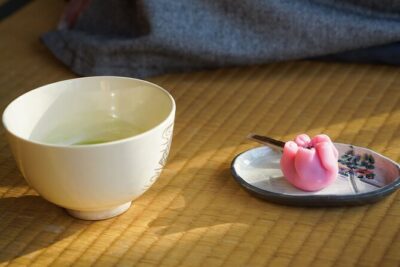
Kyoto Zen Meditation & Garden Tour at a Zen Temple with Lunch
Read our review →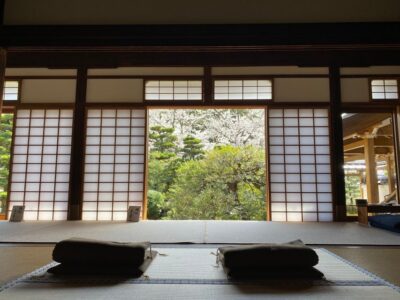
KYOTO Tea Ceremony with kimono near by Imamiya Jinjya Shrine
Read our review →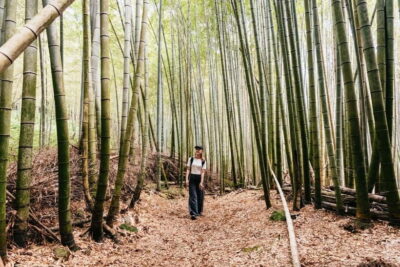
Browse the lists this tour appears in