
Reviewed · KYOTO TEMPLE TOURS
Kyoto: Arashiyama Guided Tour, Bamboo, Monkey, Zen Temple
Arashiyama’s best trick is fitting bamboo, Zen gardens, a famous bridge, and wild macaques into one compact outing. You begin at JR Saga-Arashiyama Station and finish near the river, with a guide to explain what you are seeing instead of leaving you to read signs on the fly.
I like the clear mix of nature and culture, especially the calm garden at Tenryu-ji and the broad Kyoto views from Iwatayama. I also like the flexible small-group setup: guides such as Kanako, Hiro, Nabet, and Hiraki have adjusted the pace and, in one case, replaced the monkey climb with another temple feature. The main caution is the moderate walking and uphill path to Monkey Park, which can feel tough in hot weather or poor shoes.
Key points to know before you book
- The tour begins at JR Saga-Arashiyama Station: Meet in front of the ticket gate and look for the yellow DeepExperience sign.
- The bamboo walk takes about 40 minutes: Your guide provides context as you pass through the famous grove.
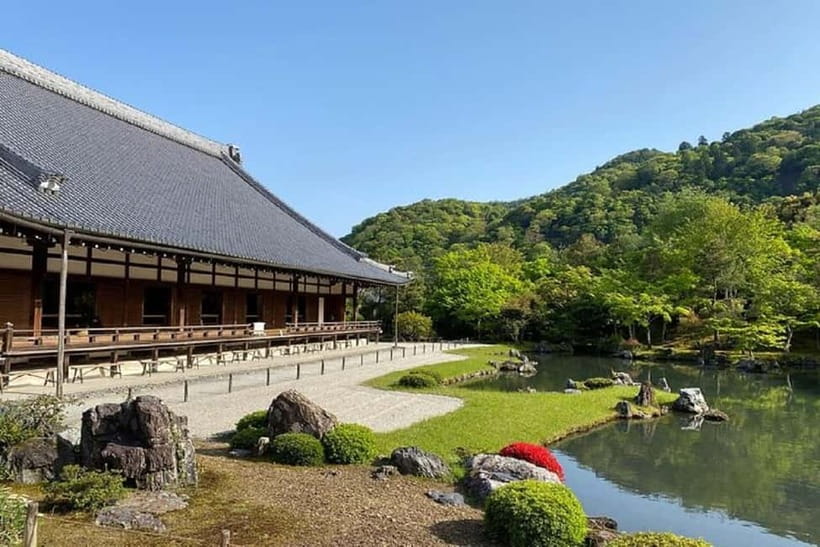
- Tenryu-ji gives the outing its Zen center: You have about 40 minutes for the temple and gardens.
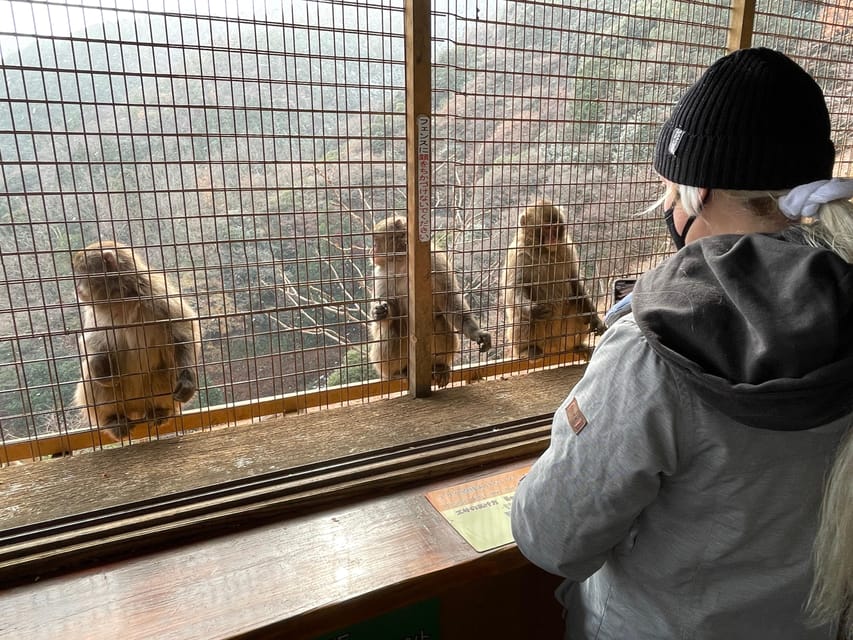
- Iwatayama requires a climb: The reward is close views of macaques and wide views over Kyoto.
- The route ends at Arashiyama Park: You finish in the Nakanoshima area, rather than returning to the station.
- Guides speak English or Japanese: Private and small-group formats are available, with free cancellation up to 24 hours before the start.
Why this three-hour Arashiyama route works
Arashiyama can feel scattered when you visit it alone. The bamboo grove, Tenryu-ji Temple, Togetsukyo Bridge, and Monkey Park are all nearby, but the order matters and the area gets busy. This tour gives you a simple route from the train station through the main sights and down to the river.
The three-hour length is useful if you want a strong first look without giving the whole day to one neighborhood. You get enough time at each major stop for an explanation and photographs, though not enough for long, unhurried exploration. Think of it as a guided introduction, not a full-day study of western Kyoto.
The guides bring the most value. Several have been praised for explaining the meaning of the sites, helping with family needs, and taking photographs. Kanako is particularly suited to families, while Hiro has shown flexibility when someone could not manage the mountain path. Nabet and Hiraki have also been noted for clear explanations of the bamboo grove, temple, and wider Kyoto setting.
Other temple visits near Kyoto we have written up
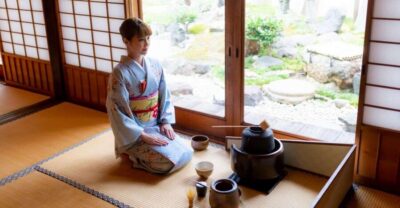
- Kyoto: Tea Ceremony Ju-An at Jotokuji Temple
★ 4.9 · 3,207 reviews - Osaka/Kyoto:Kinkakuji,Arashiyama,FushimiInariShrine,NaraPark
★ 4.1 · 1,596 reviews - Arashiyama Bamboo, Temple, Monkeys, or Secret Sake Brewery
★ 4.8 · 886 reviews
Starting at JR Saga-Arashiyama Station
Your meeting point is in front of the ticket gate at JR Saga-Arashiyama Station. Look for the guide holding a yellow sign with the DeepExperience logo. This is a practical starting point because it gives you a clear landmark before the walking begins.
Hotel pickup is not included, so you need to reach the station on your own. The tour also finishes at Arashiyama Park’s Nakanoshima area, not back at the starting station. That ending works well if you plan to continue around the river, but remember that you will need to arrange your own onward travel.
At the start, use the guide to set expectations. The day includes several walks, a temple visit, a bridge photo stop, and a climb. If you are traveling with children, older family members, or anyone managing a sore knee, say so early. The guides have shown a willingness to adjust the plan when needed, but the standard route does include Monkey Park.
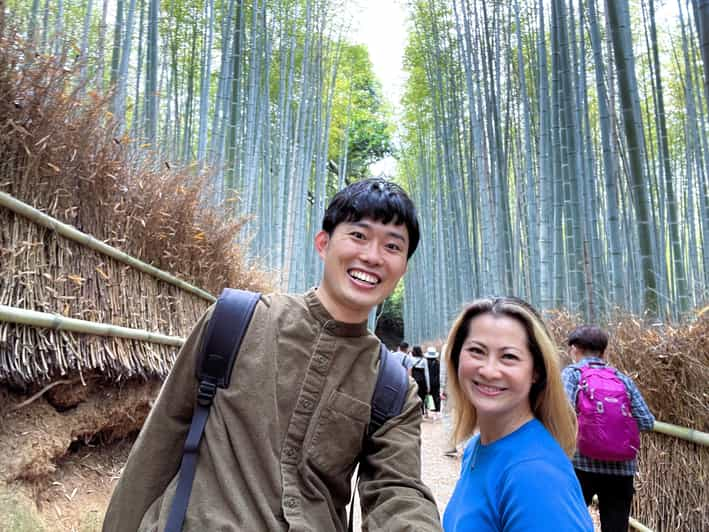
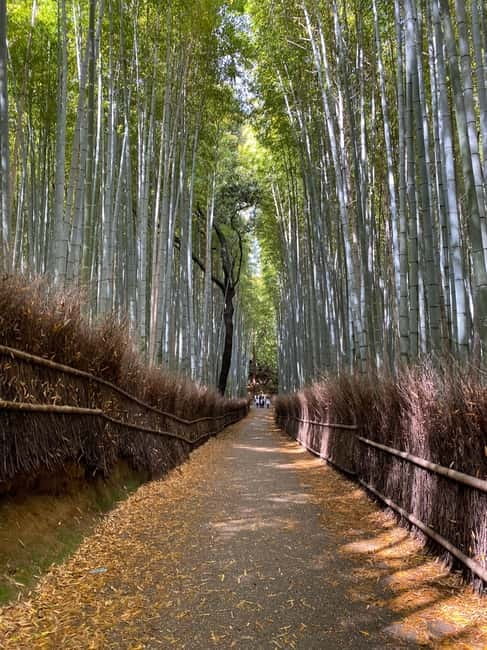
Walking through Arashiyama Bamboo Grove
The bamboo section lasts about 40 minutes. You walk beneath tall green stalks while your guide explains the area and points out details that are easy to miss when you are focused only on taking pictures.
The grove is beautiful, but it is not always silent or empty. Its fame brings plenty of people, and the path can feel less like a private forest walk than a popular Kyoto sight. A guide helps by giving the visit shape. Instead of simply stopping for a quick photograph, you get background about the place and a better sense of why the grove matters to Arashiyama.
Bring your camera, but keep it ready rather than spending every minute behind the screen. The narrow path, vertical bamboo, and shifting light make good photographs, yet the best part is also simply walking through the corridor and looking upward.
The timing is generous enough for a proper visit but limited enough that you will not linger at every bend. If bamboo is your single reason for coming to Arashiyama, you may want extra time in the area after the tour. For most people, the 40-minute stop is a good balance.
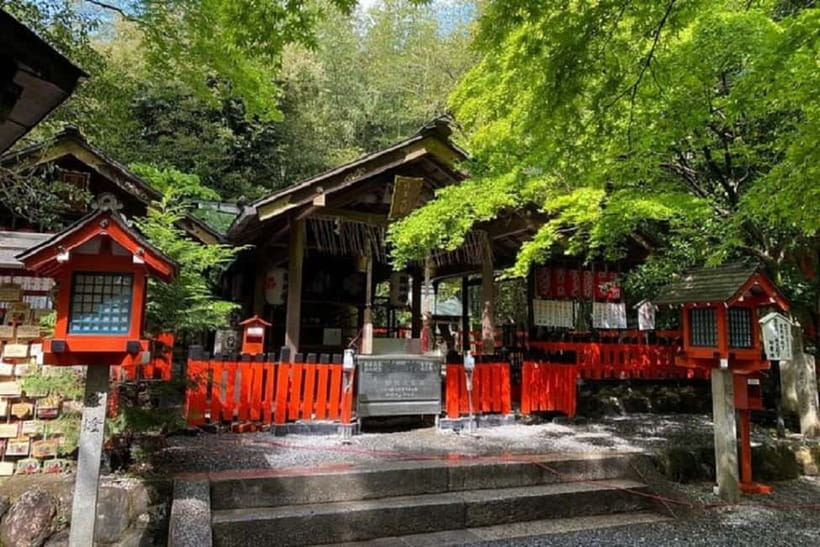
Tenryu-ji Temple and its carefully designed gardens
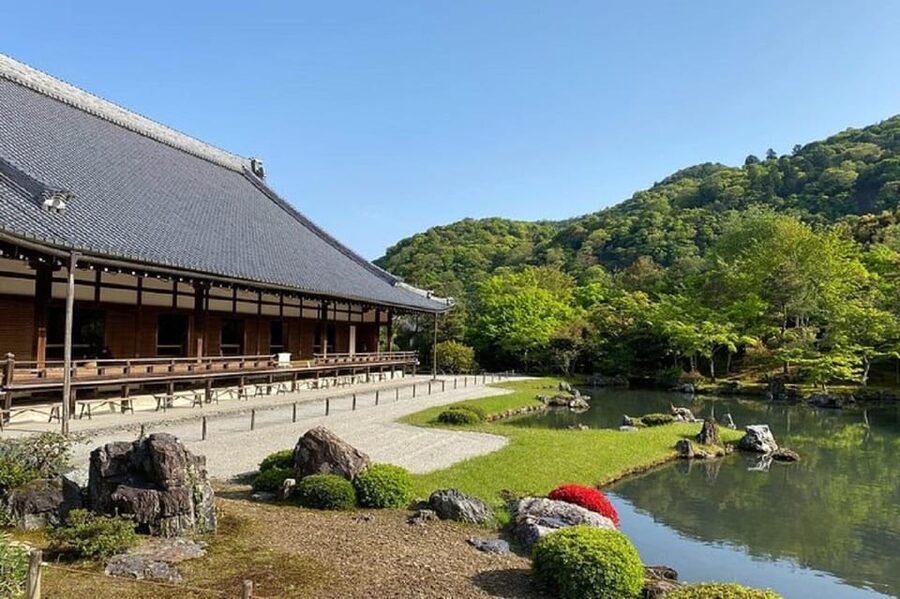
Tenryu-ji receives about 40 minutes, making it one of the central stops rather than a quick glance. The temple is a UNESCO World Heritage site, and the garden gives the route a welcome change of pace after the busy bamboo path.
This is where a guide can add real value. The temple and garden have layers of Buddhist meaning and design that are not always obvious from a casual walk. Hiraki has been praised for explaining the Zen temple in detail, and other guides have helped visitors understand the history and meaning behind what they were seeing.
I like this stop because it gives you more than another scenic photograph. The garden is arranged for viewing and reflection, with a quieter rhythm than the grove. You can take in the pond, plants, temple buildings, and mountain setting while your guide explains how the parts relate.
Forty minutes is enough to understand the place and see the main garden areas included in the visit. It is not enough for a slow inspection of every building or garden detail. If you are deeply interested in Japanese temple architecture, you may want to return on your own after the guided route.
One useful detail comes from the tour’s flexible approach. When a participant decided not to climb to Monkey Park because proper walking shoes were not available, Hiro arranged another activity and showed the Water Dragon painting on the temple ceiling instead. That is not guaranteed as part of every tour, but it shows why it is worth discussing your limits with the guide rather than quietly struggling.
A different set of gates, same trip:
- Kyoto: Arashiyama Bamboo Forest, Monkeys, Matcha & Temple Tour
★ 5.0 · 759 reviews - Osaka/Kyoto: Arashiyama, Nara & Fushimi Inari Shrine w/Lunch
★ 4.4 · 754 reviews - Kyoto Zen Meditation & Garden Tour at a Zen Temple with Lunch
★ 5.0 · 441 reviews - Kyoto: Zen Experience in a Hidden Temple
★ 5.0 · 437 reviews
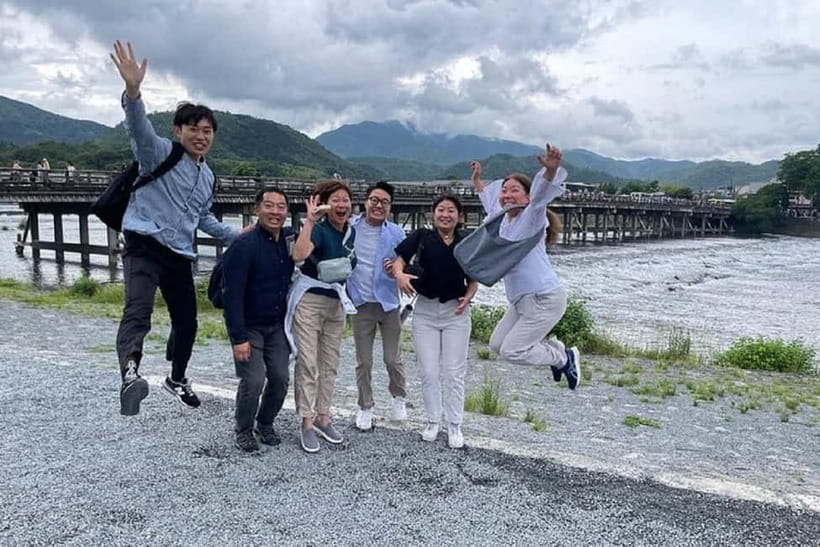
Togetsukyo Bridge and the Katsura River view
The Togetsukyo Bridge is scheduled as a 20-minute photo stop. This is shorter than the temple visit, but the bridge works as a visual pause between the cultural sites and the monkey park.
From the bridge, you can look along the Katsura River toward the surrounding mountains. The view changes with the season and weather, but the basic appeal stays the same: water, hills, and the traditional feel of Arashiyama in one frame.
Do not expect a long bridge walk or an extended riverside break. The stop is built around photographs and orientation. Your guide can help position the group and may take pictures for you, a useful touch if you want everyone in the frame.
The bridge also marks a good point to check your energy. The final major stop is Iwatayama Monkey Park, and the path there is the most demanding part of the outing. Use the 20-minute stop to drink water and make sure your shoes are comfortable.
Iwatayama Monkey Park and the uphill walk
The final scheduled stop lasts about 40 minutes. Iwatayama Monkey Park sits on the mountain above Arashiyama, and reaching the viewing area involves a challenging uphill climb. The effort is moderate rather than technical, but this is not a flat sightseeing walk.
Wear shoes with good support. The tour information specifically warns you to prepare for a moderate amount of walking, and the direct experience of the route includes a climb that some people find demanding. Hot weather adds to the work, so bring water and dress for the forecast.
At the park, you can observe wild macaques in their natural setting and feed them from the designated area. The ability to see the monkeys close up is the part children often find most exciting, but you should still follow the guide’s instructions and treat the animals as wild creatures.
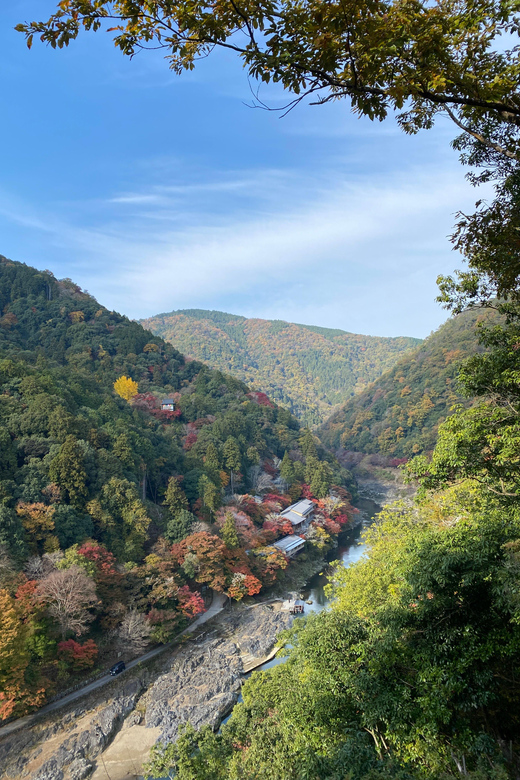
The other reward is the view from above. You can look out over Kyoto and Arashiyama from a high vantage point, giving you a completely different sense of the district than you had beside the river. The climb is the price of admission in practical terms, but it gives the tour a memorable finish.
This stop may not suit everyone. If you have limited mobility, poor footwear, or simply do not want an uphill walk, tell your guide at the beginning. Hiro has arranged an alternative temple activity for someone who skipped the climb, though you should not assume the same substitute will always be available.
What the $74 price gets you
At $74 per person, this is not the cheapest way to walk through Arashiyama. You can visit the neighborhood independently and pay individual admission costs as you go. The fee makes more sense if you value explanations, a planned route, help with photographs, and the convenience of fitting several major sights into three hours.
Tenryu-ji and Iwatayama are the stops where paid admission and organization matter most. The bamboo grove and Togetsukyo Bridge are public sights, but getting between them in the right order and understanding what you are seeing takes time when you do it alone.
The value is strongest for first-time visitors, families, and people with limited time in Kyoto. A private or small group can also make the price easier to justify because the guide can respond to your interests and pace. One participant effectively had a private outing and appreciated not waiting for other people.
The value is weaker if you prefer to linger, wander without a schedule, or spend a whole morning photographing bamboo. The itinerary moves along, and the 40-minute blocks create structure. That structure is helpful for some people and restrictive for others.
You can reserve now and pay later, and cancellation is free up to 24 hours before the start. Those terms help if your Kyoto plans are still shifting, but they do not change the basic question: are you paying for information and ease, or would you rather explore independently?
Who should choose this tour
I would point this tour toward a first visit to Arashiyama, especially if you want the major sights without planning the walking order yourself. It suits couples, families, and small groups who want both cultural context and outdoor scenery.
Families may find the monkey park especially rewarding. Kanako has adjusted the experience well for children and adults, and feeding the macaques gives younger visitors a clear highlight after the temple visit. Still, children need to be ready for the climb.
It also suits visitors who want a guide in English or Japanese. The guide’s explanations are a central part of the experience, particularly at Tenryu-ji, where a little context can make the garden and temple feel far more meaningful.
I would think twice if you need a fully flat route or do not enjoy walking. The attraction is not just the stops. It is the movement between them, including the climb to Iwatayama.
Practical advice for a smoother morning or afternoon
Wear comfortable walking shoes, not new shoes that still need breaking in. The route combines paved sightseeing areas with the uphill path to the monkey park.
Check the weather before leaving and dress accordingly. Bring water, especially in warm weather, and carry a camera if photographs matter to you. The guide may take pictures, but you should still bring your own device.
Keep your schedule flexible after the tour. It finishes at Arashiyama Park’s Nakanoshima area, so you may want to continue along the river or make your own way elsewhere rather than planning an immediate return to the station.
If you have a mobility concern, tell the guide at the meeting point. The monkey climb is the key physical challenge, and an alternative may be possible, but it should be discussed before the group reaches the mountain.
Should you book the Arashiyama guided tour?
Book it if you want a well-shaped first look at Arashiyama, value clear explanations, and can manage several hours of walking. The combination of bamboo, Tenryu-ji, Togetsukyo Bridge, and macaques gives you a broad taste of the district in one outing.
Skip it if your priority is slow photography, a flat route, or a full day at the temple and gardens. At $74, the tour earns its price through the guide, organization, and small-group flexibility rather than through exclusive access.
For most first-time visitors, I see this as a practical way to get your bearings fast and leave with both the classic photographs and a better understanding of what you saw. Just wear good shoes, bring water, and treat the Monkey Park climb as part of the experience, not an optional stroll.
FAQ
Where does the Arashiyama tour meet?
Meet in front of the ticket gate at JR Saga-Arashiyama Station. Your guide will hold a yellow sign with the DeepExperience logo.
Where does the tour finish?
The tour finishes at Arashiyama Park, in the Nakanoshima area.
How long does the tour last?
The tour lasts three hours.
What languages are available?
Live guiding is available in English and Japanese.
Is the tour private or shared?
Private and small-group options are available.
Is hotel pickup included?
No. Hotel pickup and drop-off are not included.
How much walking is involved?
You should be prepared for a moderate amount of walking, including an uphill climb to Iwatayama Monkey Park.
Can I feed the monkeys?
The experience includes the chance to feed and observe wild macaques at Iwatayama Monkey Park.
What happens if I need to cancel?
You can cancel up to 24 hours in advance for a full refund. You can also reserve now and pay later.
Newly written up around Kyoto
- Kyoto:Kiyomizu-dera Temple Rent a kimono and ride a rickshaw★ 4.8 · 7 reviews
- Kyoto: Kiyomizudera, Sanjusangendo, Ginkakuji and Higashiyama.★ 5.0 · 3 reviews
- Kyoto: Shakyo & Matcha in Historic Temple Garden★ 5.0 · 4 reviews
- KYOTO: Tempio Kiyomizu Pagode Gion “Geisya” (Guida Italiana)★ 4.7 · 17 reviews
- KYOTO: Golden Pagoda, Bamboo Forest, Arashiyama (Italian)★ 4.9 · 5 reviews
- Kyoto:Quiet Arashiyama and Sagano Temples★ 4.8 · 5 reviews
- Kyoto kiyomizu Temple : Maiko and Samurai Couple Photoshoot★ 4.8 · 25 reviews
- Kyoto: Nara, Todaiji, Kasuga Taisha Shrine Private Full Day★ 4.9 · 18 reviews
Kyoto Temple Tours, compared.
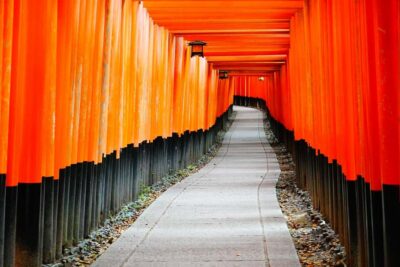
Osaka/Kyoto:Kinkakuji,Arashiyama,FushimiInariShrine,NaraPark
Read our review →
Arashiyama Bamboo, Temple, Monkeys, or Secret Sake Brewery
Read our review →
Arashiyama Bamboo Forest, Monkeys, Matcha & Temple Tour
Read our review →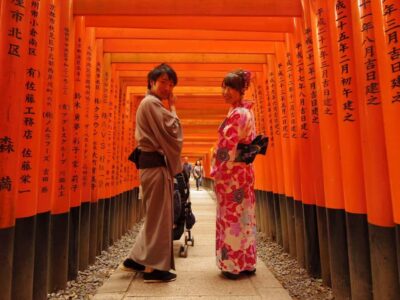
Osaka/Kyoto: Arashiyama, Nara & Fushimi Inari Shrine w/Lunch
Read our review →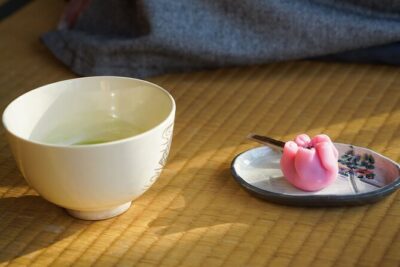
Kyoto Zen Meditation & Garden Tour at a Zen Temple with Lunch
Read our review →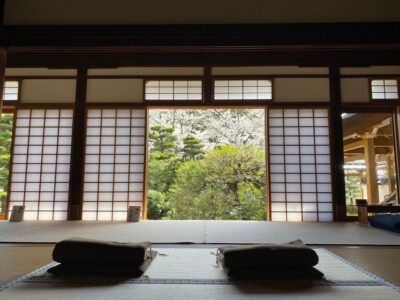
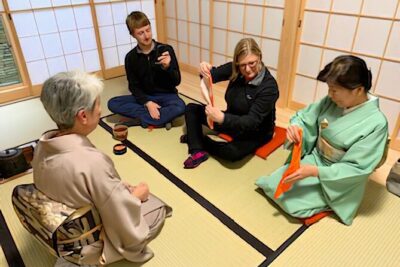
KYOTO Tea Ceremony with kimono near by Imamiya Jinjya Shrine
Read our review →Browse the lists this tour appears in