
Reviewed · FUSHIMI INARI SHRINE TOURS
Osaka/Kyoto: Arashiyama, Nara Park, Fushimi Shrine Tour
Fushimi Inari’s endless red torii, Nara’s freely roaming deer, and Arashiyama’s bamboo paths make this a smart way to see three major sights in one day. I like the three-stop route and the fact that tolls, fuel, parking, and transport are included. I also like the early Arashiyama visit, when the morning air is cooler and the paths may feel less crowded.
The tradeoff is time on the road. The Osaka to Kyoto to Nara to Kyoto to Osaka route covers a lot of ground, and each stop is tightly timed. This works best if you want an efficient first look rather than a slow, detailed visit.
Key points to know before booking
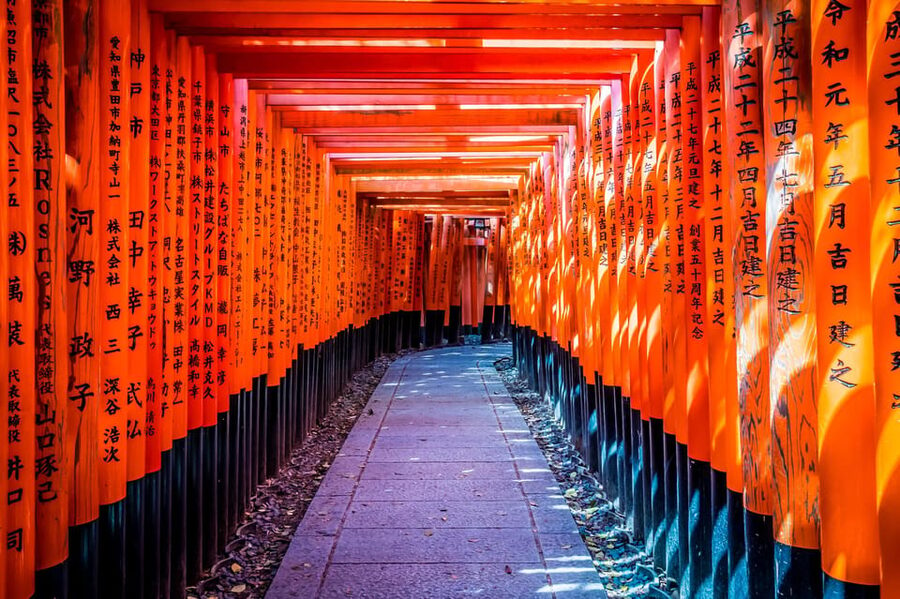
- Three famous sights in one day: Arashiyama, Nara Park, and Fushimi Inari each offer a different side of the Kansai region.
- About $51 per person: The price covers shared transport, tolls, parking, and fuel, which can be useful when local fares and transfers begin to add up.
- Two-hour Arashiyama stop: You have time for the bamboo forest area and Togetsukyo Bridge, but not every nearby sight.
- Nara’s deer are part of the setting: More than 1,000 deer roam the park, where they are regarded as divine messengers and a national natural monument.
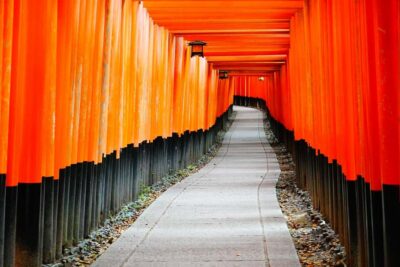
- Fushimi Inari is more than a photo stop: The shrine has thousands of red torii gates and paths climbing through Mount Inari.
- Basic guiding, not a full tour lecture: The main language is Chinese, while English, Japanese, and Korean support depends on the booking arrangements.
Three major sights, one long day
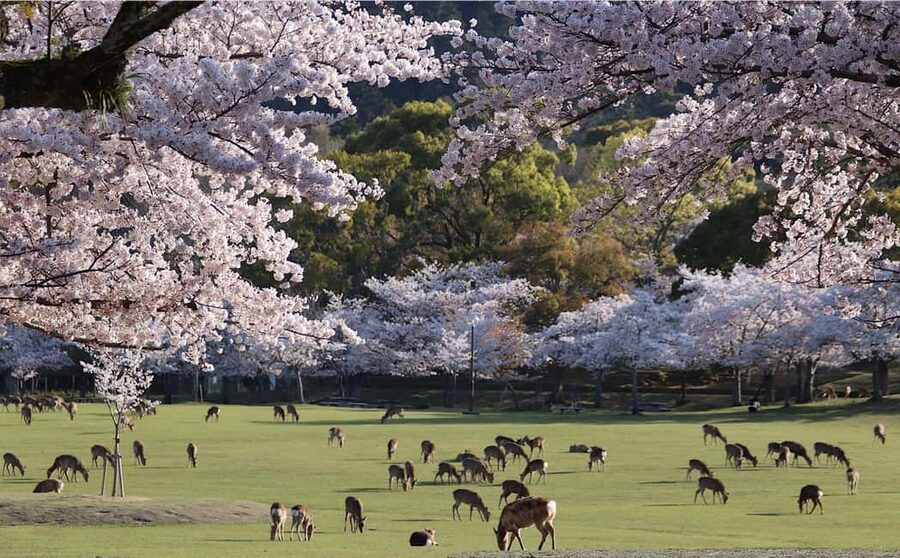
This tour is built around a simple idea: use a coach to connect three places that are spread across Kyoto and Nara. You can board in Osaka at the Dotonbori meeting point or in Kyoto near Kyoto Station’s Hachijo-guchi tourist bus area.
The published schedule begins around 8:00 in Osaka and 9:20 in Kyoto. Arashiyama is scheduled for about 10:00, followed by Nara at 13:15 and Fushimi Inari at 15:20. The coach returns to Kyoto around 17:00 and Osaka around 18:00.
That timing gives you a full ten-hour outing, but it also tells you what sort of day this is. You are not settling into one town. You are moving briskly between major sights, getting enough time to see the central attractions, take photographs, and get a feel for each place.
I would think of this as a practical sampler. It is especially useful if your stay is short, if you do not want to work out several train connections, or if you prefer to have transport arranged. If you already know Kyoto and Nara well, the limited time at each stop may feel restrictive.
More Fushimi Inari Shrine Tours in Osaka:
- Full Day Kyoto Tour : Bamboo Forest, Golden Temple, Fushimi Inari
★ 5.0 · 84 reviews - Osaka/Kyoto:Kinkakuji,Arashiyama,FushimiInariShrine,NaraPark
★ 4.1 · 1,596 reviews - Osaka/Kyoto: Arashiyama, Nara & Fushimi Inari Shrine w/Lunch
★ 4.4 · 754 reviews
Arashiyama begins with bamboo and the Togetsukyo Bridge
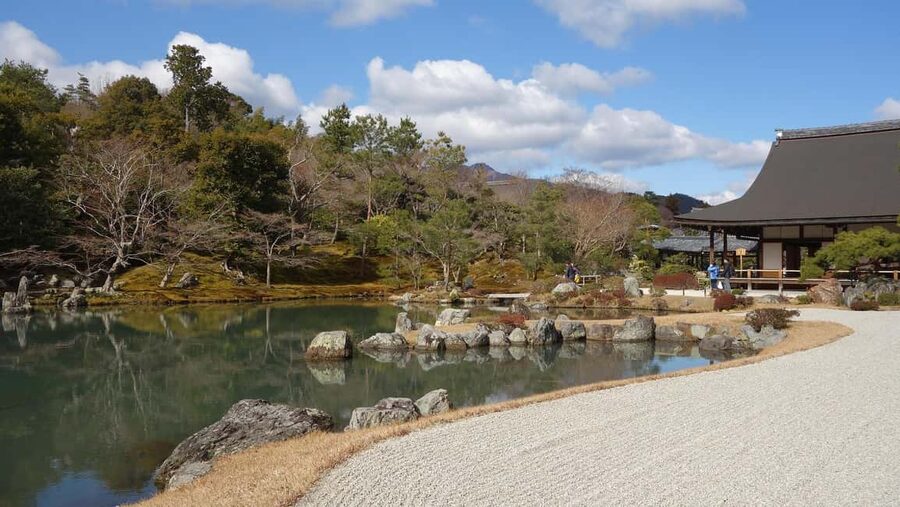
Arashiyama gets the first major sightseeing slot, with roughly two hours of free time. That is a good choice. The area is known for its bamboo forest paths, and reaching it earlier in the day can mean cooler air and a better chance of walking before the busiest period.
The bamboo area is the headline attraction, but do not ignore the Togetsukyo Bridge. From the bridge, you can look over the river and surrounding hills, with the view changing across the seasons. The tour description points to this as the classic Arashiyama scene, and it is an important part of understanding why the district draws so many people.
You will be exploring independently here. The guide can give basic direction, but this is not a detailed walking tour through every temple, lane, and garden. Two hours is enough for the bamboo paths and bridge area if you keep moving. It is not enough for a relaxed visit to all of Arashiyama.
I would make a simple plan before leaving the coach. Go first to the bamboo area, then walk toward Togetsukyo Bridge if time allows. Avoid spending the whole stop in one shop or café, since the next departure is fixed.
The main advantage of arriving by coach is ease. You do not need to figure out the best route from Osaka or Kyoto to western Kyoto. The drawback is that you cannot extend your time if Arashiyama captures your attention. Once the group is called back, the day continues.
Nara Park puts you close to more than 1,000 deer
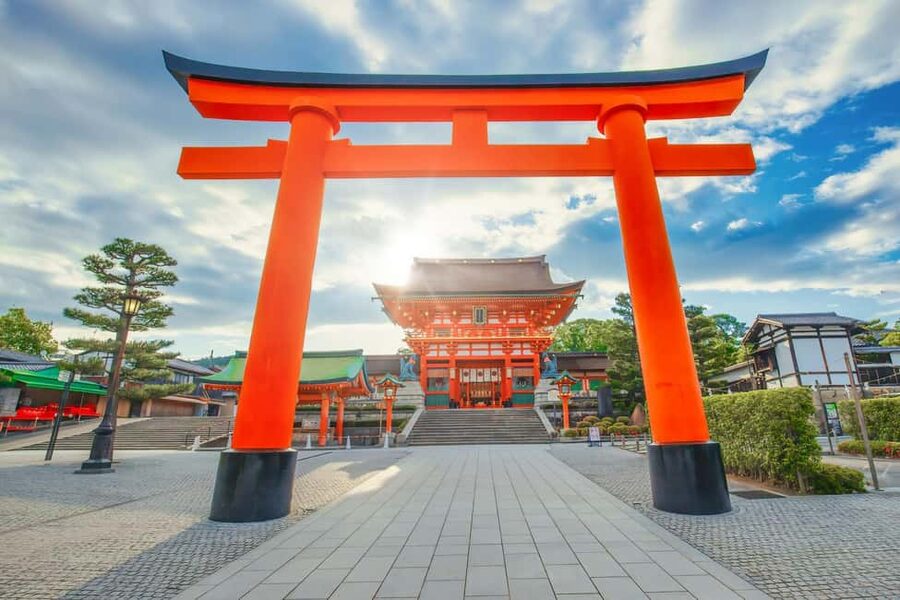
The next stop is Nara Park, with about 80 minutes of self-guided time. This is the shortest sightseeing period of the day, so it helps to know what you want to see before you arrive.
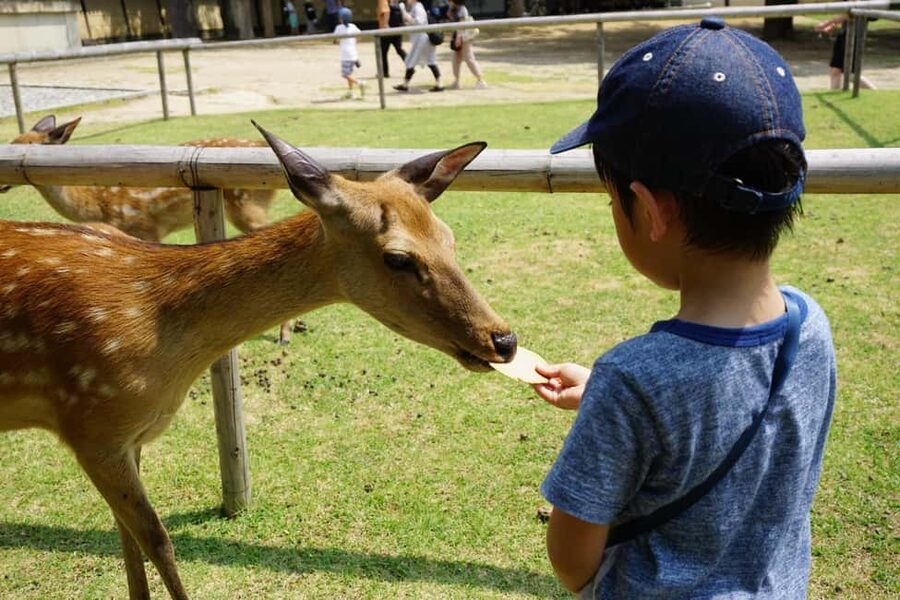
The deer are the main event. More than 1,000 deer roam freely around the park, and they are regarded as messengers of the gods. Their presence is not a small decorative feature. It shapes the entire visit, with deer moving through the green spaces and around the paths near Kasuga Taisha.
The deer have a history of more than 1,300 years in this setting and are listed as a national natural monument. That gives the encounter more meaning than a quick animal photograph. You are seeing a living part of Nara’s religious and cultural identity.
With only 80 minutes, this stop is focused. You can spend time near the deer and get a sense of the park, but you should not expect a full visit to every major temple or shrine in the area. The schedule is designed around the park itself rather than a long cultural tour.
Keep your belongings secure and follow local instructions around the animals. The tour information does not include meals or drinks, so bring what you need before boarding, while remembering that food is not allowed inside the vehicle.
I like the contrast between the three stops. Arashiyama gives you bamboo and river views. Nara gives you open parkland and deer. Fushimi Inari shifts the mood again, with red gates and a sacred mountain route.
Fushimi Inari saves its strongest image for the afternoon
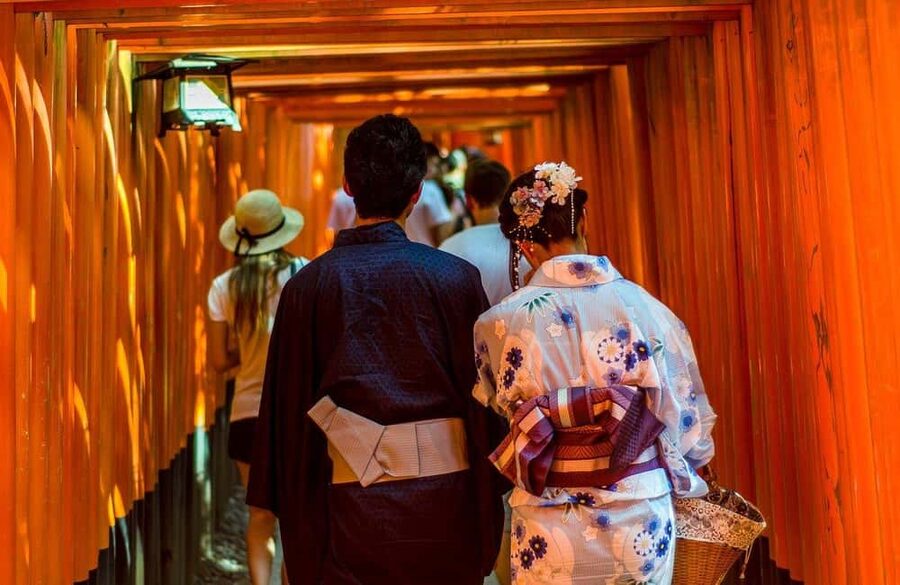
Fushimi Inari Taisha is scheduled for about 1 hour and 20 minutes, though the general activity information also describes the stop as about 1.5 hours. Either way, you have enough time to enter the shrine, walk beneath a section of the torii gates, and take in the atmosphere.
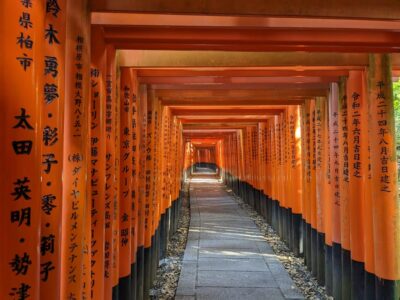
Fushimi Inari is the headquarters of roughly 30,000 Inari shrines across Japan. Its foundation is dated to 711, and the entire Mount Inari area is treated as sacred. The famous gates were donated over time, creating the long red corridors that make this one of Kyoto’s most recognizable sights.
You do not need to walk the entire mountain route to appreciate the place. The first section gives you the classic rows of torii and the strongest photo opportunities. If you want to go farther up the mountain, watch the time closely. A long uphill walk can easily use more of your stop than expected, and the coach will not wait for late arrivals.
The afternoon timing can work well for a quick visit, but Fushimi Inari is also the stop most likely to leave you wishing for more time. The site continues up the mountain, while the tour provides only a limited window. Treat this as an introduction, not a complete exploration.
The shrine is free to enter according to the supplied tour information, but personal spending is not included. Transport costs, parking, tolls, and fuel are included in the tour price.
Other temple visits near Osaka we have written up
- Osaka: Minoh, Katsuoji Temple, & Minoh Falls Full-day Tour
★ 4.9 · 172 reviews - Osaka Temple Cool Foot Bath & Matcha Experience〈45min〉
★ 4.9 · 82 reviews - Osaka: Mind & Spirit Balance Temple Reiki Healing
★ 5.0 · 41 reviews - Osaka: Minoh Waterfall & Katsuo-ji Temple Half-Day Tour
★ 4.7 · 27 reviews
What $51 buys you
At $51 per person, the value depends on how much you value convenience. The price includes the shared coach, toll fees, parking fees, fuel, and a guide or host who can provide basic information. You also avoid arranging separate transport between Osaka, Kyoto, Nara, and the individual sights.
That is useful because the route is not a simple out-and-back journey. The coach may take you from Osaka into Kyoto, onward to Nara, back to Kyoto for Fushimi Inari, and then back to Kyoto or Osaka. Public transport is possible, and it may be faster or cheaper for confident planners, but it requires more decisions and transfers.
The tour makes the most financial sense for a small group that wants a fixed plan. It can also be helpful if you are staying in Osaka but want to see several Kyoto and Nara highlights without changing hotels.
The value is weaker if you want long visits, detailed explanations, or the freedom to leave a site when you choose. Much of the day is spent traveling between stops, and the schedule cannot adapt much if you want to stay longer at Arashiyama or Fushimi Inari.
One direct assessment of the route calculated that roughly three quarters of the day could be connected to bus travel. That figure will vary with traffic and the exact pickup point, but the larger point is fair: this is a transport-heavy day.
Guiding is helpful but deliberately light
The tour is mainly conducted in Chinese. English and Korean-speaking staff may be available if requested at booking, but language support is not guaranteed. Japanese is also listed among the possible languages.
In a small group, the driver may also act as the guide. Expect basic onboard commentary and practical help rather than long historical talks at every site. That arrangement can work well when you mainly need directions, timing reminders, and help finding the right area.
Specific guides named in the supplied information include Levi, CC, HuaHua, and Eric. Levi was praised for giving useful information and helping with practical needs, while CC was noted for explaining where to go and allowing plenty of sightseeing time. Those names suggest that the personal quality of the day can depend heavily on the staff assigned.
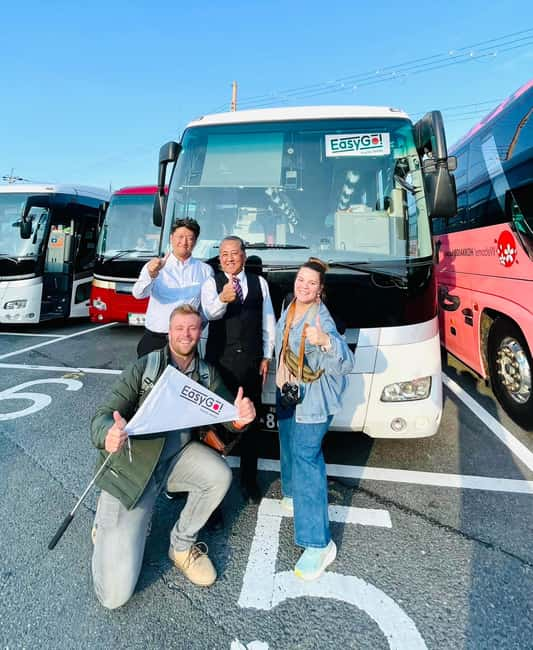
You should not expect the guide to contact you before departure. Go directly to the listed meeting point and look for staff wearing an EASY GO vest or holding an EASY GO flag. The exact meeting point depends on the option you book, so check it carefully.
A shared coach may include people from several countries. That is normal for this type of outing, but it can make departure discipline especially important. One serious complaint involved a missed departure after confusion over the meeting time, followed by difficulty reaching the guide. I would arrive well before the stated time, confirm the departure point, and keep the guide or operator contact details available.
The practical limits of a fixed coach schedule
Traffic and weather can change the order or length of the stops. A site may be reached early because of a closure or limited opening hours, and the day may finish earlier than planned. Severe weather or a natural disaster can lead to cancellation.
The operator also notes that stop lengths can change depending on traffic or the number of people in the group. This is another reason to return to the coach early. At Fushimi Inari and Arashiyama, it is easy to lose track of time once you move away from the entrance.
Food and drinks are not included, and food is not allowed in the vehicle. You will need to plan purchases around the sightseeing stops. Personal expenses are also separate.
The tour is listed as wheelchair accessible, which is useful, but the information does not explain how every path or sightseeing area is handled. If you use a wheelchair, confirm the specific arrangements for the coach and each stop before booking.
Free cancellation is available up to 24 hours in advance for a full refund, and you can reserve now and pay later. Those policies are useful when weather or other plans remain uncertain.
Who should book this day trip?
I would choose this tour if you have one free day, want to see the headline sights, and prefer a shared coach over planning several rail journeys. It suits first-time visitors who want a broad introduction to Kyoto and Nara, families who value a fixed route, and people staying in Osaka who want an organized day outside the city.
It is also a sensible option for anyone who wants the major photographs: bamboo in Arashiyama, deer in Nara, and red torii at Fushimi Inari. The route gives you three very different settings without requiring you to master the local transport network.
I would hesitate if you dislike group schedules or want to explore at a slow pace. Independent transport may give you more control, especially if Fushimi Inari, Nara’s temples, or Arashiyama deserve a full day on their own.
Book it for efficiency, not depth. At $51, it can be fair value for transport and convenience, but you are paying with time and flexibility. Arrive early, confirm your meeting point, plan each stop before leaving the coach, and this packed day can deliver a useful first look at three of Kansai’s best-known sights.
FAQ
Where can I join the tour?
You can choose a starting point in Kyoto near Kyoto Station’s Hachijo-guchi tourist bus area or in Osaka at 1-chōme-1-3 Dōtonbori. The meeting point may vary according to the option booked.
How long does the tour last?
The activity lasts about 10 hours. The published schedule begins at 8:00 from Osaka or 9:20 from Kyoto, returning around 17:00 to Kyoto and 18:00 to Osaka.
How much free time is provided at each stop?
The planned schedule gives about two hours in Arashiyama, 80 minutes in Nara Park, and about 1 hour 20 minutes at Fushimi Inari. Actual times can change with traffic, weather, group size, or site access.
Is a guide included?
Yes. A Chinese, English, Japanese, or Korean-speaking guide or host may be available. The tour is mainly conducted in Chinese, and English or Korean service should be requested at booking but is not guaranteed.
Are meals included?
No. Meals, drinks, and personal expenses are not included. Food is not allowed inside the vehicle.
Can I cancel the booking?
You can cancel up to 24 hours before the activity for a full refund. The reserve-now-and-pay-later option lets you book without paying immediately.
Newly written up around Osaka
- Osaka: Mind & Spirit Balance Temple Reiki Healing★ 5.0 · 41 reviews
- Osaka Temple :Warm Bamboo Oil Massage – Deep Restore〈90min〉★ 5.0 · 14 reviews
- Osaka Temple :Warm Bamboo Oil Massage – Deep Restore〈60min〉★ 4.9 · 19 reviews
- Osaka Temple Head Spa &Matcha Facial – Refresh & Glow〈90min〉★ 5.0 · 24 reviews
- Osaka: Temple Tour and Traditional Calligraphy Lesson★ 4.9 · 24 reviews
- Osaka: Minoh Waterfall & Katsuo-ji Temple Half-Day Tour★ 4.7 · 27 reviews
- Osaka: Private Tour of Shitennoji, Osaka’s Oldest Temple★ 4.5 · 6 reviews
- Osaka Morning Tour: Shitennoji Temple, Shinsekai &Doutonbori★ 5.0 · 23 reviews
Fushimi Inari Shrine Tours, compared.
Osaka/Kyoto:Kinkakuji,Arashiyama,FushimiInariShrine,NaraPark
Read our review →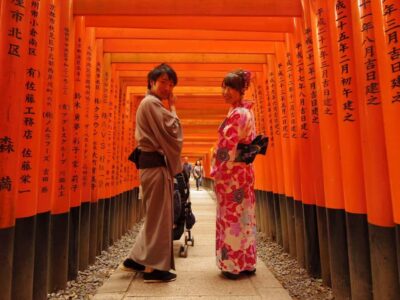
Osaka/Kyoto: Arashiyama, Nara & Fushimi Inari Shrine w/Lunch
Read our review →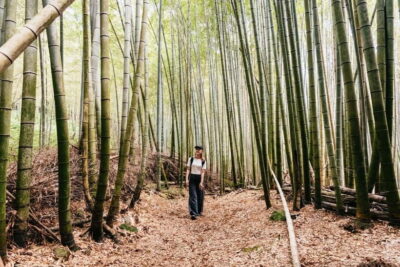
Kyoto Tea Ceremony & Kiyomizu-dera Temple Walking Tour
Read our review →Full Day Kyoto Tour : Bamboo Forest, Golden Temple, Fushimi Inari
Read our review →
Fushimi Inari Shrine and Tofukuji Temple E-Bike Tour
Read our review →
Early Morning Fushimi Inari Shrine – Beat the Crowds
Read our review →Browse the lists this tour appears in