
Reviewed · WORKSHOPS
Seoul: Vegan Temple Food Class, Jogyesa & Changdeokgung Tour
Korean temple food is not simply vegan cooking with the meat removed. It follows Buddhist ideas about seasonality, restraint, and mindful eating, and this tour lets you work with a practicing monk before visiting some of Seoul’s most important cultural sites. The cooking class is the heart of the day, while Jogyesa and Changdeokgung add context.
I like the chance to learn directly from a monk, and I like the mix of food, medicine, markets, temples, and royal architecture. Guides including Bruce, Gina, Ron, and BJ have been praised for explaining Korean customs clearly and helping with translation. The main drawback is practical: you cook standing and walk for much of the day, with no hotel pickup or drop-off.
Key points to know before booking
- The monk-led class changes with the seasons: The menu is not fixed, so you may learn dishes that reflect what is available at the time of your visit.
- The meal is entirely plant-based: No meat is used, making the class suitable for vegetarians and anyone curious about Buddhist food rules.
- The tour links several sides of Seoul: You move from monastic cooking to Jogyesa Temple, Insadong, a medicinal herb market, and a royal palace.
- The herbal market adds unusual local context: You can learn how Korean medicinal ingredients are sold and explained, with possible tastings of food and tea.
- Changdeokgung is included: The palace admission is covered, and the guide explains Joseon-era buildings and gardens.
- Saturday may matter for English cooking instruction: One booking note specifically recommends Saturday for classes conducted in English, so confirm this if clear instruction in English is important to you.
Why the temple food class is the real centerpiece
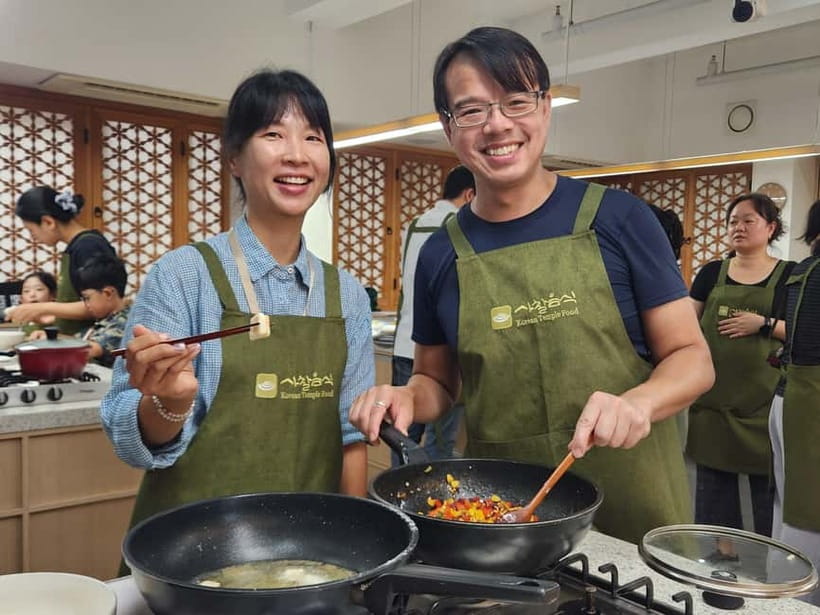
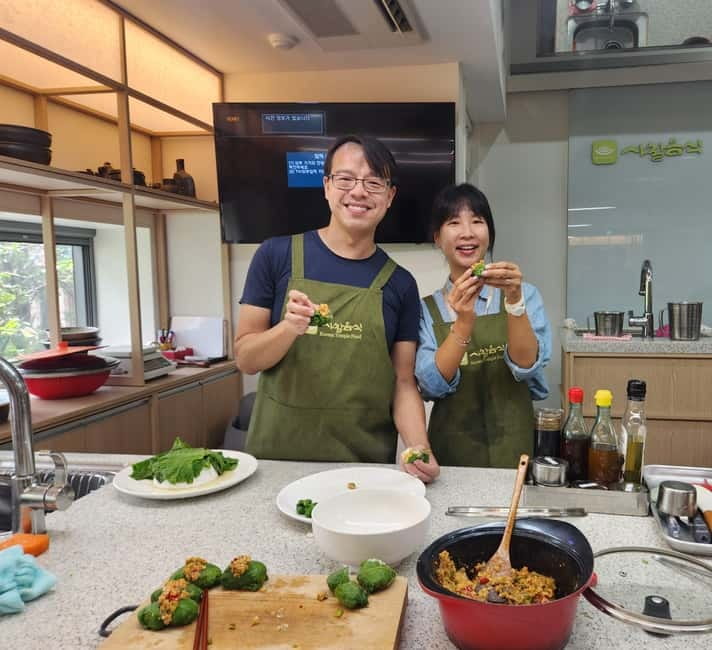
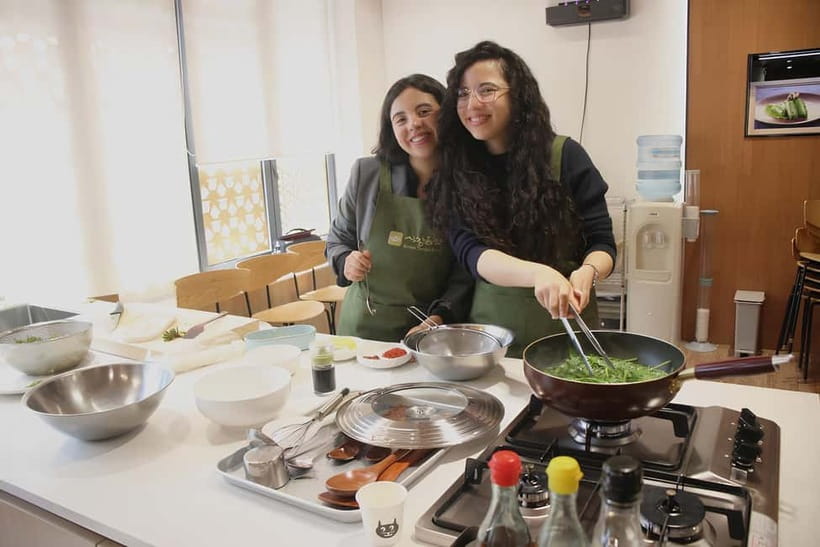
The most memorable part of this day is likely to be the cooking lesson. You do not simply watch a demonstration and receive a prepared meal. You take part in making vegan dishes in a calm, modern studio guided by a Buddhist monk.
That setting gives the food a clear purpose. Korean temple cuisine is shaped by Buddhist practice, so the emphasis is on simple preparation, seasonal ingredients, and respect for food. The monk explains how the dishes connect with monastic life and mindful eating, rather than treating the meal as just another cooking workshop.
I like this approach because it gives you a way to understand Korean culture through ordinary actions: washing, chopping, seasoning, cooking, and eating. You learn why restraint matters and how a plant-based meal can feel complete without meat.
The menu changes according to seasonal ingredients. That is good news if you prefer food with a sense of place, but it means you cannot book this class expecting one particular dish. If you have a favorite Korean food in mind, ask before booking rather than assuming it will appear.
The food is made without meat at all. The information provided describes it as suitable for vegetarians, and the fully plant-based format also makes it a comfortable choice for people seeking a wellness-focused food activity.
Cooking is done standing. The class is hands-on, so you should expect to move around rather than sit through a lecture. Afterward, you eat the dishes at the location. Because temple practice aims to avoid waste, you are asked to finish the meal there. If you want leftovers, bring your own reusable container.
That small detail tells you something useful about the tone of the class. This is not built around oversized portions or casual takeaway food. It treats ingredients and preparation with care.
Other shrines and temple grounds within reach of Seoul:
- Seoul: Palace, Temple and Market Guided Foodie Tour at Night
★ 4.9 · 750 reviews - Seoul: Mt Seorak + Naksansa Temple or Nami Island Group Tour
★ 4.7 · 422 reviews - Best Things to Do – Half Day Seoul Trip (Seoul Palace & Temple)
★ 5.0 · 190 reviews
Meeting the monk and making sense of Korean food rules
A major strength of the activity is the chance to ask questions while you cook. The monk can explain the ideas behind temple food in a more direct way than a standard city tour guide could.
The cooking lesson also opens the door to wider Korean food traditions. One guide, Gina, has been praised for explaining Korean food and medicine together, while other guides have helped explain how traditional medicine links foods with different body types and physical needs.
Keep the distinction clear: the tour introduces these ideas as part of Korean culture and traditional practice. It is not described as a medical consultation. Still, it can help you understand why Korean markets devote so much space to roots, herbs, dried ingredients, and ginseng.
Guides such as Bruce have also helped visitors translate and follow palace explanations, while Ron has been noted for his help with medicinal ingredients and temple cuisine. The particular guide can vary, but an English-speaking licensed guide is included.
The experience may be private in some cases. One booking account describes reserving a slot and finding the tour operated as a private experience with personal attention. Do not assume every departure will have the same format, but ask the provider if group size matters to you.
Jogyesa Temple, Seoul’s Buddhist center
After the meal, you visit Jogyesa Temple, the spiritual center of Korean Zen Buddhism. This is a useful stop after the cooking class because you can connect the food lesson with a living religious tradition.
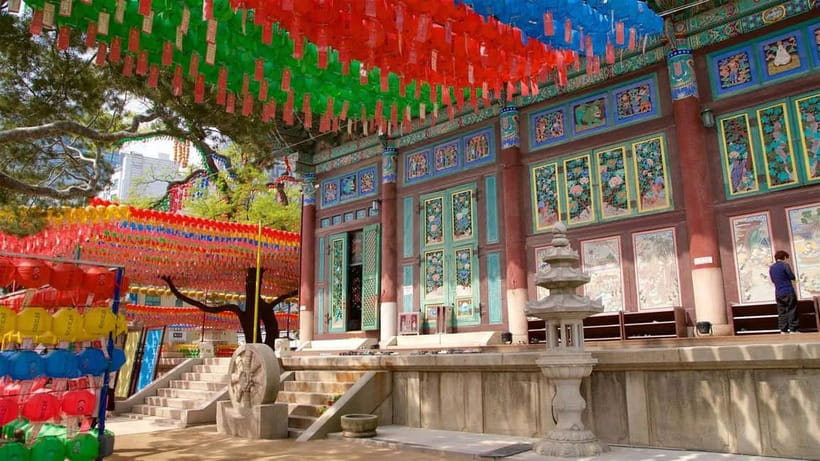
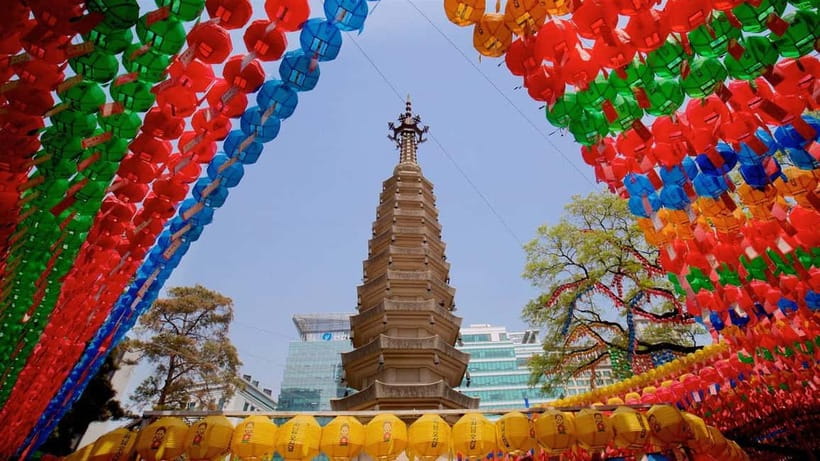
You will see colorful lanterns and old trees within the temple grounds. The visit is not just a photo stop. Your guide explains how Buddhist influence remains part of daily Korean life and helps you read the temple as more than a decorative building in central Seoul.
Jogyesa is especially effective in this itinerary because it slows the pace after the cooking activity. You have already heard about monastic values, and now you see the setting in which those values developed.
I would not expect a long private religious teaching session or a formal ceremony. The available information promises a guided visit, not participation in worship. Treat the temple as an active place of faith and behave quietly and respectfully.
The visit also gives you a break from the more commercial parts of central Seoul. You are still in the city, but the temple grounds offer a calmer setting beneath the trees and lanterns.
Insadong’s teahouses, crafts, and small discoveries
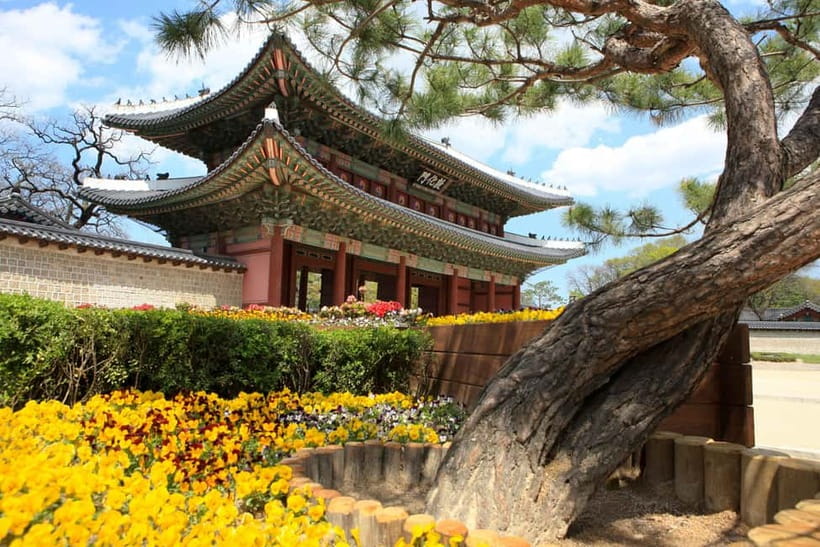
The route continues through Insadong, one of Seoul’s best areas for traditional arts and culture. Its streets include teahouses, craft shops, and calligraphy studios, giving you a quick look at the city’s artistic side.
This is a brief walk rather than a dedicated shopping tour. That is both a benefit and a limitation. You get a taste of Insadong without giving up the palace and market visits, but you may not have time to browse every shop or settle in for a long tea service.
A guide can make this short stop more useful by pointing out details you might miss on your own. You may see traditional crafts, local artwork, and small food shops along the way. One account describes time in a lively art market area, with the guide helping create a more personal visit and taking souvenir photos.
If you enjoy browsing, keep your expectations in check. The schedule covers several major stops, so Insadong works best as a cultural walk between the temple and the later parts of the tour, not as a full afternoon of independent shopping.
More temple trips with food stops in Seoul:
- Seoul Sunrise & Sunset Hike + Temple & K-Food Adventure
★ 4.8 · 6 reviews - Bangkok by Night: Temples, Markets and Food Tuk-Tuk Tour
★ 5.0 · 3,752 reviews - Bangkok: Markets, Temples and Food Night Tour by Tuk Tuk
★ 4.9 · 2,371 reviews - 1-Day Snow Monkeys, Zenko-ji Temple & Sake in Nagano
★ 5.0 · 1,020 reviews
The medicinal herb market and Korean wellness traditions
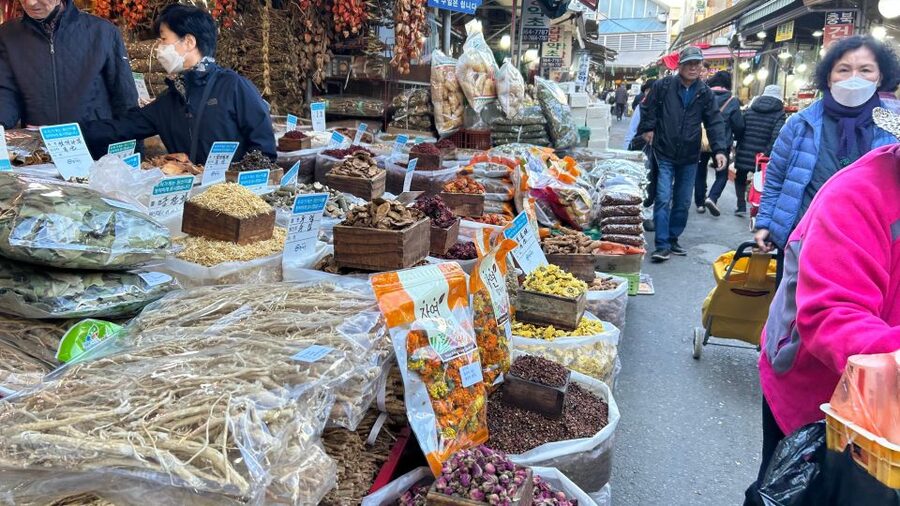
The medicinal herb and ginseng market adds a distinctly local angle. This is not the same experience as walking through a standard food market. The focus is on ingredients used in Korean traditional medicine, including medicinal plants, roots, and ginseng.
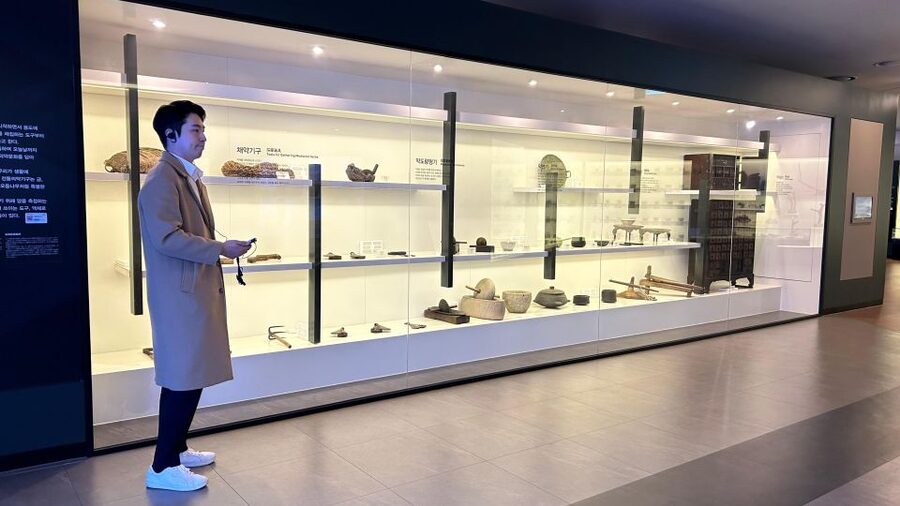
The activity is described as visiting Korea’s largest medicinal herb and ginseng market. A museum visit may also be part of the route, and one account describes seeing displays of traditional medicine while dressed in traditional clothing.
You may have opportunities to taste food and tea in the market area. These tastings help turn an abstract lesson about herbs into something you can see, smell, and sample. The exact items can change, so do not expect a guaranteed tasting menu.
This stop suits curious eaters who want more than a list of palace dates. You learn how food, wellness, and traditional beliefs overlap in Korean culture. The guide can explain how ingredients are categorized and how people have historically matched certain foods with different body types.
At the same time, this part may feel less immediately familiar than the temple or palace. If you are not interested in traditional medicine, some of the explanations may seem technical. I would still keep it on the itinerary because it offers a side of Seoul that many first-time sightseeing routes skip.
Changdeokgung Palace and the Joseon royal setting
The final major stop is Changdeokgung Palace, a UNESCO World Heritage site and former home of Korean royalty. Admission is included, which helps the $73 price make more sense.
Changdeokgung is known for its graceful architecture and quiet garden spaces. The palace gives you a strong contrast with the temple food class. In the morning, you explore Buddhist ideas about simplicity. Later, you see the formal spaces created for the Joseon dynasty court.
Your guide explains the palace buildings and the Joseon period, making the visit easier to follow. Bruce, in particular, has been praised for helping with translation and palace explanations, but the guide on your date may be someone else.
The palace is a good final stop because it gives the day a clear historical frame. You have encountered religion, food, medicine, markets, and art. Changdeokgung brings those themes into the political and royal story of Korea.
The tour information does not promise entry to every garden area or a separate garden ticket, so confirm the exact palace access if a particular section matters to you. You should also allow for a lot of walking across outdoor grounds, even though the route is not described as a strenuous hike.
How much value do you get for $73?
At $73 per person, this is not the cheapest way to see Jogyesa or Changdeokgung. You could visit those places independently for less if you are comfortable managing directions, admissions, and explanations on your own.
The value comes from the combination. The price includes a licensed English-speaking guide, the monk-led cooking class, and admission to Changdeokgung Palace. It also brings together several subjects that would otherwise require separate planning: temple food, Buddhism, traditional medicine, Insadong, and Joseon architecture.
I see the cooking class as the part that justifies the cost. A palace ticket alone would not. The chance to cook with a Buddhist monk and eat what you prepare gives the day a clear activity rather than a string of sightseeing stops.
You should also remember that hotel pickup and drop-off are not included. The meeting point is Anguk Station Exit 1, where you look for a Tripper sign. The tour ends back at the meeting point.
One account describes taking a taxi between parts of the itinerary. Since transportation is not listed as included, you should be prepared to pay for any local transfer that the guide recommends or that the route requires. Ask about this before setting your daily budget.
Who will enjoy this day most?
I would recommend this tour to you if you want food to be part of your cultural sightseeing, not just a break between attractions. It is also a strong match for vegetarians, plant-based eaters, and anyone curious about Korean Buddhist traditions.
You will get the most from it if you enjoy asking questions. The guides are there to explain customs, ingredients, medicine, and history, so a passive approach would leave value on the table.
It also suits visitors who want a structured day. The guide handles the transitions between the cooking class, temple, market areas, and palace. You do not need to build a route across central Seoul from scratch.
I would think twice if you have trouble walking long distances or standing during a class. The entire tour is on foot apart from any local transfer that may be arranged, and it runs in rain or snow. It is not recommended for people with mobility issues or difficulty walking for extended periods.
The exact class language deserves attention. The tour is listed as English-language, but one booking note says Saturday is the day to choose for English cooking classes. If communication with the monk is especially important to you, confirm the schedule before paying.
Practical details that shape the day
Meet at Anguk Station Exit 1. The guide carries a Tripper sign, and the tour returns to the same meeting point.
Wear comfortable shoes and clothing suitable for standing and walking. You may be outside at Jogyesa, Insadong, the market, and Changdeokgung, so dress for the weather. The tour runs in rain or snow unless conditions make it impossible to continue.
Bring a reusable container only if you want to take food away. The meal is intended to be finished at the class location, and taking leftovers without a container is not part of the arrangement.
The experience has a rating of 4.6 from 34 ratings, with especially strong praise for the cooking lesson, guide support, cultural explanations, and the personal feel of some departures. The recurring practical lesson is simple: this is a full cultural day, not a short cooking class with a palace ticket attached.
Should you book the Seoul temple food and palace tour?
Book it if you want a thoughtful, plant-based introduction to Seoul that connects food with Buddhism, traditional medicine, art, and royal history. The monk-led cooking class is the key reason to choose it, while Jogyesa and Changdeokgung give the day depth and variety.
Skip it if you want a relaxed schedule, private transportation, or lots of free time for shopping. The walking and standing are real, and extra transport costs may arise.
For the right visitor, $73 is fair value. You receive a hands-on class, a meal, a professional English-speaking guide, several cultural stops, and palace admission in one organized outing. I would confirm the English cooking schedule and transport details first, then book if the mix of food and history matches your interests.
FAQ
Where does the tour begin?
The tour begins at Anguk Station Exit 1. Look for the guide holding a Tripper sign.
Where does the tour end?
The activity ends back at the meeting point at Anguk Station Exit 1.
Is the cooking class fully vegan?
Yes. The temple food contains no meat and is fully plant-based.
Will the cooking menu be the same on every tour?
No. The menu changes according to seasonal ingredients, so the dishes can vary from one class to another.
Can I take the food home afterward?
The meal is meant to be finished at the class location to avoid food waste. If you want to take food with you, bring your own reusable container.
Is Changdeokgung Palace admission included?
Yes. Admission to Changdeokgung Palace is included in the activity price.
Is hotel pickup and drop-off included?
No. Pickup and drop-off are not included. You must reach the meeting point independently, and any local transportation used during the day may require separate payment.
Is the tour suitable for people with mobility issues?
The class is conducted standing, and the full tour is on foot. It is not recommended for people with mobility issues or difficulty walking long distances.
More temple visits with a hands-on workshop in Seoul
- Kyoto: Calligraphy class at Buddhist temple in city center
★ 5.0 · 167 reviews - Chinese Kungfu class in old temple beside Forbidden Ci
★ 4.8 · 53 reviews - Bali: Full-Day Private Water Temple Ritual & Yoga Class
★ 4.6 · 31 reviews - Thai Dance Class at Wat Arun
★ 5.0 · 30 reviews
More temple and food outings in Seoul
- Bangkok: Tuk Tuk Adventure Chinatown Michelin Food & Temples
★ 4.3 · 725 reviews - Old Delhi Food-Spice Market-Temples Tour Soon Featured on NETFLIX
★ 5.0 · 304 reviews - Takua Pa: Food Market, Tsunami Museum, Temple, & Old Town
★ 4.9 · 165 reviews - Bangkok Night Tour: Food, Temple & Tuk Tuk
★ 5.0 · 126 reviews
Newly written up around Seoul
- Seoul: War Memorial, Jogyesa Temple & Tapgol Park Tour★ 4.8 · 56 reviews
- Seoul Sunrise & Sunset Hike + Temple & K-Food Adventure★ 4.8 · 6 reviews
- Seoul: Temple & Starfield COEX Mall Gourmet Tour in Gangnam★ 4.7 · 22 reviews
- Seoul: UNESCO Sites tour: Palace, Shrine & Bukchon Village★ 4.8 · 26 reviews
- Seoul: Night Bongeunsa Temple Guided Tour★ 5.0 · 11 reviews
- Seoul: 4-Hour Guided Tour to Palace, Bukchon, Jogyesa Temple★ 5.0 · 3 reviews
- Gyeongbokgung Palace, Jogyesa Temple and Bukchon village★ 5.0 · 12 reviews
- Danyang Tour:Guinsa Temple & Bobaljae & Cheongpung Cable Car★ 5.0 · 15 reviews
Workshops, compared.
Calligraphy class at Buddhist temple in city center
Read our review →
Chinese Kungfu class in old temple beside Forbidden Ci
Read our review →
Full-Day Private Water Temple Ritual & Yoga Class
Read our review →
My Son Hindu Temples & Terracotta Workshop PRIVATE TOUR
Read our review →
Kanazawa: Samurai Swordsmanship Lesson at a rented temple
Read our review →
Cooking Class in a former Artist Monastery in the Heart of Monopoli
Read our review →Browse the lists this tour appears in