
Reviewed · MEIJI SHRINE & SENSO-JI TOURS
Tokyo: Asakusa & Tokyo’s Oldest Temple Senso-ji Walking Tour
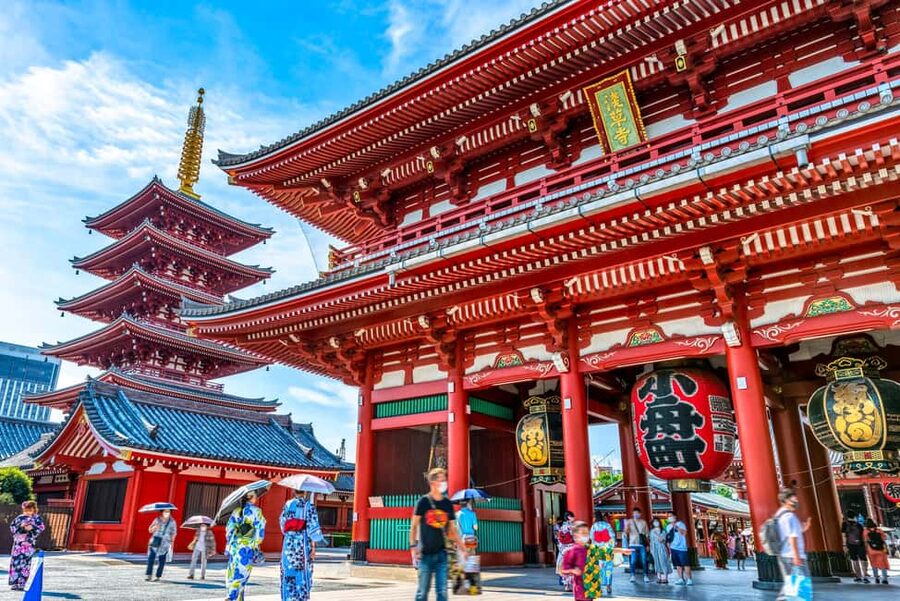
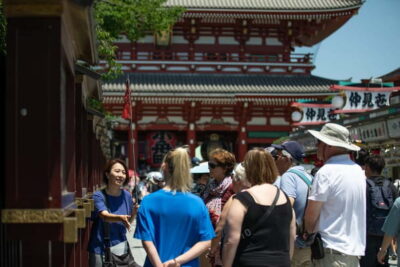
Senso-ji is the main event here, but the best part is reaching it through Asakusa’s old streets, where lanterns, snack stalls, and traditional shops create a sharp contrast with modern Tokyo. I like the clear focus: two hours, one historic district, and no wasted time crossing the city. I also like the small group limit of 10, which gives you a better chance to ask questions.
The $11 price is excellent for a guided introduction, especially if this is your first visit to Asakusa. Just keep your expectations sensible: the tour stays around one compact area, and one early guide received fair feedback for following a route without yet building a strong story around each sight.
Key points at a glance
- Senso-ji takes center stage: Visit Tokyo’s oldest and best-known Buddhist temple, with time for photos, sightseeing, and shopping.
- Kaminarimon is the meeting landmark: Find the group at Kaminarimon Police Station, a practical starting point beside Asakusa’s famous gate.
- Nakamise supplies the atmosphere: Walk a traditional shopping lane lined with small stores, sweets, snacks, and souvenirs.
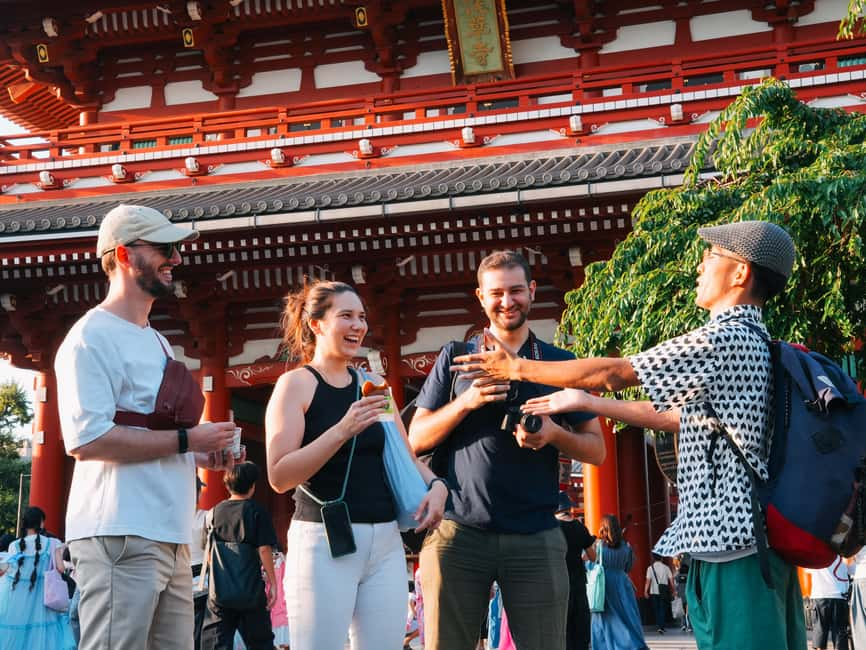
- Guides add local context: Lax and Shoma have been praised for clear English, warmth, and strong knowledge of Japanese culture.
- Small groups keep it personal: The group is limited to 10 people, useful in crowded Asakusa.
- Good value at $11: You get a two-hour guided walk with flexible cancellation up to 24 hours before departure.
Why Asakusa is a smart first stop in Tokyo
Tokyo can feel enormous at first. The city spreads across many districts, each with its own mood, and it is easy to spend your first day simply figuring out trains and neighborhoods.
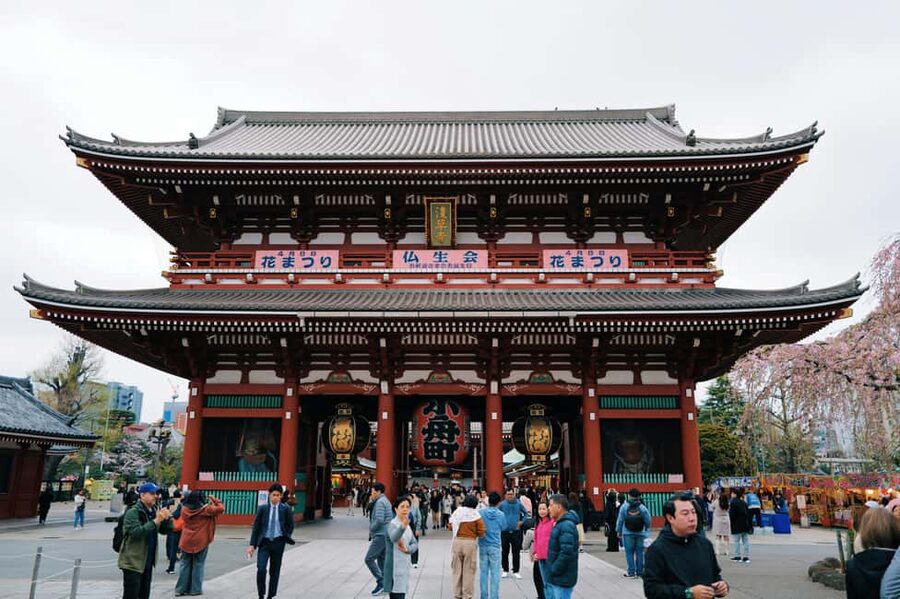
Asakusa gives you a manageable starting point. The sights sit close together, the route is on foot, and the district offers a clear introduction to older Tokyo. You can see a famous Buddhist temple, pass under a landmark gate, shop along a traditional lane, and hear how the area changed from the Edo period through the postwar years.
I like this kind of tour because it gives shape to a place that might otherwise become a string of quick photos. A guide can point out the meaning behind the gates, explain the role of the temple, and connect the street scenes with Asakusa’s past.
The experience is also short enough to fit around other plans. At two hours, it works well on a first full day in Tokyo, a morning before lunch, or an afternoon before you move on to another district.
More Temple Walking Tours in Japan
- Tokyo: Asakusa Walking Tour with Sensoji Temple Visit
★ 4.8 · 1,583 reviews - Tokyo: Meiji Shrine Walking Tour — Shinto & Imperial System
★ 4.9 · 266 reviews - Tokyo: Meiji Jingu Shrine and Shinto Culture Walking Tour
★ 5.0 · 245 reviews
Meeting at Kaminarimon Police Station
The tour begins at 雷門交番, known in English as Kaminarimon Police Station. This puts you close to Kaminarimon, the large entrance gate associated with Senso-ji and one of Asakusa’s most recognizable photo spots.
Meeting beside a police station is less glamorous than meeting beneath a temple gate, but it is easy to identify on a busy street. Look for the English name in your booking details and allow enough time to find the spot before the start.
There is no hotel pickup or drop-off. You make your own way to the meeting point, so the tour is best for anyone comfortable getting around Tokyo independently. The advantage is a lower price and a simple start in the heart of the district.
Your guide leads the walk from there. The group can include up to 10 people, which is small by city-tour standards. That size should help with hearing the guide and keeping the route together, though Asakusa can still feel crowded around the major gates and shopping street.
Kaminarimon and the first look at Senso-ji
Kaminarimon means Thunder Gate, and it sets the tone immediately. The gate is dramatic, ceremonial, and built for photographs. It also signals that you are entering the approach to Senso-ji rather than an ordinary shopping street.
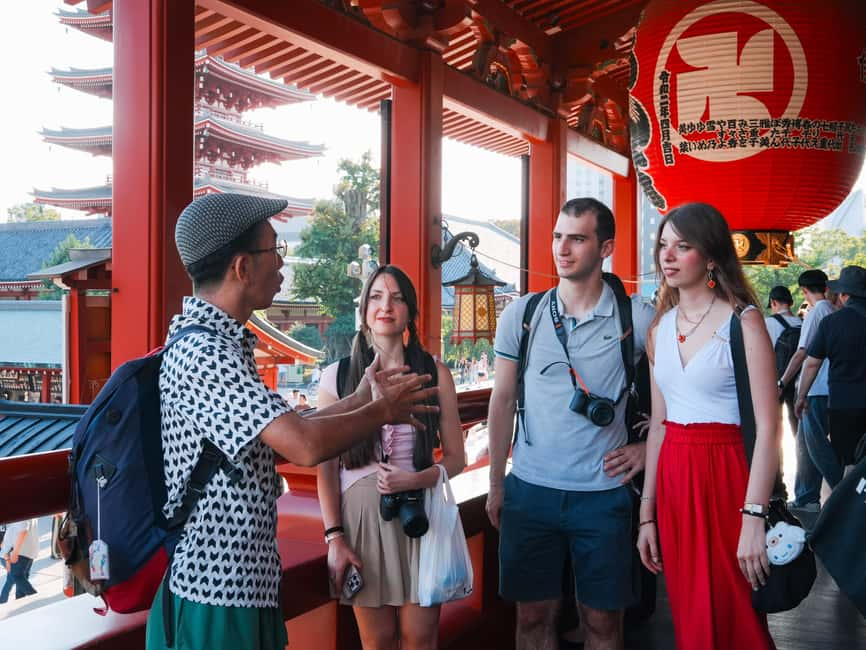
A guide is useful here because the gate is more than a pretty entrance. This is where the tour begins to connect architecture, religion, and daily life. You can ask questions about what you are seeing instead of simply moving along with the crowd.
The tour focuses on the story of Senso-ji, a Buddhist temple that dates back to the seventh century. That long history gives the visit weight, but the experience remains grounded in the present. People come here to worship, browse, eat, take pictures, and meet friends.
I would arrive with a little patience. Kaminarimon is one of the most photographed places in Asakusa, and you may need to pause while the group gathers or wait for a clear view. The reward is a strong opening image and an immediate sense of place.
Nakamise Street, snacks, and traditional shopping
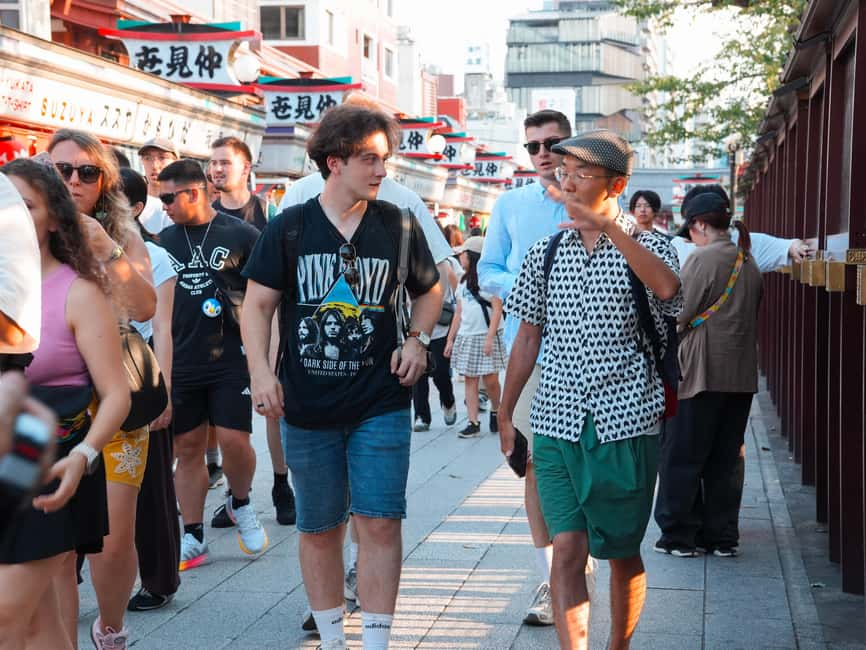
From Kaminarimon, the route continues along Nakamise Shopping Street. This is the main approach to Senso-ji, lined with traditional-style shops selling souvenirs, sweets, snacks, and small gifts.
The street is part of the attraction, not just a passage to the temple. You get color, movement, food smells, and the chance to see the commercial side of a major religious site. Freshly made sweets and street snacks are part of the atmosphere, although food purchases are not included in the tour price.
The schedule allows about an hour for Nakamise and sightseeing around this part of the route. In practice, I would treat that as time for walking, listening, photographs, and perhaps a quick purchase rather than a full shopping session. If you stop at every shop, you may find yourself behind the group.
This is one reason a guided visit helps. Your guide can keep the route moving while pointing out what deserves attention. Guides also bring stories about Asakusa’s older character, including its Edo-era role and the entertainment districts that once shaped the neighborhood.
The drawback is that Nakamise can feel commercial. If you want a quiet temple approach, this is not it. The street is lively and geared toward visitors, with many shops selling similar gifts. Still, it gives you a useful picture of how worship, food, trade, and sightseeing overlap in central Tokyo.
More Temple Walking Tours in Tokyo
- Tokyo: Meiji Shrine and Shinto Culture Walking Tour
★ 5.0 · 225 reviews - Tokyo: Meiji Shrine Walking Tour — Shintoism & Imperial System
★ 5.0 · 209 reviews - Tokyo: Asakusa Temple & Shrine Walking Tour with Local Guide
★ 5.0 · 105 reviews - Tokyo: Meiji Shrine Walking Tour with Local Guide
★ 4.9 · 9 reviews
Inside Senso-ji, Tokyo’s oldest temple
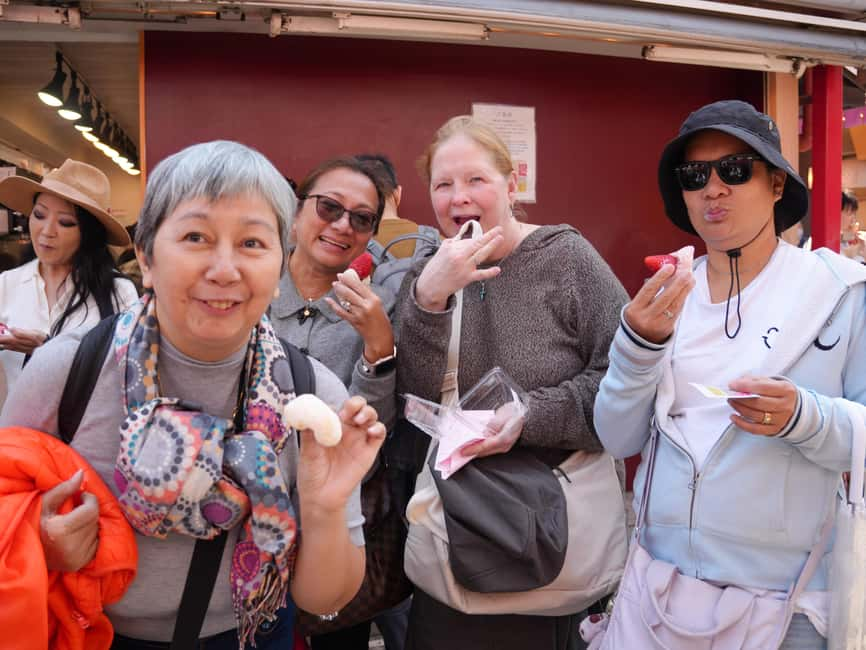
Senso-ji is the heart of the walk. The temple is introduced as Tokyo’s oldest, with roots reaching back to the seventh century, and it remains Asakusa’s main cultural anchor.
Expect time for a temple visit, photos, sightseeing, and some shopping near the complex. The tour does not treat Senso-ji as a quick backdrop. The guide explains its stories and legends, helping you understand why this place matters to the district.
I especially like this stop for first-time visitors because it gives you a clear entry point into Japanese religious culture. You can learn how the temple fits into local life without needing to begin with a long lecture or a museum visit.
The atmosphere changes as you move from the shopping lane toward the temple buildings. You still have crowds and cameras, but the purpose of the site becomes clearer. Your guide can explain details that are easy to miss when you are concentrating on where to walk next.
A practical point: this is a walking tour, not a private temple appointment. The group must follow the public route, and the guide cannot control the crowds. You should expect shared spaces and a steady flow of people.
Stories of Edo, geisha districts, and postwar Asakusa
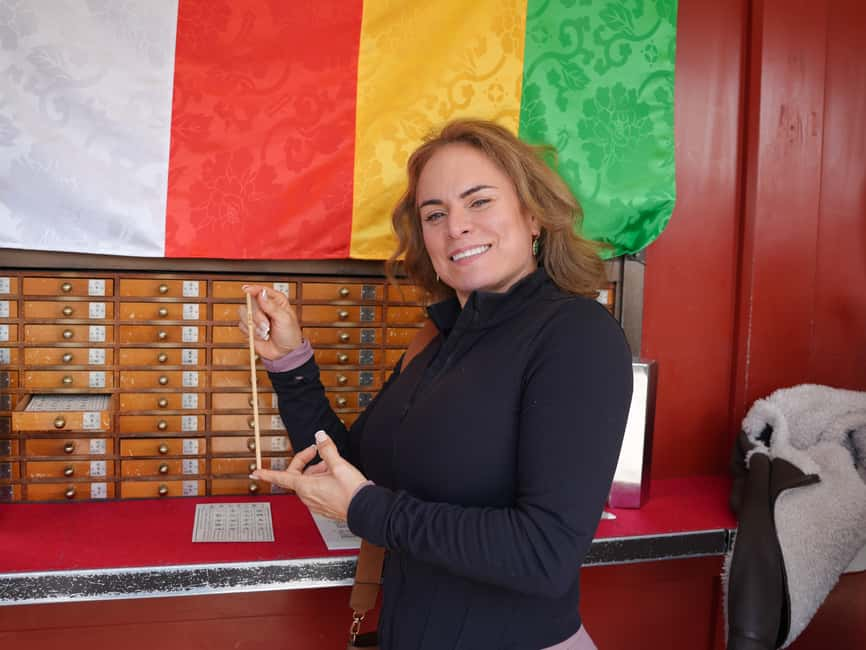
The most useful part of a good Asakusa tour is the story connecting the sights. The route covers more than a gate and a temple. It touches on Asakusa’s time as part of Edo-era Tokyo, its geisha quarters, smaller shrines, and its changes from samurai-era stronghold to postwar revival.
Those subjects make the district easier to read. A shopfront, side street, or shrine is not just another old-looking building. It becomes part of a neighborhood that has repeatedly adapted to changing times.
The tour also presents Asakusa as a place where old and new Tokyo meet. That contrast is visible without needing a long journey. You can move from a historic temple complex to a busy commercial lane, then into quieter streets where local traditions are less obvious.
Your experience will depend partly on the guide. Lax has been praised for making the tour fun and bringing strong knowledge of the city. Shoma has been described as clear, helpful, kind, and especially good at explaining Japanese culture and differences between Japanese and Anglo ways of thinking.
That range matters. A guide who simply points out buildings gives you a route. A guide who explains why the district developed as it did gives you a better understanding of Tokyo. One early guide was still developing this storytelling skill, so the quality may vary by departure.
What the two-hour schedule feels like
The listed duration is two hours, and that is enough for an introduction rather than a full study of Asakusa. The core route takes you through Nakamise Street, Senso-ji, and the surrounding Asakusa area before returning to Kaminarimon Police Station.
The timing is well suited to you if you want orientation. You will see the major sights, hear the basic story, and learn where you may want to return on your own.
It is less suited to you if you want long periods for shopping, prayer, street photography, or independent wandering. The group needs to stay together, and the guide has a route to complete.
I would keep the rest of the day flexible around the tour. The walk itself is not long by Tokyo standards, but stopping for photos and moving through crowds can make the pace feel full. You may want to return later for food or more shopping once you know the layout.
The tour ends back at the same police station. That is convenient because you finish where you started and can continue exploring Asakusa without needing to retrace the entire route.
The guide makes the difference
This experience is sold as a guided walk, so the guide is not a minor detail. You are paying $11 partly for the route, but mainly for the explanations that bring the route to life.
Lax has received particularly strong praise for being friendly, enthusiastic, and well informed. One small-group departure became especially personal because only one booking party attended. That kind of situation can turn a standard walk into a more tailored conversation, though you should not assume you will have a private tour.
Shoma has also been praised for excellent English and for explaining Japanese culture in a way that connects with English-speaking visitors. His strength appears to be context: not only what you are looking at, but how Japanese and Anglo cultural habits can differ.
The feedback is not uniformly glowing. A newer guide was described as pleasant but still learning how to engage the group and build a stronger story around the sights. That is a fair consideration for anyone expecting polished guiding at every departure.
The small group helps reduce this risk. With no more than 10 people, you can ask a question, signal if you missed a point, and have a better chance of direct conversation. Keep your expectations realistic, though. A low-cost group walk will not always have the depth or consistency of a private specialist tour.
Is $11 good value?
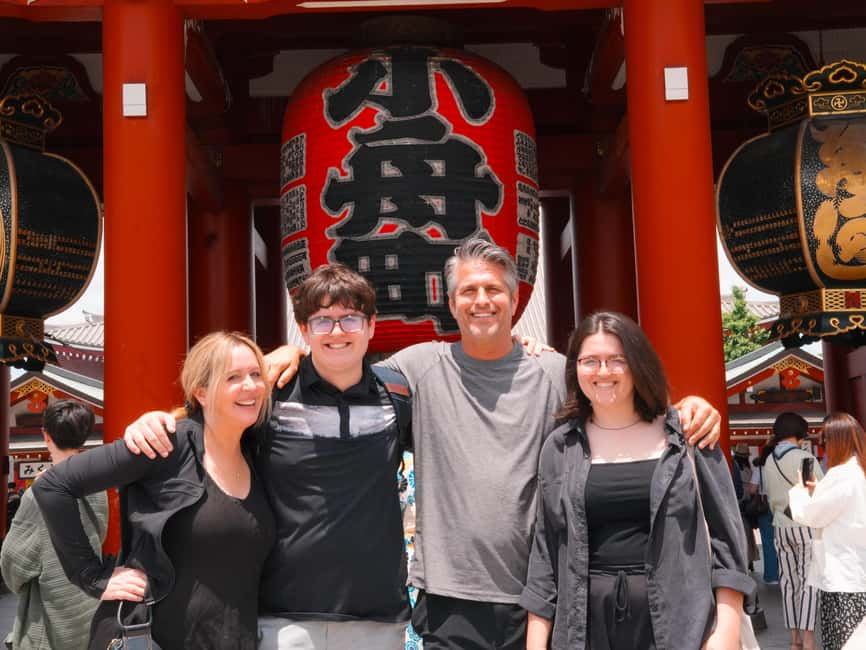
Yes, for most visitors, the price is hard to criticize. At $11 per person, you receive a two-hour walking tour, an English-speaking guide, and visits to the central sights of Asakusa.
The value comes from focus. You are not paying for transportation, hotel pickup, a meal, or a long list of scattered attractions. You are paying for a compact introduction to one of Tokyo’s most important historic districts.
Admission is listed for Asakusa, Senso-ji, and Nakamise Street, but the main benefit is the guided access and explanation rather than an expensive ticketed attraction. The tour gives you a starting framework that can make later independent visits more rewarding.
I would not choose it if you already know Senso-ji well or prefer to explore entirely alone. You can walk through the district without a guide. The $11 becomes worthwhile when you value clear explanations, local stories, and help noticing details.
Flexible booking also adds practical value. You can reserve now and pay later, and cancellation is available up to 24 hours before the start for a full refund. That helps if your Tokyo schedule is still shifting.
Who should book this Asakusa walk?
I would recommend it most strongly to first-time Tokyo visitors, history fans, and anyone who wants a gentle introduction to Japanese temples and neighborhood culture.
It also suits you if you have only a short time in Asakusa. The route covers the main sights without requiring you to plan a map, research temple history, or decide which streets matter.
Families and mixed-interest groups may find the format useful because the tour combines photos, food shops, shopping, architecture, legends, and cultural explanation. The two-hour length is also easier to fit into a busy day than a longer city tour.
You may want something else if you are looking for a food tour, a private guide, or a slow photography walk. Food is part of the setting, but there is no included meal. The group format also means you cannot set the pace entirely yourself.
Should you book it?
Book this tour if you want an inexpensive, well-focused introduction to Senso-ji and Asakusa with an English-speaking guide. The standout strengths are the $11 price, small group limit, central route, and guides such as Lax and Shoma, who have been praised for warmth and cultural insight.
Skip it if you already know the district or want a highly polished, specialist-led experience every time. The route stays within one area, and guide quality can vary. For most first-time visitors, though, this is a sensible way to get your bearings before exploring Asakusa on your own.
FAQ
How much does the Asakusa walking tour cost?
The tour costs $11 per person.
How long does the tour last?
The advertised duration is two hours.
Where does the tour meet?
Meet at Kaminarimon Police Station, listed as 雷門交番.
Where does the tour finish?
The walk returns to Kaminarimon Police Station.
What language is the tour offered in?
The live tour guide speaks English.
How many people can join the group?
The group is limited to 10 participants.
Does the tour include hotel pickup and drop-off?
No. Hotel pickup and drop-off are not included.
Which places are visited?
The route includes Nakamise Shopping Street, Senso-ji Temple, and the wider Asakusa area.
Are admission fees included?
Admission to Asakusa, Senso-ji Temple, and Nakamise Shopping Street is listed as included.
Can I cancel for a full refund?
Yes. You can cancel up to 24 hours in advance for a full refund.
More Meiji Shrine and Senso-ji Tours in Tokyo
- Tokyo Panoramic 1 Day: Meiji Shrine, Asakusa, Odaiba and SKYTREE®
★ 4.5 · 1,222 reviews - Tokyo: Asakusa and Tokyo’s Oldest Temple Senso-ji Tour
★ 4.9 · 352 reviews - Tokyo Morning Tour: Asakusa, Meiji Shrine and Tsukiji Fish Market
★ 5.0 · 128 reviews - Tokyo Morning Tour: Meiji Shrine, Asakusa & Fish Market
★ 4.9 · 44 reviews
Newly written up around Tokyo
- Tokyo: Snow Monkey and Zenkoji Temple Day Trip In Low Price★ 5.0 · 5 reviews
- Tokyo: Gotokuji Culture Walk & Lucky Cat Temple Experience★ 4.9 · 5 reviews
- :Tokyo,Shibuya /Meiji Shrine tour in KIMONO/English-friendly★ 5.0 · 4 reviews
- Tokyo: Sensoji Temple & Street Food: Private Tour with guide★ 4.6 · 8 reviews
- Tokyo: Visit 5 Shrines & Collect Goshuin on Private Tour★ 5.0 · 3 reviews
- Tokyo War History Tour: Yasukuni Shrine & War Museum★ 4.5 · 6 reviews
- Tokyo: Shibuya Sky, Harajuku & Meiji Shrine Highlights Tour★ 4.5 · 9 reviews
- Tokyo: Private Meiji Shrine & Harajuku Highlights Tour★ 4.5 · 4 reviews
Meiji Shrine & Senso-ji Tours, compared.
Asakusa Walking Tour with Sensoji Temple Visit
Read our review →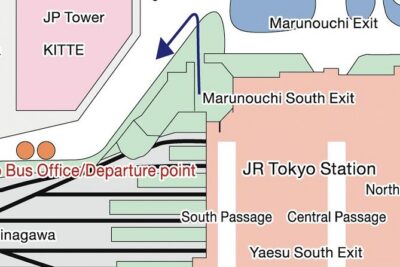
Tokyo Panoramic 1 Day: Meiji Shrine, Asakusa, Odaiba and SKYTREE®
Read our review →
Asakusa Senso-ji Temple and Old Tokyo Walking Tour
Read our review →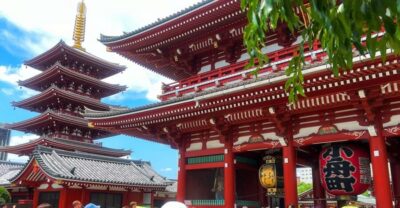
Asakusa and Tokyo’s Oldest Temple Senso-ji Tour
Read our review →
Meiji Shrine Walking Tour — Shinto & Imperial System
Read our review →
Meiji Jingu Shrine and Shinto Culture Walking Tour
Read our review →
Meiji Shrine Walking Tour — Shintoism & Imperial System
Read our review →Browse the lists this tour appears in