
Reviewed · MEIJI SHRINE & SENSO-JI TOURS
Tokyo: Meiji Shrine Walking Tour — Shinto & Imperial System
Meiji Shrine gives you a rare Tokyo trick: within minutes of Harajuku’s busy streets, city noise fades beneath a canopy of about 100,000 trees. The walk feels calm and slightly mysterious, yet your guide keeps it grounded with clear explanations of Shinto, the imperial family, and Japan’s jump from samurai rule to modern nation.
I like two things here. First, the small group, capped at 10, makes it easier to ask about customs and get help with shrine rituals. Second, the tour connects pretty details to real meaning, from the 12-meter torii made of 1,500-year-old Taiwanese cypress to the poetry of Emperor Meiji and Empress Shoken. The main consideration is that this is an English-only walking tour, and the pace includes a fair amount of standing and walking.
Key points to know before you book
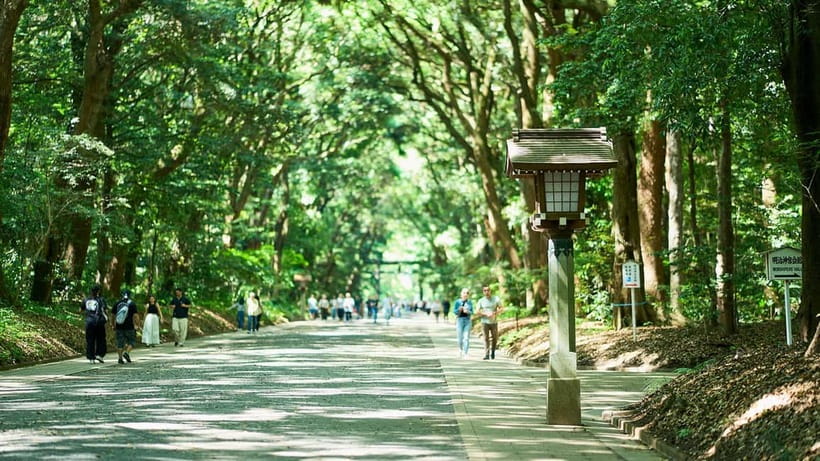
- The forest is part of the experience: The approach to Meiji Shrine is shaded, quiet, and surprisingly removed from central Tokyo.
- The 12-meter torii sets the tone: You’ll pass through Japan’s largest wooden torii, built from ancient Taiwanese cypress.
- Etiquette is explained, not assumed: Your guide shows you how to approach the shrine, where to walk, and how to pray respectfully.
- History has a clear storyline: The tour follows Japan’s movement from samurai society to the modern imperial state associated with Emperor Meiji.
- Small groups make a difference: With no more than 10 people, guides such as Yuuka, Keiko, Yuki, and Ayaka can answer questions and assist with photos or shrine activities.
- The finish is gentle: Mori no Terrace gives you time for Japanese tea, light snacks, and shrine-related souvenirs after the guided walk.
Why Meiji Shrine feels far from Tokyo
The tour begins near Harajuku Station, one of Tokyo’s most useful starting points for this part of the city. You meet your English-speaking guide, then leave the station area behind and enter the broad approach to Meiji Shrine.
The change is immediate. The trees block much of the traffic noise, and the path takes on a slower rhythm. Birdsong and footsteps replace the usual city soundtrack. I like this opening because it does not rush you straight to a building. You first get a sense of why Shinto places are tied so closely to nature.
Your guide also helps explain a point that is easy to miss on your own. Meiji Shrine is not simply a green park with a famous entrance. The forest, the approach, the gates, the cleansing customs, and the main shrine all form part of a religious setting. Even if you are not religious, that context makes the walk more than a photo stop.
The path is generally easy to follow, but you should wear comfortable shoes. The tour lasts 90 to 135 minutes, and the longer version gives more room for questions, photographs, free time, and the café stop. The duration may vary by start time and group pace.
More Temple Walking Tours in Japan
- Tokyo: Asakusa Walking Tour with Sensoji Temple Visit
★ 4.8 · 1,583 reviews - Tokyo: Meiji Jingu Shrine and Shinto Culture Walking Tour
★ 5.0 · 245 reviews - Tokyo: Meiji Shrine and Shinto Culture Walking Tour
★ 5.0 · 225 reviews
The first torii and the proper way to enter
One of the first stops is Meiji Jingu Ichino Torii, where your guide introduces the basic rules of shrine behavior. A torii marks the boundary between ordinary space and a sacred area. You do not need to know every custom before arriving. That is one of the tour’s practical strengths.
At the torii, you learn that the middle of the path is called seichu and is traditionally reserved for deities. You are encouraged to walk along one side instead of taking the center line. It is a small detail, but it changes how you move through the grounds and helps you avoid treating the shrine like an ordinary shortcut.
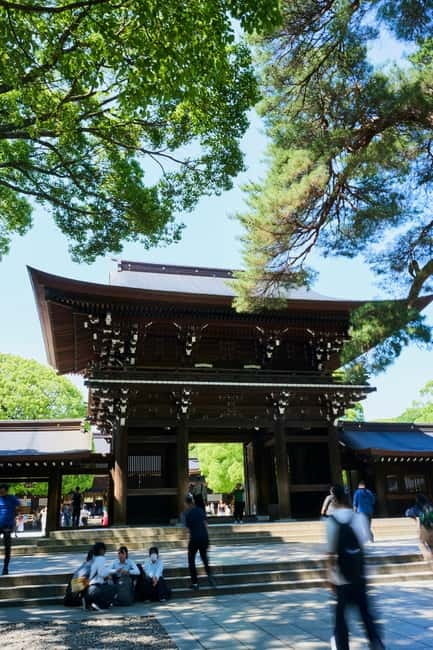
The tour then reaches the large torii, a major visual moment. This 12-meter wooden gate was made from a 1,500-year-old Taiwanese cypress. Its scale is impressive, but the guide’s explanation gives it more weight than a quick photograph would.
You will have time to stop for pictures. Still, the best way to appreciate it is to pause before raising your camera. Look at the height, the simple woodwork, and the way the gate frames the forest path. The effect is powerful because the structure is plain rather than overly decorated.
Sake barrels, wine barrels, and what they reveal
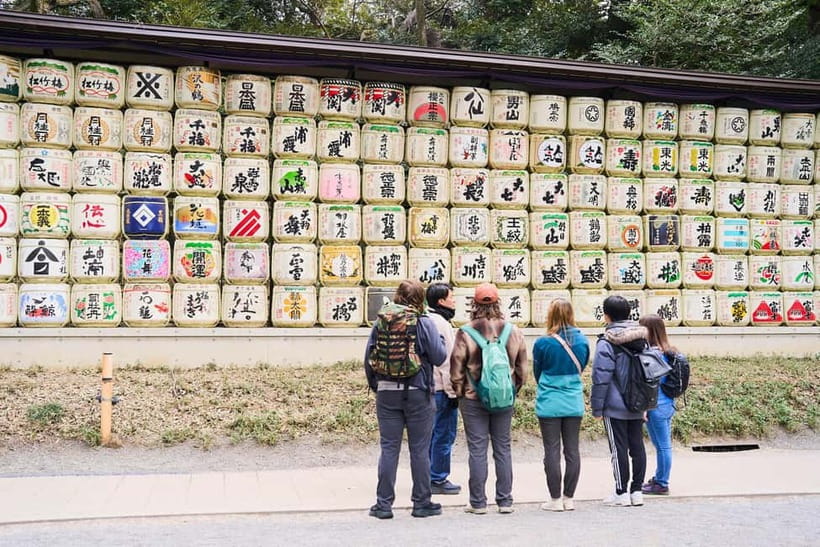
The route includes Meiji Shrine’s consecrated wine and sake barrels. These colorful barrels are among the most photographed details along the approach, especially because they contrast with the dark trees and restrained shrine architecture.
A guide can explain why they are placed here and how offerings relate to Shinto practice. This is where the tour earns its modest price. You are not only being shown an attractive object. You are given a reason to notice it and a cultural frame for understanding it.
The itinerary lists both the consecrated wine barrels and consecrated sake barrels as separate stops. The actual amount of time spent at each may be brief, around five to ten minutes, but that is enough for a short explanation and photos. If you already know Japanese shrine customs, these stops may feel familiar. If this is your first shrine visit, they help you read the setting with more confidence.
Several guides are praised for making these small details memorable. Yuuka, for example, has used old photographs to show what the area looked like before the shrine was built. That kind of visual aid is especially useful when the present-day forest makes it hard to imagine the site’s earlier appearance.
Shinto explained through simple actions
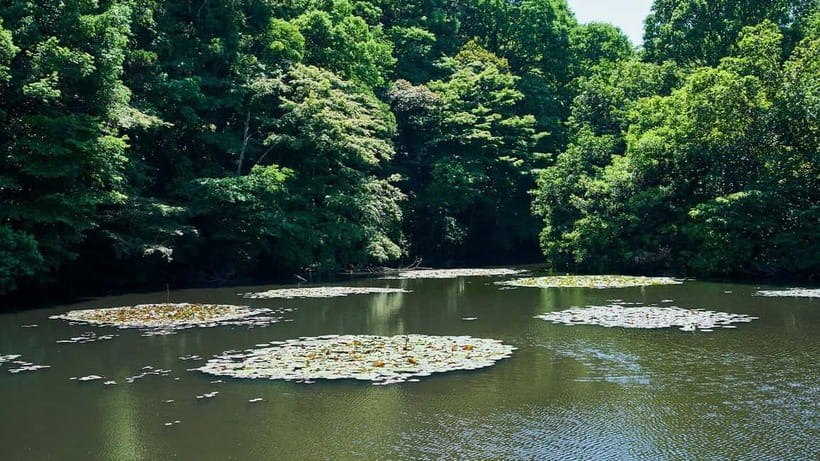
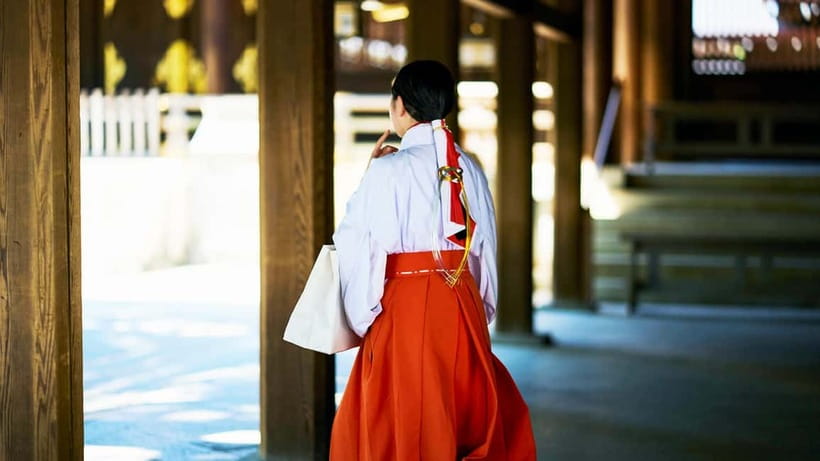
At the main shrine, the tour turns from walking and observation to participation. Meiji Shrine offers a chance to experience Shinto customs in a respectful way, with your guide explaining what to do and what to avoid.
Shinto is presented as an old Japanese religion rooted in respect for nature and harmony with the divine. You will not be expected to arrive with religious background. The guide’s job is to explain the meaning behind the actions without making the visit feel like a classroom lecture.
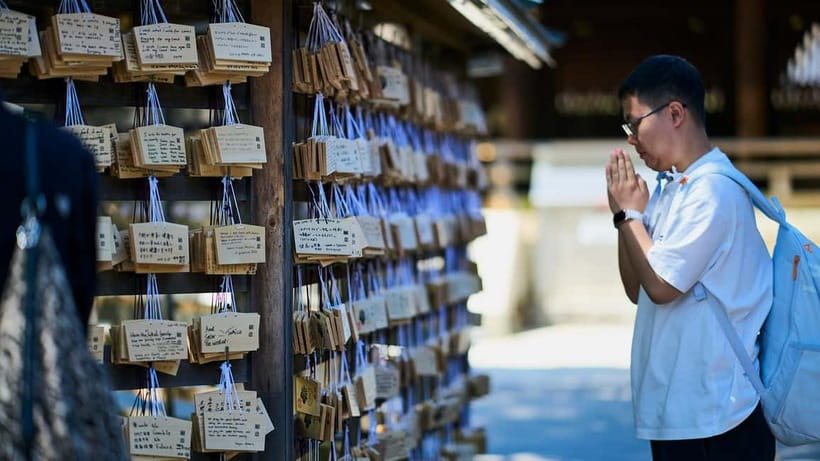
This practical help is one of the strongest reasons to book the tour. Guides have assisted visitors with offering coins, writing wishes, praying, and handling shrine activities. One guide even provided coins when a participant did not have any. You can also ask questions as you go, rather than trying to copy the person in front of you and hoping you got it right.
The tour may also help you distinguish a shrine from a Buddhist temple, as well as clarify the difference between haiku and waka poetry. Those comparisons are useful for the rest of a Japan trip. Once you understand the basic signs and customs, other religious sites become easier to appreciate.
Meiji Shrine can be busy, particularly on weekends and during important holiday periods. The forest absorbs some of the city’s energy, but the main shrine area may still have plenty of people. A guide helps you focus on the customs and meaning instead of feeling lost in the crowd.
More Temple Walking Tours in Tokyo
- Tokyo: Meiji Shrine Walking Tour — Shintoism & Imperial System
★ 5.0 · 209 reviews
Emperor Meiji, Empress Shoken, and Japan’s modern turn
The historical section gives the tour its main argument. Meiji Shrine honors Emperor Meiji and Empress Shoken, figures linked to Japan’s transformation from a samurai-led society into a modern state.
Your guide explains the imperial system and the Meiji period in accessible terms. The experience is not a full political history of Japan, and it should not be treated as one. Instead, it offers a useful introduction to how the country moved through a major period of change.
That transition is important because modern Tokyo can otherwise feel disconnected from the Japan of samurai, court tradition, and old religious customs. The tour connects those pieces. You learn why this particular shrine matters and why it remains meaningful to people in Tokyo.
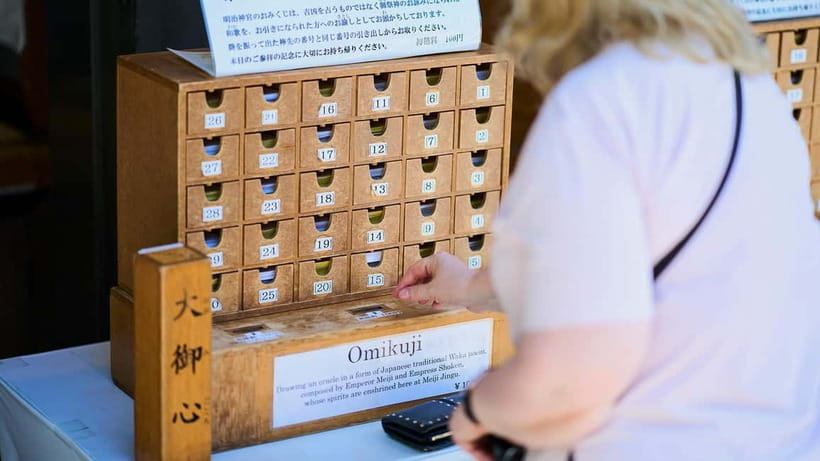
A stop focused on the imperial poetry adds a quieter, more personal side to the story. Meiji Shrine offers Omigokoro, an omikuji-style fortune featuring poems written by Emperor Meiji and Empress Shoken. English translations make the poems accessible, so you can understand the message rather than taking home a paper whose meaning is unclear.
The poetry stop will appeal to you if you like literature, symbolism, or small cultural objects. If you prefer architecture and photography, it may feel less central. The value depends on your interests, but the English translations make it easy for international visitors to take part.
Forty-five minutes at the shrine

The main Meiji Shrine visit allows about 45 minutes for guided sightseeing, free time, and shopping. This is the heart of the tour, and the schedule gives you enough room to look around without turning the visit into a race.
You can make offerings, follow the prayer customs, buy omamori protective charms, and explore the area at your own pace. These charms are a practical souvenir because they connect directly to the shrine’s religious role. The Omigokoro poems offer another option if you want something less familiar than a standard keepsake.
Guides have also helped visitors take photographs and write wishes. That can be valuable if you are traveling alone, visiting with children, or simply want a picture that does not look like a rushed selfie. Guides such as Ayaka and Keiko are repeatedly praised for giving individual attention while still keeping the group moving.
You may see a wedding ceremony or other shrine activity, but this is not guaranteed. If something is taking place, remember that the shrine is an active religious site, not only a sightseeing attraction. Your guide can help you understand when it is appropriate to watch, photograph, or step aside.
The main drawback is that a 45-minute visit can feel short if you want extended time for shopping, quiet reflection, and photography. The tour is designed to give you a well-shaped introduction, not an entire morning of unstructured exploration. You can return later if you want more time.
Mori no Terrace and the softer finish
After the shrine, the route finishes at Forest Terrace Meiji Jingu and Café Mori no Terrace. The stop lasts about 15 minutes and provides a welcome pause after the walking portion.
You can enjoy Japanese tea and light snacks while looking out at the surrounding greenery. The café is not presented as a full meal stop, so do not book this expecting lunch. Think of it as a calm place to sit, gather your thoughts, and continue the conversation with your guide.
The nearby gift shop offers small mementos, including eco-blocks made from fragrant Japanese camphor and miniature barrels of sacred sake. These are more distinctive than generic Tokyo souvenirs and are easy to pack.
I like ending here because the tour moves from ritual, to history, to a simple break. It gives you a little time to absorb what you have seen before returning to Harajuku Station. The official drop-off points are Harajuku Station, so the experience fits neatly into a day that also includes the surrounding Harajuku area.
Guides and group size
The tour is limited to 10 people and operates in English only. That combination matters. You are not following a large flag through the forest, and you have a reasonable chance to ask questions without holding up dozens of people.
The guides named in the available feedback include Keiko, Yuuka, Yuki, Ayaka, Nonoka, Nono, Mayuko, Mia, Nanami, and others. Their strongest shared quality is clear explanation. Several are praised for using humor, personal stories, historical photographs, and simple examples to make Shinto and imperial history easier to follow.
Guide assignments can vary, so you should not book on the assumption that one particular person is guaranteed. Still, the repeated praise for different guides suggests that the operator has a broad team able to handle questions and adapt the pace.
The small-group format also helps if you are new to Japan. Guides have offered advice about other Tokyo sights, answered difficult questions, helped with photos, and adjusted the discussion to individual interests. One participant received what was effectively a private tour because the group was so small that day.
Is $23 a fair price?
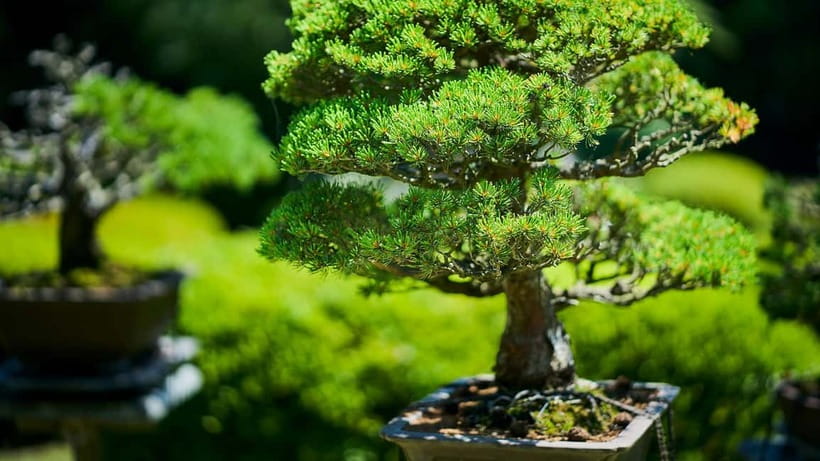
At $23 per person, this is a strong value if you want more than a walk through attractive grounds. Entry to a major shrine area may be free or inexpensive, but the real cost here pays for interpretation, etiquette help, historical context, and time-saving guidance.
You could visit Meiji Shrine on your own and still see the torii, forest, barrels, main shrine, charms, and café. What you would miss is the explanation connecting them. You might also hesitate over how to enter, where to walk, how to pray, or what the poems and offerings mean.
The price is less compelling if you already have a firm grasp of Shinto, shrine etiquette, and the Meiji period. Independent visitors who prefer to wander silently may also find the scheduled route restrictive. For a first visit, though, $23 is modest compared with the cost of a meal or a major Tokyo attraction, and the 90 to 135 minutes are used well.
Free cancellation up to 24 hours before the start and reserve-now, pay-later booking add useful flexibility. The meeting point can vary by booking option, so check the exact details before you leave for Harajuku Station.
Who should book this Meiji Shrine walk?
I would choose this tour for a first visit to Japan, especially if you want cultural context at the start of your trip. It also suits solo visitors, couples, families, and anyone who feels unsure about shrine etiquette.
It is a good fit if you enjoy history, religious customs, photography, poetry, or quiet city walks. The English-only format is clear, so it is not the right choice if you need Japanese-language support.
You should also be comfortable walking and standing for up to two hours. The forest path is part of the appeal, but this is not a seated presentation. Bring comfortable shoes and allow extra time if you want to browse charms or souvenirs after the guided portion.
Should you book it?
Book this Meiji Shrine tour if you want to understand what you are seeing, not simply take pictures of it. The forest, ancient torii, sake barrels, imperial poetry, and shrine rituals provide plenty to look at, while the guide gives those details a useful place in Japan’s story.
Skip it if you prefer complete independence, already understand Shinto customs, or want a much longer visit with no fixed route. For most first-time visitors, the small group, English explanations, practical etiquette help, and $23 price make this one of the more sensible introductions to Meiji Shrine.
FAQ
Where does the Meiji Shrine walking tour start?
The tour has starting location options at Harajuku Station. The exact meeting point may vary depending on the option you book, so check your booking details before arrival.
How long does the tour last?
The tour lasts between 90 and 135 minutes. Starting times and availability can vary.
Is the tour conducted in English?
Yes. The tour includes a live English-speaking guide, and Japanese-language support is not available.
How many people can join the group?
The group is limited to 10 participants. Some departures may be smaller.
What will I see at Meiji Shrine?
The route includes the shrine forest, Meiji Jingu Ichino Torii, the consecrated wine and sake barrels, the large wooden torii, imperial poetry, the main shrine, and Mori no Terrace.
Can I learn shrine etiquette during the tour?
Yes. The guide explains customs such as walking along the sides of the path, making offerings, praying, and behaving respectfully inside the shrine grounds.
Can I buy charms or souvenirs?
Yes. At the shrine, you can purchase omamori protective charms and Omigokoro poetry fortunes. Mori no Terrace also has a gift shop with items such as camphor eco-blocks and miniature sacred sake barrels.
Can I cancel the booking?
You can cancel up to 24 hours in advance for a full refund. The activity also offers reserve-now, pay-later booking.
More Meiji Shrine and Senso-ji Tours in Tokyo
- Tokyo Panoramic 1 Day: Meiji Shrine, Asakusa, Odaiba and SKYTREE®
★ 4.5 · 1,222 reviews - Tokyo: Asakusa and Tokyo’s Oldest Temple Senso-ji Tour
★ 4.9 · 352 reviews - Tokyo Morning Tour: Asakusa, Meiji Shrine and Tsukiji Fish Market
★ 5.0 · 128 reviews - Tokyo History: Sensoji Temple & Asakusa District Private Tour
★ 5.0 · 28 reviews
Newly written up around Tokyo
- Tokyo History: Sensoji Temple & Asakusa District Private Tour★ 5.0 · 28 reviews
- Tokyo Private Tour: Temples, Culture & Modern City Highlights★ 5.0 · 56 reviews
- From Tokyo: Snow Monkey Park & Zenko-ji Temple Private Tour★ 4.9 · 42 reviews
- From Tokyo: Nikko Toshogu Shrine and Kegon Waterfall Tour★ 4.0 · 42 reviews
- Tokyo Morning Tour: Asakusa, Meiji Shrine and Tsukiji Fish Market★ 5.0 · 128 reviews
- Tokyo: Snow Monkey Park and Zenkoji Temple Private Day Tour★ 4.7 · 127 reviews
- Tokyo Zen Meditation at Private Temple with Monk★ 5.0 · 178 reviews
- From Tokyo: Private Tour Snow Monkey Park & Zenko-ji Temple★ 4.7 · 184 reviews
Meiji Shrine & Senso-ji Tours, compared.
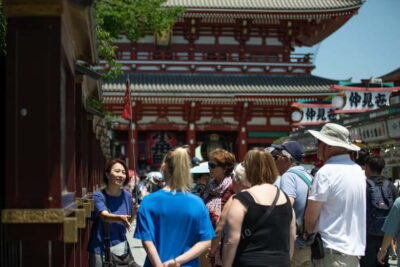
Asakusa Walking Tour with Sensoji Temple Visit
Read our review →
Tokyo Panoramic 1 Day: Meiji Shrine, Asakusa, Odaiba and SKYTREE®
Read our review →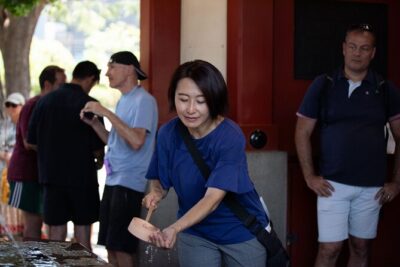
Asakusa Senso-ji Temple and Old Tokyo Walking Tour
Read our review →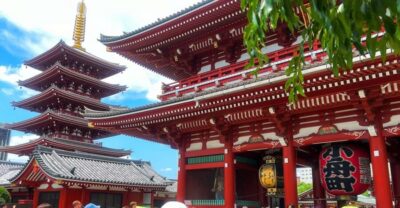
Asakusa and Tokyo’s Oldest Temple Senso-ji Tour
Read our review →
Meiji Jingu Shrine and Shinto Culture Walking Tour
Read our review →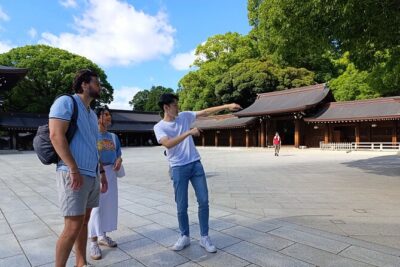
Meiji Shrine Walking Tour — Shintoism & Imperial System
Read our review →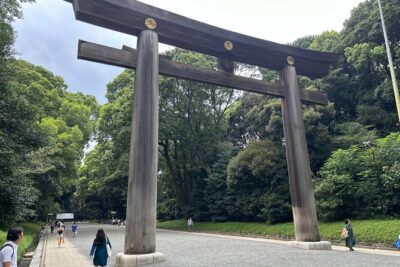
Tokyo Morning Tour: Asakusa, Meiji Shrine and Tsukiji Fish Market
Read our review →Browse the lists this tour appears in