
Reviewed · MEIJI SHRINE & SENSO-JI TOURS
Tokyo: Asakusa Walking Tour -Sumida River to Senso-ji Temple
Asakusa’s appeal comes into focus on foot. This 90-minute walk follows the Sumida River toward Senso-ji Temple, passing from quiet waterside views into Kaminarimon Gate, Nakamise Street, and one of Tokyo’s most famous temple precincts. It gives you a useful first look at a district where old customs and modern Tokyo share the same narrow streets.
I like the small group, limited to 10 people, and the tidy route that packs a river walk, temple visit, shopping street, and local food into one morning or afternoon. I also like the personal touches, including the fortune prediction and guides such as Miho, Haruka, and Mikio, who have offered clear explanations in English and, in Haruka’s case, Spanish. The main consideration is time: 90 minutes gives you an introduction, not a leisurely exploration of every shop and temple corner.
Key points to know before booking
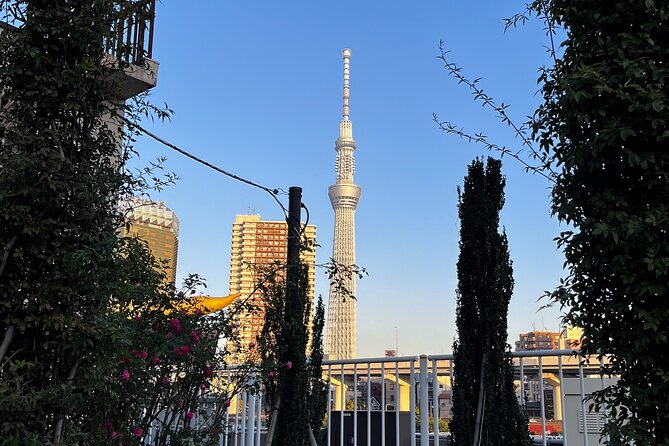
- The tour begins beside the Sumida River: Meet at the Kuramae 2-Chome Police box beside Umaya Bridge, at coordinates 35.7046293, 139.7941848.
- Senso-ji is the main event: You’ll approach through Kaminarimon Gate, see its Fujin and Raijin figures, and continue into the Main Hall and temple grounds.
- Nakamise Street comes at the right moment: The route ends near the temple and market, leaving you in a good place to keep shopping, eating, and exploring.
- The group stays small: A maximum of 10 people makes it easier to hear the English guide and ask questions.
- You receive a fortune prediction: This is included in the experience and adds a traditional Japanese ritual to the sightseeing.
- The $42 price buys orientation, not admission to a long list of sights: The value is strongest if you want context and a well-planned first walk through Asakusa.
Starting beside the Sumida River at Umaya Bridge
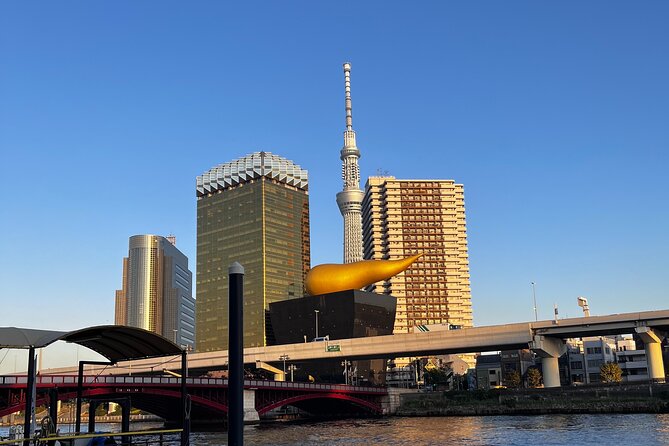
Your meeting point is in front of the Kuramae 2-Chome Police box, beside Umaya Bridge. Look for the guide holding a sign marked gotcha. The coordinates are 35.7046293, 139.7941848, so I would save the location before leaving your hotel and allow time to find the police box.
The start matters because it places you near the Sumida River rather than dropping you directly into Senso-ji’s crowded entrance. You begin with room to notice the water, the bridge, and the shape of Asakusa before moving toward the temple district.
The river section is described as a calm walk, and it gives the tour a welcome change of pace. Tokyo can feel fast and packed, especially around major sights. Here, you get a quieter opening and a chance to hear the guide explain how the river connects to Asakusa’s past and present.
This is not a boat ride. It is a walking tour along the river, so wear comfortable shoes and expect to remain on foot for the full 90 minutes.
More Temple Walking Tours in Japan
- Tokyo: Asakusa Walking Tour with Sensoji Temple Visit
★ 4.8 · 1,583 reviews - Tokyo: Meiji Shrine Walking Tour — Shinto & Imperial System
★ 4.9 · 266 reviews - Tokyo: Meiji Jingu Shrine and Shinto Culture Walking Tour
★ 5.0 · 245 reviews
From waterside streets to old Asakusa
After meeting your English-speaking guide, you continue through local streets and smaller lanes toward Senso-ji. The route is useful because Asakusa is easier to understand as a neighborhood than as a single temple photo stop.
The guide connects the area with samurai stories, merchant life, and the development of Tokyo. That historical framing helps you notice more than shop signs and crowds. You begin to see how religious buildings, shopping streets, food stalls, and ordinary city blocks sit close together.
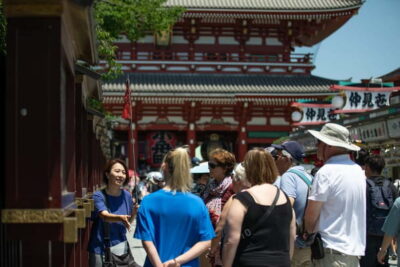
The small group format is a real advantage here. With no more than 10 participants, the guide can keep the pace together without using a loudspeaker or losing people at every crossing. You can also ask about details as they appear instead of waiting until the end.
Past guides have included Miho, Haruka, and Mikio. Miho was praised for clear English and for explaining the river, Senso-ji, the shrine, and the market. Haruka was able to speak Spanish comfortably, which helped one participant follow the tour with ease. These guides may not be assigned to every departure, but their work gives you a useful sense of the experience’s personal style.
Kaminarimon Gate and the first view of Senso-ji
The approach to Senso-ji builds toward Kaminarimon Gate, the temple’s famous entrance. Its name means Thunder Gate, and the large figures of Fujin and Raijin, associated with wind and thunder, make this one of Asakusa’s most memorable photo stops.
A guide adds value here because a quick photograph does not explain what you are seeing. You can learn about the guardian figures and the role of the gate as an entrance into a sacred area. The gate also marks a sharp shift in atmosphere, from everyday streets to a formal temple approach filled with visitors, shops, and religious landmarks.
This is likely one of the busiest parts of the walk. If you want a perfectly quiet photograph, you may need to return later on your own. During the tour, the benefit is not solitude. It is understanding the scene while you are standing in it.
The route does not promise a private entrance, reserved access, or skip-the-line treatment. You are visiting one of Tokyo’s best-known places in the ordinary public setting. That is part of the experience, but it also means the pace can depend on foot traffic.
Nakamise Shopping Street, where the tour turns practical

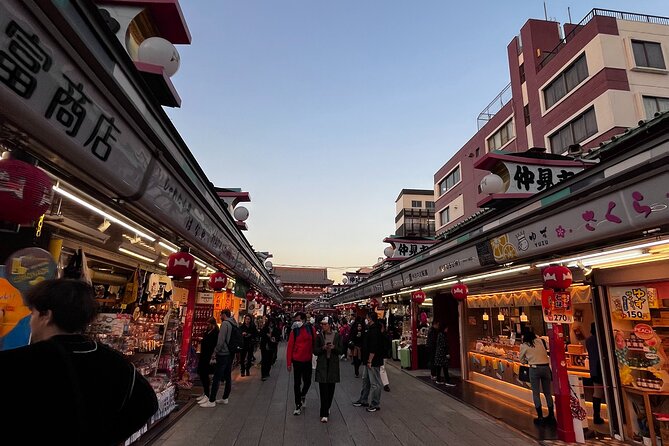
From Kaminarimon Gate, you continue along Nakamise Shopping Street toward the temple grounds. This traditional retail street is lined with shops selling souvenirs, small gifts, snacks, and other items connected with Asakusa.
Nakamise works well on a guided walk because it can be easy to rush through. You may notice a shop, a food display, or a traditional item without knowing its place in the local setting. The guide helps you connect the street to the temple approach and points out the role of shopping and food in the district.
Food is part of the tour’s flavor. The experience description mentions traditional snacks and local specialties such as tempura, yakitori, and melon pan with ice cream. The included items list only a fortune prediction, so you should not assume that a meal or food tasting is covered by the $42 price. You may have opportunities to buy treats along the way, but bring extra money if eating is important to you.
The melon pan with ice cream deserves special mention because it became a favorite stop for one past participant. It is the sort of simple Asakusa treat that can become a highlight, especially after walking. Still, the precise food stops can vary, and the tour should not be booked as a dedicated food tour.
The best strategy is to treat Nakamise as both part of the route and a preview. After the guided walk ends, you can return to shops that caught your eye instead of trying to shop while keeping pace with the group.
More Temple Walking Tours in Tokyo
- Tokyo: Meiji Shrine and Shinto Culture Walking Tour
★ 5.0 · 225 reviews - Tokyo: Meiji Shrine Walking Tour — Shintoism & Imperial System
★ 5.0 · 209 reviews - Tokyo: Asakusa Temple & Shrine Walking Tour with Local Guide
★ 5.0 · 105 reviews - Tokyo: Asakusa & Tokyo’s Oldest Temple Senso-ji Walking Tour
★ 4.6 · 21 reviews
Inside the Senso-ji grounds and Main Hall
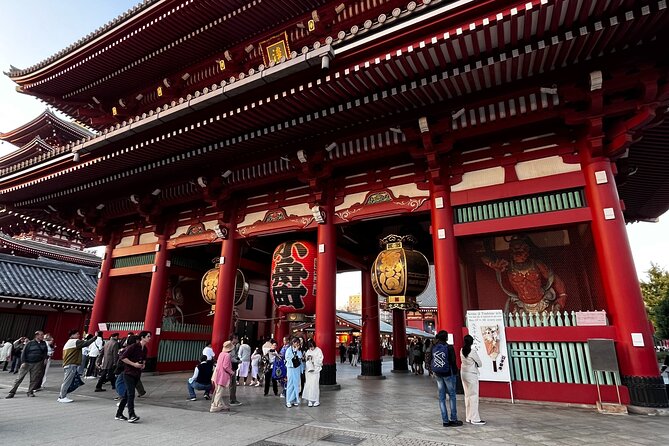
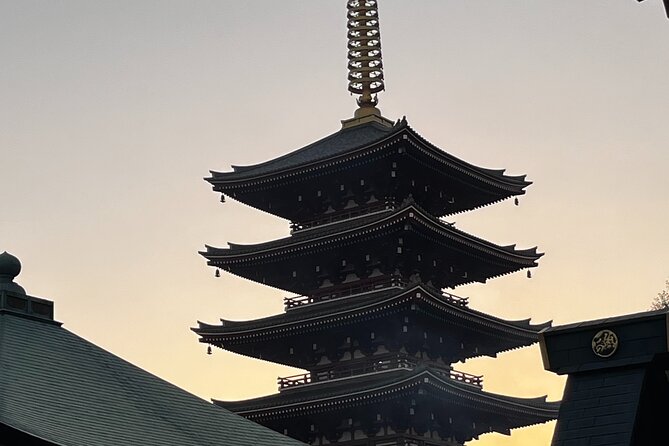
Senso-ji is the tour’s central sight. The temple is one of Tokyo’s most important and recognizable places, and the walk gives you a basic structure for seeing it: the gate, the shopping approach, the sacred grounds, the Main Hall, and nearby religious features.
Inside the grounds, the guide explains how to behave respectfully and how the space functions. You can offer prayers and take in the temple buildings, rather than treating the site only as a background for photographs.
The tour description also refers to the shrine, and one past guide explained both the temple and shrine areas. That distinction matters in Japan, where Buddhist temples and Shinto shrines are different religious places, even when they sit close together in a historic district.
You should expect an introduction rather than a long private lecture. The 90-minute schedule must cover the river, neighborhood, gate, market, and temple. If you want time for detailed architectural study, quiet prayer, or repeated photographs, plan to stay after the group walk.
One useful feature is the ending point. The tour finishes at the temple and market area, rather than sending you back to the original meeting point. That lets you continue at your own speed. One past participant spent hours afterward eating, shopping, and exploring, then followed a guide’s suggestion to visit Tokyo Skytree. The tour does not include Skytree, but the location makes it a practical add-on if you want to extend your Asakusa day.
The fortune prediction adds a personal touch
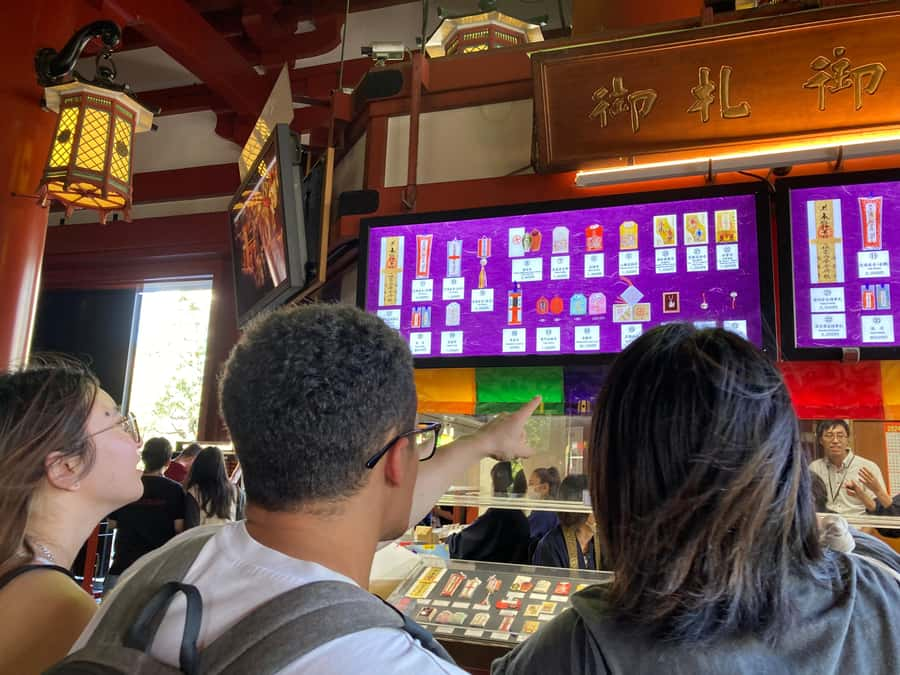
A fortune prediction is included, and it gives the tour something beyond sightseeing. You are not only looking at a temple and hearing facts. You also take part in a small tradition connected with Japanese religious culture.
Keep your expectations sensible. The activity does not describe a private ceremony or a lengthy spiritual session. It is an added experience within a short walking tour, not the main reason to book. Still, it can make the visit feel more personal and gives you a memorable souvenir of the temple grounds.
If you are curious about customs but unsure how to begin, having a guide explain the process is useful. You can ask what the fortune means and how to respond respectfully. The exact format is not detailed, so I would regard it as a pleasant extra rather than a guaranteed, elaborate ritual.
Is $42 good value for 90 minutes?
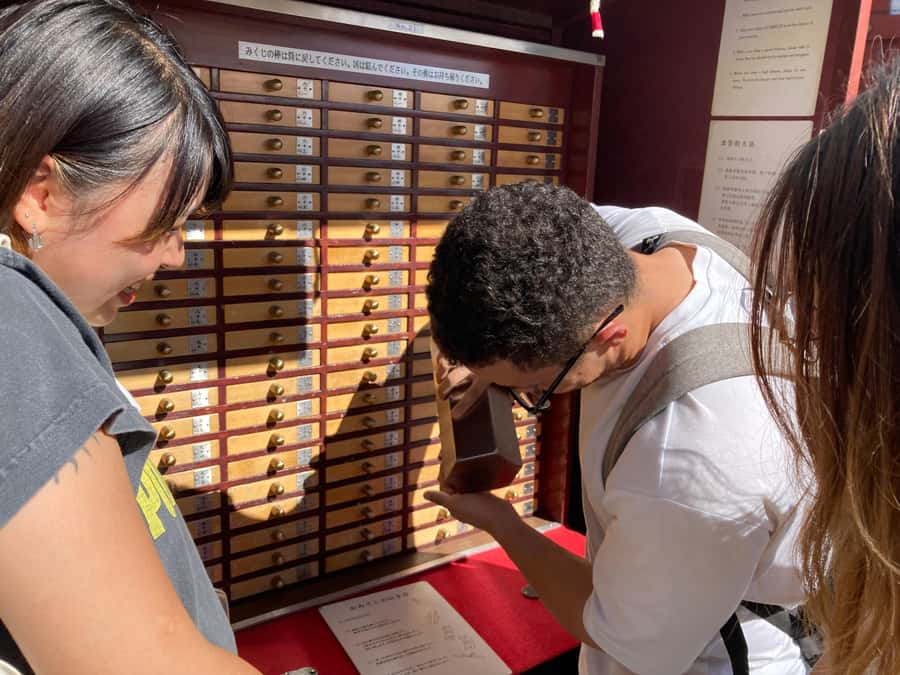
At $42 per person, this is not the cheapest way to walk through Asakusa. You can visit the Sumida River, Senso-ji, and Nakamise Street independently. The temple approach and market are public areas, and you do not need a ticket for the basic sightseeing route described here.
The price makes more sense if you value clear orientation. In 90 minutes, you get a planned route, an English-speaking guide, local background, help understanding the temple and shrine, a fortune prediction, and a small group capped at 10 people. You also finish in the most useful part of Asakusa, where you can continue without being tied to the group.
I see the tour as especially good value on a first visit, when Tokyo can feel hard to organize. It can also help you decide how to spend the rest of your day. You may leave with a better sense of which shops deserve another look, which foods you want to try, and how to reach another nearby attraction.
The value is weaker if you already know Asakusa well or want a slow food-focused outing. You may cover the same core sights on your own and spend more time inside shops and temple grounds. The tour is a compact introduction, not a full day of guided exploration.
Timing, language, and group size
The tour lasts 90 minutes, with starting times available according to the booking calendar. That length is one of its strengths. You can fit it into a wider Tokyo day without giving up half a day of sightseeing.
The short schedule also creates a limit. The route has several distinct parts, and each one receives an overview rather than extended time. If you stop often for photographs or shopping, you may feel rushed. Save purchases and longer browsing for after the official walk.
The listed tour language is English. Past departures have also included Japanese, and Haruka was able to speak Spanish. You should book expecting English, while recognizing that another language may be available depending on the guide and departure.
The group limit of 10 is small enough for conversation but not private. You may still walk with other people, and the pace will be set for the group. That is a good compromise for solo visitors and couples who want guidance without joining a large coach-style outing.
Cancellation is free up to 24 hours before the start time, and you can reserve now and pay later. Those policies are helpful if your Tokyo schedule may shift, but they do not change the central question: do you want a short, guided introduction or more independent time?
Who should book this Asakusa walk?
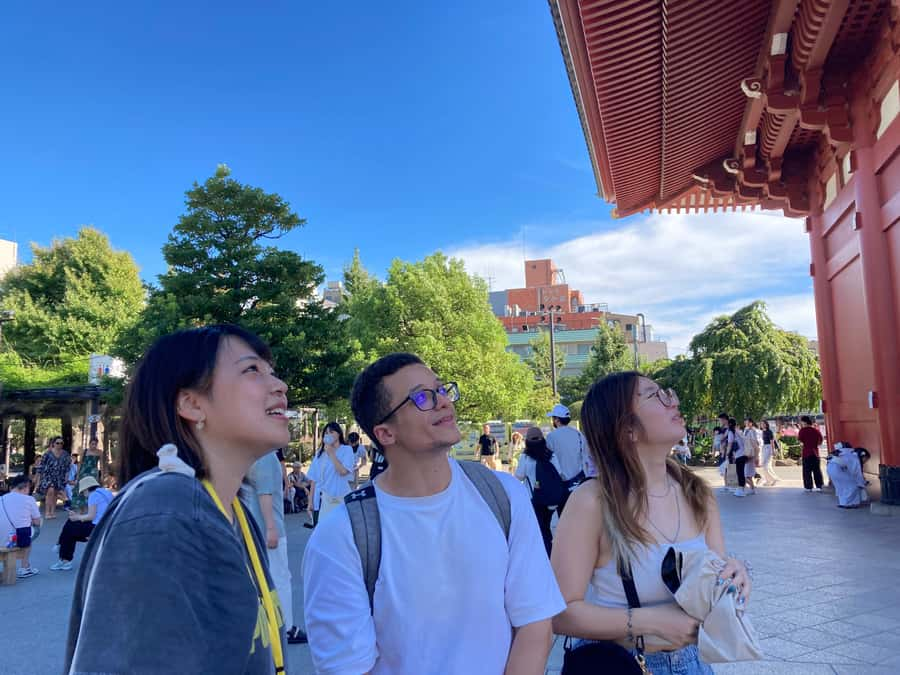
I would recommend it to first-time Tokyo visitors who want to understand Asakusa before exploring it alone. It suits you if you enjoy walking, want explanations in English, and prefer a small group over a large city tour.
It is also a good choice for anyone who wants a gentle beginning beside the Sumida River before entering the busy temple district. Families and older visitors should consider the full walking time, since the experience remains on foot and the data does not describe seating or special accessibility arrangements.
Food-focused visitors may enjoy the chance to see traditional snacks and local eateries, but remember that food is not listed as included. Shoppers will benefit from ending near Nakamise Street, where you can keep browsing after the guide leaves.
You may want to skip it if you have already explored Senso-ji, Nakamise, and the river on a previous visit. In that case, the short route may repeat familiar ground. You might also prefer an independent visit if your main goal is quiet temple time, extended shopping, or a flexible meal.
Should you book the Sumida River to Senso-ji tour?
Book this tour if you want a well-shaped first look at Asakusa in a small group. The route links the river, Kaminarimon Gate, Nakamise Street, and Senso-ji without wasting time on transfers. The fortune prediction adds a nice local detail, and the ending leaves you in the right place to continue exploring.
The $42 price is reasonable for guided context and a compact introduction, but not for admission to a string of paid attractions or a full food tour. Go in expecting 90 minutes of walking, an English guide, public sights, and a helpful orientation. If that matches your plans, this is an efficient way to begin your Asakusa visit.
FAQ
How long is the Asakusa walking tour?
The tour lasts 90 minutes.
What sights are included on the route?
The route includes a walk along the Sumida River, Senso-ji Temple, Kaminarimon Gate, and Asakusa Nakamise Shopping Street.
Where does the tour meet?
The guide waits in front of the Kuramae 2-Chome Police box next to Umaya Bridge, holding a sign marked gotcha. The meeting point coordinates are 35.7046293, 139.7941848.
What language is the tour conducted in?
The listed tour language is English. Past guides have also used Japanese, and one guide, Haruka, was able to speak Spanish.
How many people can join the group?
The group is limited to 10 participants.
Is a fortune prediction included?
Yes. A fortune prediction is included in the activity.
Can I cancel the booking?
Yes. You can cancel up to 24 hours in advance for a full refund. You can also reserve now and pay later.
More Meiji Shrine and Senso-ji Tours in Tokyo
- Tokyo Panoramic 1 Day: Meiji Shrine, Asakusa, Odaiba and SKYTREE®
★ 4.5 · 1,222 reviews - Tokyo: Asakusa and Tokyo’s Oldest Temple Senso-ji Tour
★ 4.9 · 352 reviews - Tokyo Morning Tour: Asakusa, Meiji Shrine and Tsukiji Fish Market
★ 5.0 · 128 reviews - Tokyo Morning Tour: Meiji Shrine, Asakusa & Fish Market
★ 4.9 · 44 reviews
Newly written up around Tokyo
- Tokyo: Snow Monkey and Zenkoji Temple Day Trip In Low Price★ 5.0 · 5 reviews
- Tokyo: Gotokuji Culture Walk & Lucky Cat Temple Experience★ 4.9 · 5 reviews
- :Tokyo,Shibuya /Meiji Shrine tour in KIMONO/English-friendly★ 5.0 · 4 reviews
- Tokyo: Sensoji Temple & Street Food: Private Tour with guide★ 4.6 · 8 reviews
- Tokyo: Visit 5 Shrines & Collect Goshuin on Private Tour★ 5.0 · 3 reviews
- Tokyo War History Tour: Yasukuni Shrine & War Museum★ 4.5 · 6 reviews
- Tokyo: Private Meiji Shrine & Harajuku Highlights Tour★ 4.5 · 4 reviews
- Tokyo: Shibuya Sky, Harajuku & Meiji Shrine Highlights Tour★ 4.5 · 9 reviews
Meiji Shrine & Senso-ji Tours, compared.
Asakusa Walking Tour with Sensoji Temple Visit
Read our review →
Tokyo Panoramic 1 Day: Meiji Shrine, Asakusa, Odaiba and SKYTREE®
Read our review →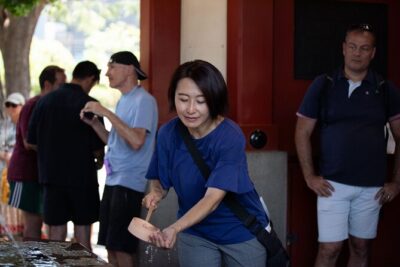
Asakusa Senso-ji Temple and Old Tokyo Walking Tour
Read our review →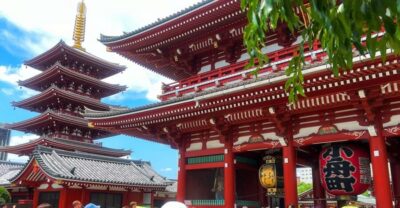
Asakusa and Tokyo’s Oldest Temple Senso-ji Tour
Read our review →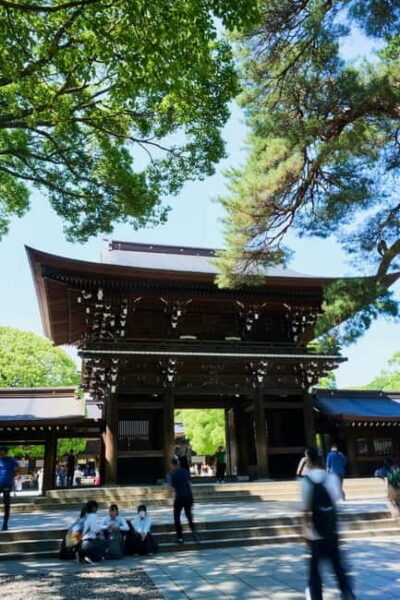
Meiji Shrine Walking Tour — Shinto & Imperial System
Read our review →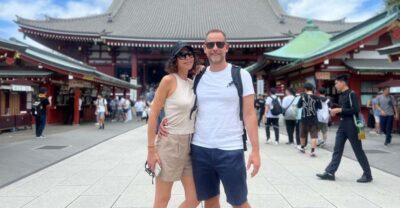
Meiji Jingu Shrine and Shinto Culture Walking Tour
Read our review →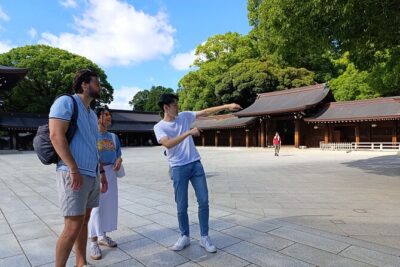
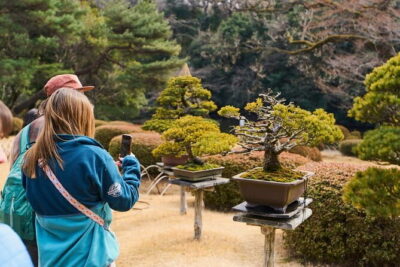
Meiji Shrine Walking Tour — Shintoism & Imperial System
Read our review →Browse the lists this tour appears in